Additional Personnel Including Military Medical Officers Deployed
Support for Stable University Entrance Exam Management
"Must Prevent Further University Entrance Exam Confusion"
The government urged the resident doctors who have not returned even by the final deadline to return promptly, while also announcing plans to support substitute personnel to maintain the emergency medical system and to continuously strengthen the medical cooperation system between hospitals.
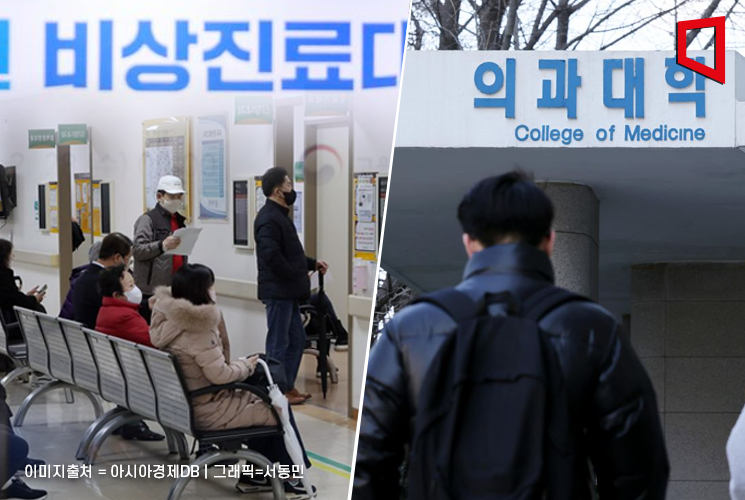
On the 20th, Park Min-su, the 2nd Vice Minister of the Ministry of Health and Welfare, said at the Central Disaster and Safety Countermeasures Headquarters briefing on the doctors' collective action, "As of May 14, a total of 427 personnel, including 170 military doctors and 257 public health doctors, are dispatched and working," adding, "We plan to deploy additional personnel if necessary by assessing the demand based on the operation status of regional emergency situation rooms and severe/emergency medical care at each hospital." Senior doctors will also be utilized.
Vice Minister Park stated, "The Senior Doctors Support Center is surveying the demand from 194 institutions, including public medical institutions, university hospitals, and training hospitals," and added, "Based on the survey results, we will support the connection between hospitals and senior doctors."
The government also plans to continuously strengthen cooperation between tertiary general hospitals and cooperative medical hospitals. Currently, a total of 185 cooperative medical hospitals are designated and operated, including 68 cancer treatment cooperative hospitals that have received grade 1 or 2 in cancer adequacy evaluations among general hospitals and have numerous cancer treatment achievements.
Vice Minister Park said, "We operate a dedicated call center at the National Cancer Center for patient consultation and a damage report center to alleviate patient inconvenience caused by the collective action," and added, "We will further strengthen communication with patient groups and others to listen to the voices of patients and their guardians and devise measures to ensure timely treatment."
The government especially plans to ensure that the experience gained through operating this emergency medical system leads to reform of the medical delivery system. Accordingly, tertiary general hospitals will reduce mild and outpatient care significantly and improve their structure to focus on severe patients.
Vice Minister Park said, "We will fundamentally improve the system so that high-difficulty, high-risk patients and those referred from secondary hospitals can be primarily treated at tertiary general hospitals, while patients with mild to moderate conditions and those referred from primary medical institutions can be handled by general hospitals or specialized hospitals."
Following last week's judicial ruling, the government's plan to increase medical school admissions is expected to accelerate. Vice Minister Park said, "The government will promptly finalize the 2025 academic year admission plan to prevent further confusion in next year's university entrance exams," and added, "We will spare no effort to support each university to operate this year's admissions stably." He also stated, "We will promptly finalize the 'Medical School Education Advancement Plan,' which includes a phased investment roadmap for faculty, facilities, and equipment to establish education conditions at the level of advanced countries," and added, "Along with improving educational conditions, we will accelerate the expansion of essential medical services."
The Special Committee on Medical Reform plans to hold meetings this week for the 'Essential Medical Care and Fair Compensation Expert Committee' and the 'Medical Workforce Expert Committee' to discuss priorities for improving essential medical care fees, planned compensation measures for urgently needed areas, and improvements to resident training environments.
Vice Minister Park said, "To improve the long working hours of residents, we will discuss reducing continuous working hours from the current 36 hours to 24 hours and further gradually reducing weekly working hours from 80 to 60," adding, "We will expand national support for training costs to dramatically improve training quality and concretize measures to fundamentally improve the training system so that residents can receive high-quality education."
He added, "We will accelerate discussions on medical reform to bring about changes that can be felt by medical sites and the public."
© The Asia Business Daily(www.asiae.co.kr). All rights reserved.
![Clutching a Stolen Dior Bag, Saying "I Hate Being Poor but Real"... The Grotesque Con of a "Human Knockoff" [Slate]](https://cwcontent.asiae.co.kr/asiaresize/183/2026021902243444107_1771435474.jpg)
















