Hong Nampyo, Mayor of Changwon Special City: "We Will Ensure the Reinvigoration of Masan"
'Masan Free Trade Zone' Designated as National Industrial Complex After 54 Years
Korea's First 'Digital Masan Free Trade Zone' to Be Established in Masan Marine New Town
Master Plan Developed to Upgrade Industrial Areas Including Bongam and Jungri Complexes
The 'Masan Free Trade Zone', designated in 1970, has been re-designated as a national industrial complex after 54 years. Masan Marine New City is set to host the nation's first 'Digital Free Trade Zone', officially designated and announced by the Ministry of Trade, Industry and Energy on January 25. Bongam Industrial Complex and Jungri Industrial Complex are also preparing master plans for their advancement. In response, Changwon Special City is holding a series of meetings with local businesses and universities to foster creative talent and build an industrial ecosystem, embarking on the formulation of detailed strategies that will lay the foundation for the next 50 years.
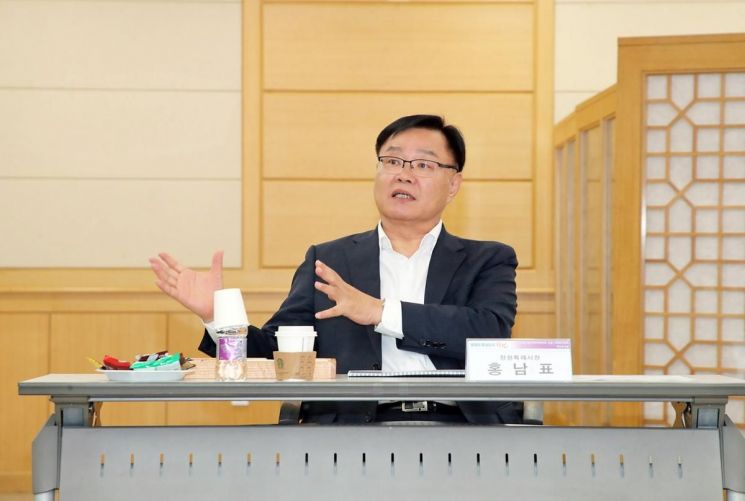 Changwon Special City Mayor Hong Nampyo is explaining the commissioning of a planning research project for the creation of the Digital Masan Free Trade Zone.
◆Masan Free Trade Zone Designated as National Industrial Complex
The Masan Free Trade Zone, established in 1970 as Korea’s first foreign-exclusive industrial complex, has significantly contributed to national and regional economic development by attracting foreign capital, increasing exports, and boosting employment. Alongside Taiwan's export processing zones, it has been recognized as one of the most successful free trade zones in the world. At its peak, it accounted for over 26% of Gyeongnam's exports, greatly influencing the regional economy, and the sight of tens of thousands of workers commuting was as spectacular as the ebb and flow of the tide.
However, after years of rapid growth, the zone began to decline in the 2000s. Its share of Gyeongnam's exports also plummeted. From 1988, when Gyeongnam's export statistics began, until 2003, it maintained a share of around 20%, but dropped to single digits in 2007 and has remained in the 2% range over the past decade. A major blow came in 2016 when the iconic large crane of Seongdong Industries, a symbol of the area, was sold to a shipyard in Romania. The media likened this symbolic event, signaling the decline of Korea's shipbuilding industry, to the 'Tears of Malmo' in Sweden.
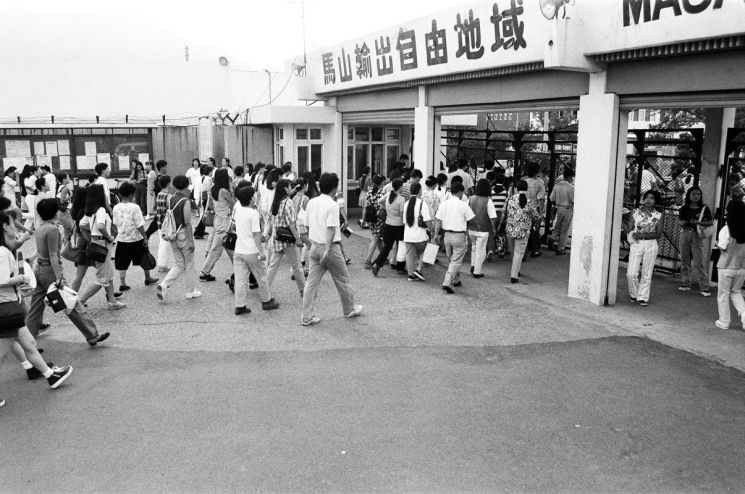
Fortunately, having overcome its twilight years, the Masan Free Trade Zone is now preparing for a resurgence as it has recently been designated a national industrial complex. On January 9, the National Assembly passed a partial amendment to the 'Act on the Designation and Operation of Free Trade Zones.' The amended law officially came into effect on March 7.
Currently, the Masan Free Trade Zone is divided into three sections?Zone 1, Zone 2, and Zone 3?covering a total area of 957,000 square meters in Yangdeok-dong and Bongam-dong, Masanhoewon-gu. A total of 130 companies, including 61 foreign-invested and 69 domestic companies, are located here, employing about 5,662 people.
The Masan Free Trade Zone was the only industrial-type free trade zone among the seven in the country, and as such, it faced many disadvantages, such as a low floor area ratio and exclusion from national support projects. However, with its designation as a national industrial complex, the floor area ratio will be increased from the current 70% to 80%. As a result, investments such as factory expansions and production line increases by resident companies are expected to grow, leading to additional job creation.
◆Nation’s First ‘Digital Masan Free Trade Zone’ to Be Established
The nation’s first Digital Masan Free Trade Zone will be established in Masan Marine New City. Changwon Special City requested the creation of the 'Digital Masan Free Trade Zone' from the government in December last year. As a result, the Ministry of Trade, Industry and Energy officially designated it on January 25 this year.
The Digital Masan Free Trade Zone is an urban high-tech industrial complex where D.N.A (Data, Network, AI) companies are clustered, moving beyond the traditional manufacturing-focused industrial complex model to meet the demands of the Fourth Industrial Revolution. It will be built on a public site within Masan Marine New City, covering a land area of 33,089 square meters and a total floor area of 105,300 square meters. The project period is from 2024 to 2028, with a total budget of 386 billion won, including 289.5 billion won from the national government and 96.5 billion won from local funds.
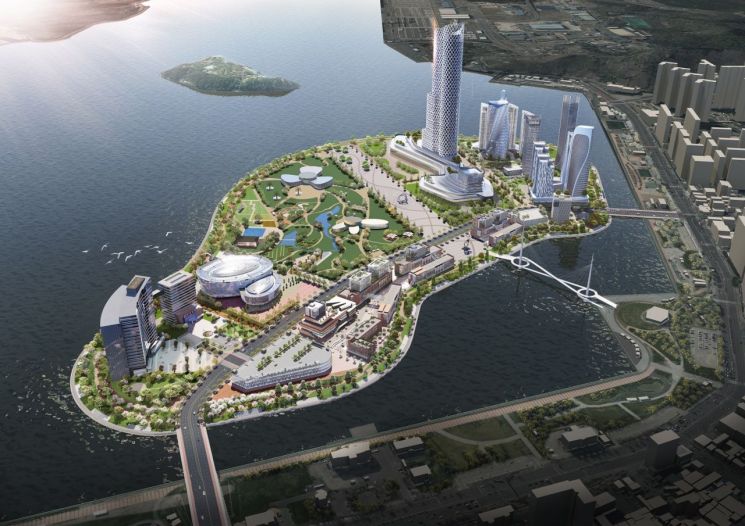
The city plans to construct the D.N.A. Innovation Town, a business occupancy space within the Digital Masan Free Trade Zone. This will include a 20-story business facility (approx. 80,000 square meters of total floor area) on industrial land and a 12-story support facility (approx. 25,300 square meters of total floor area) on mixed-use land. The Digital Masan Free Trade Zone is expected to generate an economic effect of approximately 541.2 billion won in production, 226.4 billion won in added value, and 3,441 jobs.
The city aims to develop the Digital Masan Free Trade Zone into a specialized zone for intelligent machinery and manufacturing, producing and exporting both tangible and intangible goods, in connection with the existing Masan Free Trade Zone and Changwon National Industrial Complex. The goal is also to build a new industrial ecosystem where residential, cultural, industrial, and natural elements coexist.
Going forward, the city plans to clarify the rationale for choosing Masan Marine New City as the location and focus on preparing for the preliminary feasibility study to ensure the project's justification.
Recently, the city has launched a 'Digital Masan Free Trade Zone Development Planning Research Service' covering: ▲plans for the development of the Digital Masan Free Trade Zone ▲fostering D.N.A. (Data, Network, AI) industries ▲strategies for linking with core industries (manufacturing) ▲development of cultural and artistic content industries ▲the necessity of national funding support, among others. Based on the results, the city plans to submit a request for a preliminary feasibility study to the Ministry of Trade, Industry and Energy within this year.
◆Master Plan for Advancement of Bongam and Jungri Industrial Complexes
Changwon Special City is also promoting the advancement of industrial areas (8.7 km²) within its jurisdiction, including Bongam and Jungri Industrial Complexes.
Until now, industrial areas, unlike industrial complexes, have only been managed as designated land use zones under the 'National Land Planning and Utilization Act', and despite their potential due to proximity to urban centers, they have suffered from a lack of policy support, making revitalization difficult.
To address this, the city has been working on a major overhaul of aging industrial complexes: in August last year, officials visited Yeongdeungpo District Office, Seoul Institute, and conducted field surveys in Mullae-dong and G-Valley; in September, they gathered on-site feedback through meetings with the Bongam and Jungri Industrial Complex Business Association; in October, they initiated related research; in November, they organized the '2023 Changwon Industrial Innovation Forum' to collect expert opinions, all in an effort to establish a competitive plan.
Going forward, the city plans to present a vision for the advancement of Bongam and Jungri Industrial Complexes based on analysis of industrial infrastructure and local conditions, and by the end of the year, finalize and announce tailored master plans for each industrial area through resident feedback, public hearings, and council reports.
Through these efforts, the city aims to achieve systematic and planned management of industrial areas, transform the paradigm of industrial growth, and overhaul aging industrial complexes, ultimately turning them into innovative industrial spaces where industry, business, residential, and cultural functions are integrated.
Hong Nam-pyo, Mayor of Changwon Special City, said, "In the era of the Fourth Industrial Revolution, only those with a digital foundation can survive in global competition," and added, "By establishing hardware for new growth engines and refining the talent development and utilization system?the software?we will create a competitive industrial ecosystem and achieve a renaissance for Masan."
© The Asia Business Daily(www.asiae.co.kr). All rights reserved.
!["The Woman Who Threw Herself into the Water Clutching a Stolen Dior Bag"...A Grotesque Success Story That Shakes the Korean Psyche [Slate]](https://cwcontent.asiae.co.kr/asiaresize/183/2026021902243444107_1771435474.jpg)


















