"Taiwan Arms Sales Involvement" US Boeing Sanctions
EU, US, Taiwan, Japan Anti-Dumping Investigation on Imported Chemicals
Pressure Accelerates on Taiwan President Lai Ching-te's Inauguration Day
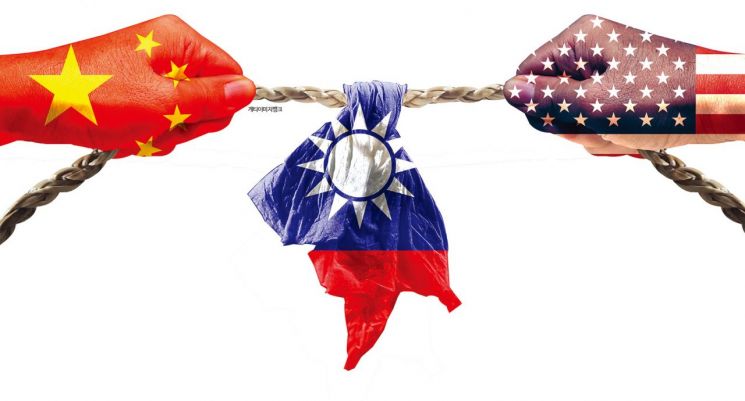
China is unleashing pressure tactics against the Western alliance and Taiwan ahead of the inauguration of Lai Ching-te, the pro-American and pro-independence president-elect of Taiwan. On the day before the inauguration, China initiated anti-dumping investigations on chemical substances imported from the European Union (EU), the United States, Taiwan, and Japan, and on the day of the event, it announced sanctions against the U.S. defense sector of Boeing.
On the 20th, the Chinese Ministry of Commerce announced on its website that it included Boeing Defense, Space & Security (BDS), which participated in arms sales to the Taiwan region, on the list of "unreliable enterprises." The ministry explained that it would ban BDS from export-import activities related to China, new investments within China, and entry of senior executives into China, and would also cancel BDS's future work permits and residence qualifications.
Furthermore, the ministry stated that under the "Regulations on the List of Unreliable Enterprises," a fine twice the amount of the arms sales to Taiwan would be imposed, and the company must pay the fine within 15 days from the date of announcement. The Ministry of Commerce also added U.S. companies General Atomics Aeronautical Systems and General Dynamics Land Systems, which were sanctioned last month with asset freezes, to the list of "unreliable enterprises."
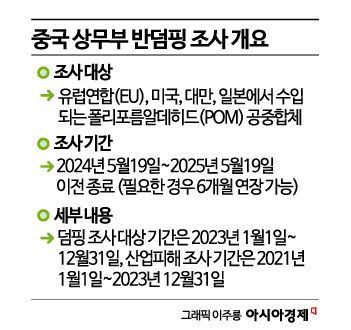
On the previous day (the 19th), the Ministry of Commerce also announced the initiation of an anti-dumping investigation on polyoxymethylene (POM) copolymers imported from the EU, the U.S., Taiwan, and Japan. POM copolymers are thermoplastic resins that partially replace metals such as copper and zinc and are widely used in automotive parts, electronic products, industrial machinery, sports and medical equipment, and construction materials.
This investigation follows an anti-dumping petition filed last month (on the 22nd) by local companies including Yunnan Yuntianhua Co., Ltd., Ningxia Coal Industry Group Co., Ltd., Kaifeng Longyu Chemical Co., Ltd., Yangguang Lunan Chemical Co., Ltd., Tangshan Zhonghao Chemical Co., Ltd., and China Petroleum Inner Mongolia New Materials Co., Ltd. These companies claim that imported POM copolymers have caused "clear dumping" in the mainland market and inflicted "significant damage" to local industries.
In their petition, they emphasized that "timely and effective anti-dumping investigations and measures will help restore distorted market competition order" and "protect the industry and economic security of mainland China." According to relevant regulations, the Ministry of Commerce reviewed the petitioners' qualifications, the situation related to the investigated products, the status of similar products in the mainland market, the impact on mainland industries, and the countries (regions) under investigation, and decided to initiate the investigation.
According to market research firm Huajing Industrial Research Institute, China imported 45% of its POM demand in 2022. The Hong Kong South China Morning Post (SCMP), based on customs data, estimated that the EU, Taiwan, Japan, and the U.S. ranked 3rd to 6th respectively in China's POM imports in the first quarter of this year.
The announcement stated that the dumping investigation period by the Ministry of Commerce covers one year from January 1 to December 31 of last year, and the industry damage investigation period spans three years from January 1, 2021, to December 31, 2023. The investigation is expected to be completed within one year but may be extended by six months if necessary.
Additionally, the Ministry of Commerce emphasized that stakeholders involved in this investigation must submit basic identity information along with export or import volumes to mainland China, quantities and amounts of products, and quantities and amounts of similar products produced and sold, in both electronic and written formats, to the Ministry of Commerce's Trade Remedy Investigation Bureau within 20 days from the start of the investigation.
These sanctions and investigations began amid escalating trade pressure from Western countries such as the U.S. and the EU against China. On the 14th, the U.S. announced tariff increases on Chinese electric vehicles, computer chips, and medical products, and on the 17th, the EU initiated a trade investigation on Chinese tin-plated steel. The EU is also conducting an investigation into subsidies for Chinese electric vehicles.
© The Asia Business Daily(www.asiae.co.kr). All rights reserved.
![User Who Sold Erroneously Deposited Bitcoins to Repay Debt and Fund Entertainment... What Did the Supreme Court Decide in 2021? [Legal Issue Check]](https://cwcontent.asiae.co.kr/asiaresize/183/2026020910431234020_1770601391.png)

















