District Office, Law Firm L Plus, and Residents Collaborate for 4 Years
Top Award Case at Seoul City Workshop
Also Scheduled to Exhibit at Ministry of Land's Land Expo
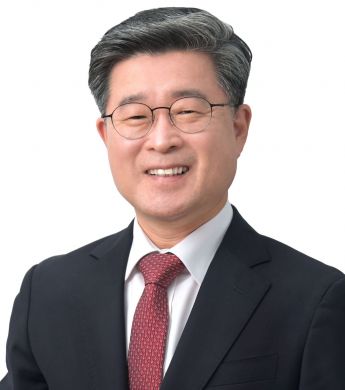
Jung-gu District Office in Seoul (District Mayor Kim Gil-seong) acted as a mediator to resolve the issue of land ownership that had been tied up as collective shared land for over 70 years since the Japanese colonial era, making it difficult to exercise property rights. This was the result of proactive administration. Jung-gu announced that it completed the ownership arrangement of the area around 182 Ssangnim-dong on the 20th of last month, enabling over 100 co-owners to exercise their rightful property rights and also eliminating remnants of Japanese colonial rule.
Separating land tied up as collective shared property into individual ownership involves disputes over property rights among individuals. Nevertheless, Jung-gu took the initiative because it could not stand by while residents suffered from their property rights being frozen for 70 years.
This area was land owned by Japanese people during the Japanese colonial period. After liberation, relatives and others received it through registration of ownership transfer, and in 1954 it was divided into 87 parcels, but it was registered as shared ownership rather than divided ownership, leaving about 100 people as joint owners.
As a result, every time the land ownership was transferred, real estate transaction reports and registry adjustments for all 87 parcels were required. Land use and development requiring consent from co-owners, such as new construction or remodeling of buildings, were practically impossible. Due to the complicated rights relationships, banks would not provide mortgage loans.
Some owners tried to resolve ownership through individual lawsuits. For example, a co-owner of five parcels started a lawsuit in 2003, partially transferred ownership in 2006, and finally completed sole ownership registration in 2014. However, most co-owners were left frustrated due to legal fees amounting to tens of millions of won and complicated procedures.
Since 2020, Jung-gu investigated the original land registry, land ledger, cadastral maps, division survey maps from 1954, and land grant documents, analyzing the rights relationships. It was confirmed that there were over 100 rights holders in the area, with many missing or deceased persons. It was also confirmed that 72 parcels could be subject to ownership transfer lawsuits as divided ownership.
Individual lawsuits would cost about 8 million won just for court mailing fees for the first trial, in addition to litigation costs. To solve this, the district sought advice from several law firms. During this process, the law firm L-Plus proposed a way to significantly reduce court mailing fees and litigation costs. The solution was pre-litigation reconciliation (reconciliation among participants before litigation) and joint lawsuits.
The plan was to have owners of parcels confirmed as divided ownership agree to transfer shares among themselves, then the agreeing parties would become joint plaintiffs and file civil lawsuits to claim share transfers from the remaining co-owners. If a favorable judgment was obtained, share transfer registration could be applied for with the reconciliation record and final judgment. The more agreeing parties, the fewer defendants, reducing court mailing fees and shortening litigation periods, thus drastically reducing residents' burdens.
Accordingly, Jung-gu signed a business agreement with law firm L-Plus and Yoon Gwang-guk Judicial Scrivener Office to actively support the ownership arrangement. Resident briefings were held, and for those living in other regions or overseas who were unreachable, contact was made through tenants or acquaintances, explaining proposals via mail, email, and social networking services (SNS). After persistent efforts, all 72 owners of parcels eligible for litigation agreed to participate in the joint lawsuit.
As a result, attorney fees were reduced to one-tenth compared to individual lawsuits, and court mailing fees dropped from 8 million won per person to 80,000 won, one one-hundredth. The cost-saving effect on litigation expenses amounted to about 2 billion won.
In September 2020, pre-litigation reconciliations for ownership transfer registration among participants were filed with the competent court, and ownership transfer lawsuits were simultaneously initiated in December of the same year. Reconciliation was reached in June 2021, and in May 2022, a favorable judgment for the joint plaintiffs was obtained. Finally, the judgment was confirmed in November 2023, and registration was completed last month.
Jung-gu presented this achievement as an exemplary case at the cadastral and land workshop hosted by Seoul City on the 13th and 14th, winning the grand prize. To help citizens suffering from similar cases, the district plans to exhibit this case at the Land Expo hosted by the Ministry of Land, Infrastructure and Transport in the second half of the year.
On the 23rd, residents, Jung-gu staff, lawyers, and other stakeholders who have shared tears and laughter over the past four years will gather at the Saerom Center in Gwanghui-dong to celebrate the achievement.
District Mayor Kim Gil-seong said, “I am pleased and grateful that the shared ownership issue that troubled residents for 70 years was resolved through the proactive administration of our staff,” adding, “We will continue to stand by residents and actively address their inconveniences.”
© The Asia Business Daily(www.asiae.co.kr). All rights reserved.
![User Who Sold Erroneously Deposited Bitcoins to Repay Debt and Fund Entertainment... What Did the Supreme Court Decide in 2021? [Legal Issue Check]](https://cwcontent.asiae.co.kr/asiaresize/183/2026020910431234020_1770601391.png)















