Yeonhap Asset Management and Kiwoom F&I Prepare Consecutive Corporate Bond Issuances
Large-Scale NPLs Linked to Real Estate Collateral Expected to Surface
Bond Issuance Also Used for Maturing CP Repayment
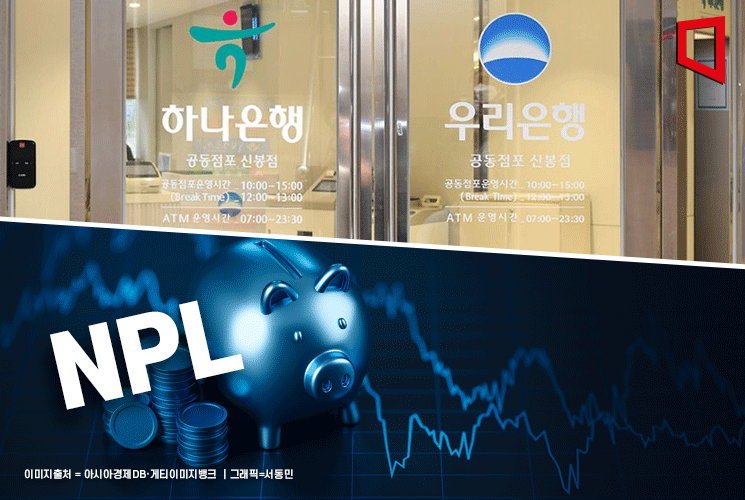
Specialized investment firms in non-performing loans (NPL) are consecutively issuing corporate bonds to raise funds. This is understood to secure liquidity for purchasing NPLs arising from project financing (PF) restructuring processes. It is also expected that short-term borrowings, which have been the main funding source in the NPL purchase process, will be largely repaid.
According to the investment banking (IB) industry on the 20th, Union Asset Management (UAMCO·Yuamco) and Kiwoom F&I plan to issue corporate bonds worth up to 500 billion KRW and 100 billion KRW, respectively. Yuamco has selected Samsung Securities, SK Securities, and Korea Investment & Securities as lead managers for the bond issuance, while Kiwoom F&I has appointed its affiliate securities firm Kiwoom Securities, along with KB Securities and Shinhan Investment Corp., as lead managers.
Yuamco plans to issue corporate bonds worth 250 billion KRW combining 3-year and 5-year maturities. If a large amount of investment funds flow in at a low interest rate level during the demand forecast (corporate bond bidding) targeting institutional investors, the issuance size will be increased to 500 billion KRW, twice the original plan. Kiwoom F&I plans to issue 50 billion KRW in 18-month and 2-year bonds and is reportedly planning to increase the issuance to 100 billion KRW depending on the demand forecast results.
Yuamco and Kiwoom F&I are specialized NPL investment companies. They purchase NPLs sold through bidding processes by financial institutions such as banks and realize profits by recovering more funds than the purchase price. When financial institutions’ NPLs increase, opportunities for profit realization through NPL investment and recovery processes increase; conversely, when NPLs decrease, the number of investments and recoveries decreases.
Recently, amid the deterioration of the real estate market and rising delinquency rates at financial institutions, the amount of NPL purchases by NPL investment firms has significantly increased. In the NPL purchase process, they rely more on external borrowings than on their own funds, increasing short-term borrowings such as commercial paper (CP) and long-term borrowings through corporate bond issuance. Meanwhile, as financial authorities are intensifying PF restructuring, large-scale NPLs are expected to enter the market at relatively low prices.
Yuamco also issued corporate bonds worth 400 billion KRW in January this year. If it issues an additional 500 billion KRW in corporate bonds, it will have issued nearly 900 billion KRW in bonds this year alone. Bank and securities-affiliated NPL investment firms such as Hana F&I and Daishin F&I also issued corporate bonds in the first quarter and are reportedly considering additional fundraising.
These companies are expected to use the raised funds not only for NPL investment but also for repaying maturing borrowings. During the ongoing real estate market downturn since last year, short-term borrowings such as CP have increased significantly, expanding the funds needed to respond to loan maturities.
Yuamco’s CP balance, which was zero at the beginning of last year, surged to 1.57 trillion KRW last month amid expanded NPL investment. After partially repaying maturing CP recently, it has decreased to 1.295 trillion KRW. Daishin F&I’s CP balance has increased from the 50 billion KRW range to around 1.06 trillion KRW over the past two years. Kiwoom F&I’s CP balance also rose from zero to 298 billion KRW in the past year.
An IB industry official said, "Since NPL investment to recovery takes time, NPL investment firms inevitably increase external borrowings when expanding NPL investments," adding, "Due to the recent real estate market downturn, even NPL recovery rates have declined, increasing reliance on borrowings." The official predicted, "External fundraising for NPL investment and repayment of maturing borrowings will continue for some time."
© The Asia Business Daily(www.asiae.co.kr). All rights reserved.
![Clutching a Stolen Dior Bag, Saying "I Hate Being Poor but Real"... The Grotesque Con of a "Human Knockoff" [Slate]](https://cwcontent.asiae.co.kr/asiaresize/183/2026021902243444107_1771435474.jpg)











