Both 1st and 2nd Trials Recognized Evidence Admissibility
Supreme Court: "Without Party Consent, Illegal Wiretapping"
The Supreme Court has ruled that secretly recorded audio files obtained by installing a recording application to prove a spouse's infidelity cannot be used as evidence. This overturns lower court rulings that had allowed such illegally obtained evidence to be admitted at the discretion of the court in civil cases such as divorce, unlike in criminal cases.
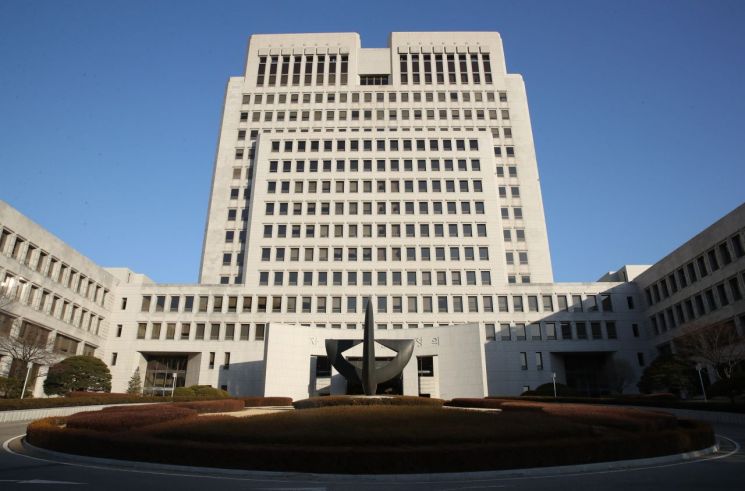
The Supreme Court's First Division (Presiding Justice Kim Seon-su) made this judgment in a lawsuit where Mr. A sued the third party for compensation and damages. However, the original ruling ordering the third party, Mr. B, to pay Mr. A 10 million won in consolation money was upheld.
Mr. A and his husband married in 2011. The husband, a doctor, had an extramarital affair with Nurse B, who worked at the same hospital, dating her multiple times. Mr. A discovered this in 2019 but did not immediately divorce his husband because Mr. A also had an affair. When the husband found out about Mr. A's infidelity in 2020, the couple mutually agreed to divorce the following year.
Subsequently, Mr. A filed a lawsuit against Ms. B, claiming 33 million won in damages for mental distress caused by the affair. During the trial, Mr. A submitted an audio recording as evidence. The recording was obtained by secretly installing a 'spy app' on the husband's mobile phone.
The first and second trial courts recognized the evidentiary value of the recording and ruled that the third party, Ms. B, must pay 10 million won in consolation money. However, the Supreme Court's ruling differed. It stated, "Since Mr. A, a third party, recorded the conversation between the spouse and the third party Ms. B without the consent of the sender and receiver, this act constitutes wiretapping under the Protection of Communications Secrets Act, and telephone conversations recorded through illegal wiretapping have no evidentiary value." Nevertheless, the court maintained the order for Ms. B to pay 10 million won in consolation money, recognizing her infidelity based on evidence other than the recording file.
© The Asia Business Daily(www.asiae.co.kr). All rights reserved.

















