Use of Wild Animals in School Meals at About 1,000 Schools
80% of Schools Serving Wild Animals Concentrated in Western Japan
In Japan, as crop damage caused by wild animals such as deer and wild boars continues, reports have emerged that some schools are preparing and serving wild game in school meals. On the 16th, the Japan Agricultural News reported that the number of schools using deer and wild boar meat caught through hunting as ingredients for school meals has increased 2.5 times over the past five years.
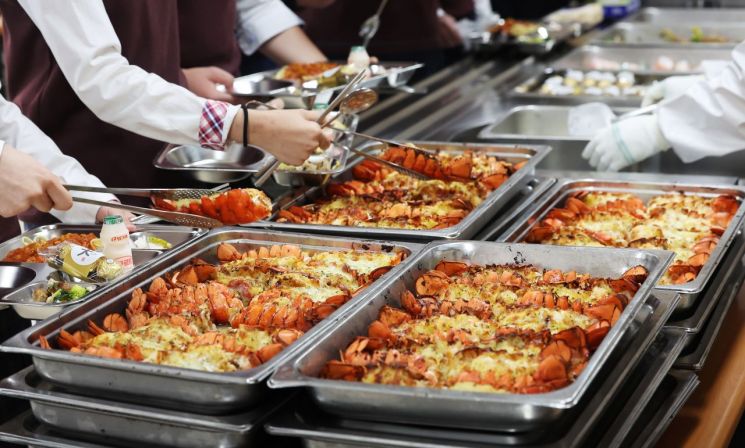 According to a survey conducted by Japan's Ministry of Agriculture, Forestry and Fisheries, in 2017, 387 schools across 19 prefectures in Japan utilized wild animals in their school meals. This included 11 schools in Hyogo Prefecture, 66 schools in Oita Prefecture, 39 schools in Nagasaki Prefecture, and 34 schools in Hokkaido. The photo is of school lunch data from South Korea and is not directly related to the article.
 [Photo by Yonhap News]
According to a survey conducted by Japan's Ministry of Agriculture, Forestry and Fisheries, in 2017, 387 schools across 19 prefectures, which are Japan's regional public entities, utilized wild game in their school meals. This included 11 schools in Hyogo Prefecture, 66 in Oita Prefecture, 39 in Nagasaki Prefecture, and 34 in Hokkaido. In 2018, 569 schools actively used wild game in meals, including 171 schools in Oita Prefecture, 121 in Hyogo Prefecture, and 65 in Shimane Prefecture. Although there was a temporary decrease in 2019, the number rose again to 933 schools by 2022.
The Japan Agricultural News explained that 80% of the schools serving wild boar and deer meat are concentrated in western Japan. This is because there are many mountainous areas where wild animals inhabit, and the capture of these animals to prevent crop damage is increasing. Local governments are also actively involved. Oita Prefecture has introduced a subsidy system, and other local governments operate systems that cover everything from capture to meat processing, distribution, and meal preparation. The media also reported that menus easy for children to eat, such as deer meat curry, are being developed. On the other hand, eastern Japan, which experienced the Fukushima nuclear power plant accident, does not use wild game in school meals.
Minimizing Agricultural Damage, Revitalizing Local Economy
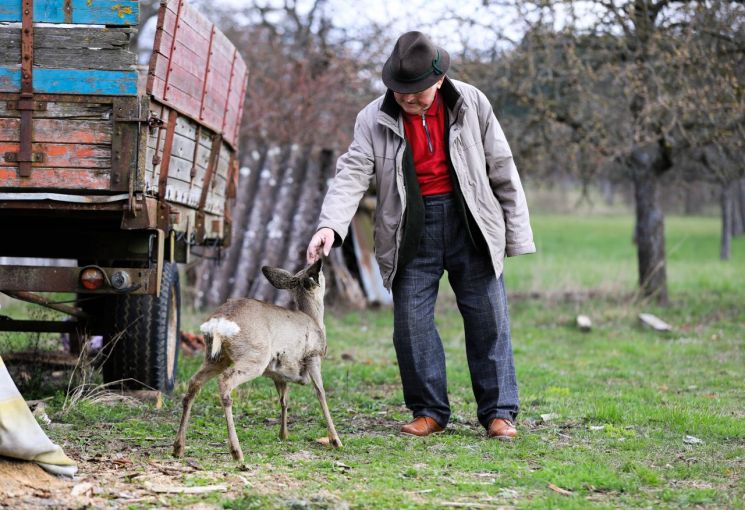 Consumption of wild animals is a very unfamiliar culture in Korea. In contrast, Japan generally shows a positive response to using wild animals as school meal ingredients. Previously, in 2014, deer meat, which became a school meal ingredient thanks to the idea of a nutritionist in Hokkaido, Japan, won the highest award, the Minister of Agriculture, Forestry and Fisheries Award, at a menu competition hosted by a subsidiary of the Japanese Ministry of Agriculture, Forestry and Fisheries (school meals and employee cafeterias category). The photo is not related to the specific content of the article. [Photo source=Pixabay]
Eating wild game is a very unfamiliar culture in Korea. In contrast, in Japan, there is generally a positive response to using wild game as ingredients for school meals. Previously, in 2014, deer meat used as a school meal ingredient in Hokkaido, Japan, won the highest award, the Minister of Agriculture, Forestry and Fisheries Award, at a menu competition (school meals and staff cafeterias category) hosted by a subsidiary of the Ministry of Agriculture, Forestry and Fisheries.
The nutritionist who proposed this idea at the time explained in an interview with a media outlet, "Deer meat used as a school meal ingredient is rich in iron and is a low-fat, high-protein food, so it was chosen as an ingredient without hesitation." She added, "Deer meat is purchased from 'Deer Association Certified' facilities recognized under the Hokkaido local government manual for meat processing and handling standards." The local community welcomes the active use of wild deer, which are a headache for farming households, in school meals, seeing this deer meat meal as an opportunity for young children to reconsider the life of animals and the global environment.
Especially recently, local governments in Japan have been promoting various cooking methods by professional chefs through media outlets, greatly improving consumer awareness within Japan. A Japanese netizen who saw the report commented, "Some children may have aversions to unfamiliar foods, but it is good to have the opportunity to eat things they do not eat at home. Since we never know when certain crops might become unavailable for harvest, I think it is good to diversify risks." Another netizen commented, "School meals are education. When I was young, I ate whale meat in school meals. I think it is a problem to force children to eat things they really dislike, but it is also good to have opportunities to experience various foods."
However, some voices of concern about eating wild game have also been raised. This is because wild boar or deer meat can have harmful effects on health. One netizen expressed the opinion, "Some people develop chronic hepatitis after eating wild boar meat, and deer meat can sometimes have many ticks."
© The Asia Business Daily(www.asiae.co.kr). All rights reserved.


















