CJ CheilJedang Operating Profit 375.9 Billion KRW... 49% Increase
Samyang Foods 235%, Lotte Wellfood 101%, Daesang 92% Operating Profit Growth
K-Food Boom and High Inflation Drive Increased Home Meal Demand
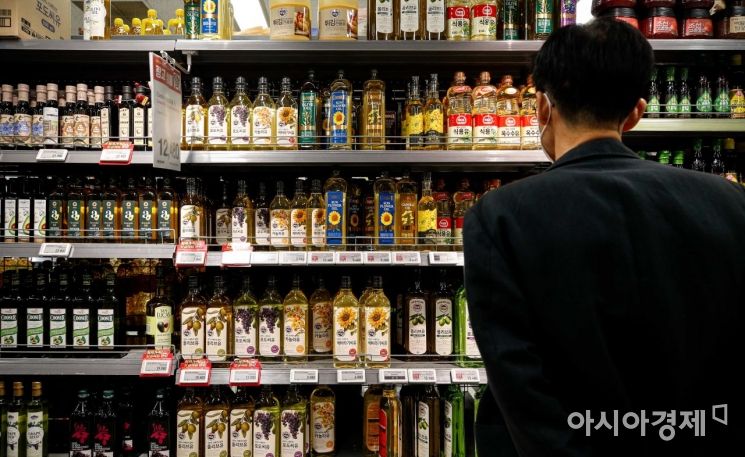
Domestic food companies achieved significantly improved performance in the first quarter of this year despite challenging conditions such as the global economic downturn and high inflation. In Korea, food consumption increased as more consumers sought 'home-cooked meals' amid rising dining-out prices, while overseas, the popularity of 'K-Food' led to increased product exports.
According to the food industry on the 16th, CJ CheilJedang announced on the 14th that its consolidated operating profit for the first quarter of this year, including its subsidiary CJ Logistics, was tentatively estimated at 375.9 billion KRW, a 48.7% increase compared to the same period last year. Sales during the same period rose 2% to 7.216 trillion KRW, and net profit increased by 213.5% to 154.6 billion KRW. Operating profit showed a clear recovery following the turnaround in the fourth quarter of last year (298.3 billion KRW, a 24% increase year-on-year).
CJ CheilJedang reported that its global business performed well, and it achieved such strong results domestically by focusing on cost reduction efforts. In the domestic food business, the trend of eating at home expanded, and by collaborating with online platforms to open new sales channels, sales of key products such as Bibigo dumplings, Hetbahn (instant cooked rice), and Gourmet Sobaba chicken increased by more than 10%. In the overseas food business, growth continued not only in the core North American market but also in new markets such as Europe and Australia.
Daesang's consolidated operating profit for the first quarter of this year increased by 91.5% to 47.7 billion KRW. Sales rose 5.5% to 1.045 trillion KRW. Sales of key items such as fresh foods, convenience foods, and seasonings increased, and the profitability of gift set business improved. Global food sales also grew by about 20%. Both CJ CheilJedang and Daesang saw improved profitability in their bio business divisions, which contributed to their strong performance.
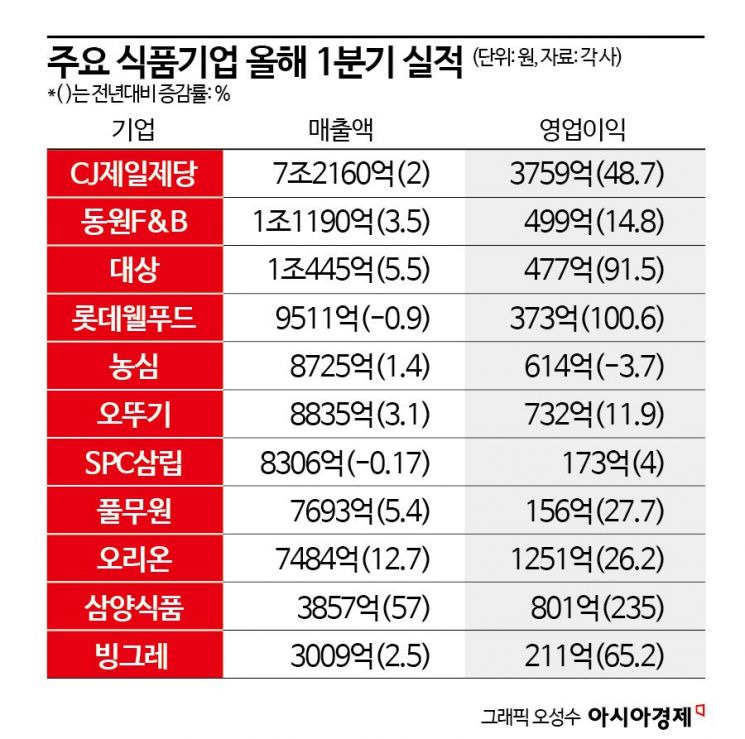
Lotte Wellfood's consolidated operating profit for the first quarter rose 100.6% to 37.3 billion KRW. Although sales decreased slightly by 0.9% to 951.1 billion KRW, net profit surged to 20.1 billion KRW. Lotte Wellfood explained that the international price of oils, which had risen sharply due to the Russia-Ukraine war, stabilized, improving profitability. Additionally, in its global business, operations in India and Kazakhstan performed well, leading to sales and operating profit increases of 3.3% and 60.9%, respectively, compared to the same period last year.
Dongwon F&B announced that its consolidated operating profit for the first quarter of this year was tentatively estimated at 49.9 billion KRW, a 14.8% increase. Sales rose 3.5% to 1.119 trillion KRW, and net profit increased by 52.4% to 45.6 billion KRW. Dongwon F&B attributed its strong performance to increased sales of gift sets during the Lunar New Year holiday and growth in home meal replacement (HMR) sales.
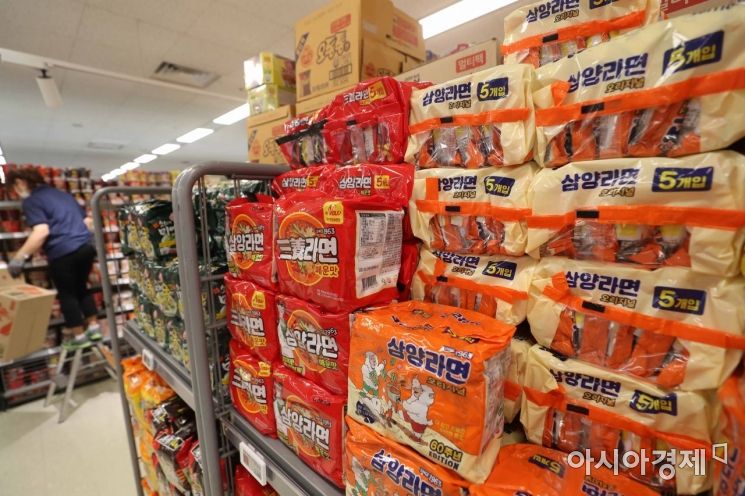
The fortunes of the 'big three ramen companies' were somewhat mixed. Samyang Foods and Ottogi showed improved results. Notably, Samyang Foods recorded the largest increase in operating profit among major food companies. In the first quarter of this year, Samyang Foods posted consolidated sales of 385.7 billion KRW and operating profit of 80.1 billion KRW, the highest quarterly figures ever. Compared to the same period last year, sales increased by 57%, and operating profit rose by 235%. The strong export performance of its flagship brand 'Buldak' led to overseas sales increasing by 83% to 288.9 billion KRW, accounting for 75% of total sales. Ottogi also reported a 12.0% increase in operating profit to 73.2 billion KRW in the first quarter, with sales rising 3.1% to 883.6 billion KRW. The company explained that steady growth in convenience foods and about a 15% increase in overseas sales contributed to these results.
On the other hand, Nongshim was unable to avoid a decline in profitability due to rising raw material costs. Nongshim's first-quarter sales grew 1.4% year-on-year to 872.5 billion KRW, achieving top-line growth, but operating profit fell 3.7% to 61.4 billion KRW. Nongshim stated, "Sales grew thanks to domestic and export growth, but operating profit decreased due to increased cost burdens."
Among confectionery companies, Orion's operating profit increased 26.2% year-on-year to 125.1 billion KRW, and sales grew 12.7% to 748.4 billion KRW, marking the highest first-quarter performance. Despite rising raw material prices, efforts such as diversifying raw material suppliers and global integrated purchasing, focusing on efficiency and profitability management, were effective. In particular, the Chinese subsidiary saw sales growth due to the 'Chunje' (Lunar New Year) effect, and operating profit increased significantly after switching to an indirect sales system to improve profitability.
Additionally, Pulmuone and Binggrae also posted strong results thanks to their overseas businesses. Pulmuone's consolidated operating profit for the first quarter rose 27.7% year-on-year to 15.6 billion KRW, with sales increasing 5.4% to 769.3 billion KRW. The U.S. subsidiary, a key player in the overseas food manufacturing and distribution business including the U.S., Japan, China, and Vietnam, recorded its highest-ever tofu sales, and Asian noodle products continued to grow. Binggrae's operating profit increased 65.2% year-on-year to 21.1 billion KRW, and sales rose 2.5% to 300.9 billion KRW. A Binggrae representative explained, "Sales increased year-on-year due to growth in major products and overseas sales. Operating profit rose due to improved profitability from overseas sales growth and an expanded product mix with higher profitability."
Following the general election and entering the second quarter, the food industry is beginning to implement price increases in earnest. Lotte Wellfood plans to raise prices of key products such as Ghana chocolate and Pepero by an average of 12% next month. The company stated that price hikes are inevitable as cocoa prices, the main raw material for chocolate, have reached record highs. Seasoned seaweed manufacturers are also raising prices due to the sharp rise in raw material prices. Following specialized companies with high market shares such as Gwangcheon Kim, Seonggyeong Food, and Daecheon Kim, which raised product prices by 10-20% last month, CJ CheilJedang also increased seaweed prices by 11.1% in marts and online starting from the 2nd of this month.
However, as food companies posted strong first-quarter results, some voices argue that food companies should refrain from raising product prices despite the cost increases. The view is that although raw material costs such as cocoa and olive oil have risen, the increase in operating profit provides room to keep prices stable for the time being. Government price policies aimed at stabilizing inflation are also a burden for the food industry. On the 3rd, the Ministry of Agriculture, Food and Rural Affairs called representatives of major food companies and the dining-out industry to seek cooperation for price stabilization, which the industry perceives as a warning against price hikes. In fact, the Fair Trade Commission conducted on-site investigations into price collusion, first targeting sugar companies in March and then beverage companies such as Lotte Chilsung and Coca-Cola on the 9th.
© The Asia Business Daily(www.asiae.co.kr). All rights reserved.