Aircraft Depreciation Cost 255.5 Billion Won... Repair Expenses Also Up
Foreign Exchange Loss 126.1 Billion Won... Profitability Improved Due to Increased Demand from China
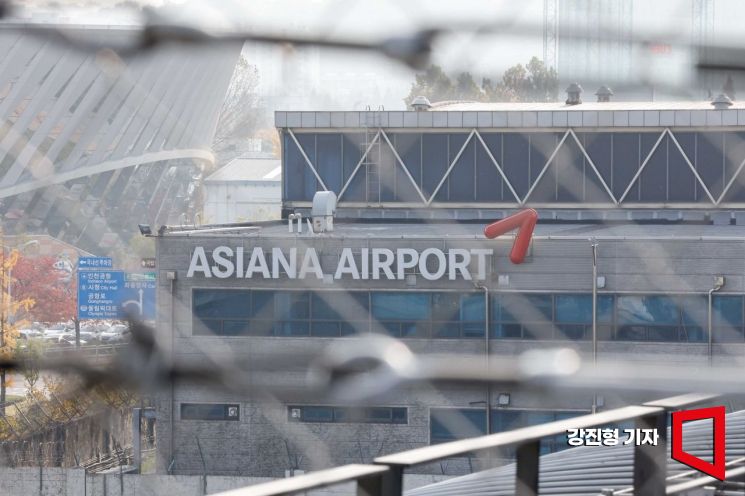
Asiana Airlines recorded its highest-ever first-quarter sales but posted a loss. The company explained that increased costs from aircraft replacement and rising exchange rates had an impact.
Asiana Airlines announced on the 16th that it recorded separate first-quarter sales of 1.633 trillion KRW and an operating loss of 31.2 billion KRW this year. Sales increased by 12.1% compared to the same period last year, achieving the highest first-quarter sales on record, but operating profit turned to a loss during the same period. This is the first quarterly operating loss since the first quarter of 2021, when COVID-19 was at its peak. The net loss for the period was also recorded at 174.4 billion KRW.
Asiana Airlines explained, "Thanks to the recovery in passenger demand, we achieved the highest first-quarter sales ever, but due to increased operating expenses from supply and transportation volume growth, increased aircraft depreciation expenses, foreign exchange losses, and expanded aircraft safety costs, we posted a loss."
In particular, aircraft depreciation expenses, which increased by 28.8% year-on-year to 255.5 billion KRW, are cited as a major cause of the loss. The company stated, "We are in the process of fleet generation replacement" and "We are strengthening fleet competitiveness based on operating profits earned over the past three years."
Outsourced repair costs such as aircraft maintenance were also recorded at 138.3 billion KRW, a 57.4% increase in safety-related costs compared to the same period last year. This is attributed to the approaching maintenance deadlines for newly introduced aircraft and maintenance of aging cargo planes. Foreign exchange losses due to the rise in the KRW-USD exchange rate also reached 126.1 billion KRW.
Meanwhile, first-quarter passenger business sales increased by 26.3% year-on-year to 1.0937 trillion KRW. On the other hand, cargo business sales decreased by 12.4% during the same period to 352.4 billion KRW. This is attributed to increased supply of lower fuselage cargo space as passenger flights expanded in earnest, leading to intensified market competition.
Asiana Airlines plans to expand supply on long-haul routes such as the Americas and Europe and to capture recovering demand from China, while improving performance through operating high-profit charter flights. Additionally, the company has plans to focus on attracting seasonal cargo demand such as e-commerce shipments from China and seasonal fruits like cherries and mangoes by optimizing cargo aircraft supply and operations.
An Asiana Airlines official said, "Gradual recovery of China routes is expected from the second half of this year, which will improve profitability," and added, "We will make every effort to normalize management, including conducting new hires for the first time in five years."
© The Asia Business Daily(www.asiae.co.kr). All rights reserved.
![User Who Sold Erroneously Deposited Bitcoins to Repay Debt and Fund Entertainment... What Did the Supreme Court Decide in 2021? [Legal Issue Check]](https://cwcontent.asiae.co.kr/asiaresize/183/2026020910431234020_1770601391.png)















