Using Trade Act Section 301 to Impose Heavy Tariffs on Chinese Electric Vehicles
25-100% Tariffs on $18 Billion Worth of Chinese Imports
Securing Voter Support... Strategy to Dilute Trump's Image
The tariff war between the United States and China has intensified. The Biden administration has imposed 'bomb tariffs' tantamount to an effective import ban on Chinese electric vehicles and semiconductors, opening the door to a second US-China trade war following the first trade war during the Trump administration. With the November presidential election approaching, President Biden is seen as aiming to secure voter support by protecting domestic industries while trying to gain an advantage over China in strategic industries. There are growing concerns that this move will shake global supply chains, provoke retaliatory measures from China, and trigger shocks in the global trade market and inflation.
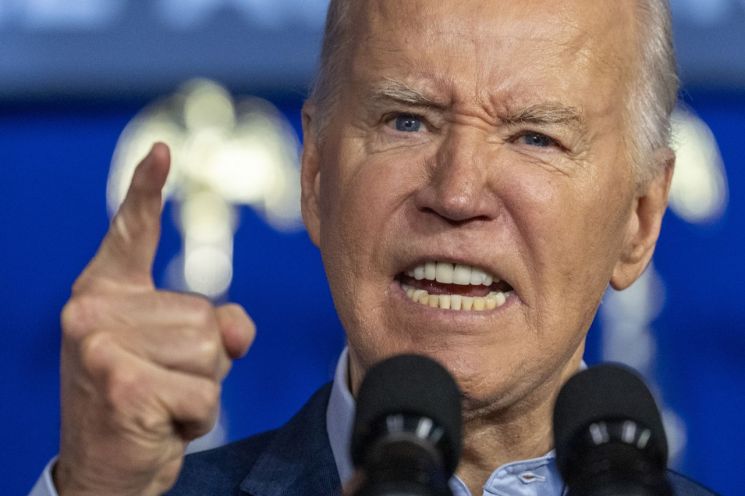
On the 14th (local time), the White House directed the U.S. Trade Representative (USTR) to raise tariffs on key strategic industries under Section 301 of the Trade Act, citing China's unfair trade practices. The Chinese imports affected by this tariff increase amount to $18 billion.
The White House will first raise tariffs on Chinese electric vehicles from the current 25% to 100% starting next year, a fourfold increase. The White House explained, "Due to extensive subsidies and non-market practices, there is a risk of overproduction, with Chinese electric vehicle exports surging 70% from 2022 to 2023," adding, "A 100% tariff rate on Chinese electric vehicles will protect U.S. manufacturers from China's unfair trade practices."
Looking at the main items, tariffs will be raised as follows: ▲Steel and aluminum from 0-7.5% to 25%, ▲Semiconductors from 25% to 50%, ▲Lithium-ion electric vehicle batteries from 7.5% to 25%, ▲Lithium-ion non-electric vehicle batteries from 7.5% to 25%, ▲Battery components from 7.5% to 25%, ▲Solar cells from 25% to 50%, and ▲Marine cranes from 0% to 25%.
Section 301 of the U.S. Trade Act grants the authority to take necessary measures against unfair trade practices that negatively affect U.S. trade and investment. Previously, former President Trump used Section 301 in 2018-2019 to impose high tariffs across a wide range of Chinese products and had promised to impose 60% bomb tariffs on all Chinese products if he won the November election.
President Biden is also strengthening a hawkish stance on trade with China as the election approaches, based on the perception that a tough approach resonates with American voters. Although initially concerned about inflation and adjusting tariff rates, he has not only maintained but increased them. This strategy is aimed at protecting domestic industries to win voter support. The tariff increase on steel and aluminum is widely interpreted as an effort to secure votes from steelworkers in swing states like Pennsylvania.
The Biden administration states that this tariff increase is limited to specific industries. Unlike former President Trump, who announced tariffs on all Chinese products, the U.S. has selectively raised tariffs on industries receiving subsidies to strengthen domestic capabilities.
The Wall Street Journal (WSJ) reported, "The leaders of both parties (President Biden and former President Trump) are competing to erect strong barriers against China in trade," adding, "What was once former President Trump's solo effort to break bipartisan consensus on free trade has now become a consensus."
AP News noted, "This move ahead of the election is likely to increase friction between the world's two largest economies," and "Both President Biden and former President Trump are competing to show who can take tougher measures against China."
There are also concerns that the Biden administration's tariff increase could provoke Chinese trade retaliation, placing burdens on inflation and economic growth.
Eswar Prasad, a senior fellow at the Brookings Institution, said, "These tariffs represent the peak of industrial policy clashes between the two countries and the peak of the upcoming U.S. election season," expressing concern that "President Biden's tariff increase raises the risk of Chinese retaliation, which could ultimately burden the U.S. economy."
Myron Brilliant, former vice president of the U.S. Chamber of Commerce, warned, "The broad use of tariffs can lead to higher costs for consumers," and cautioned, "President Biden should not try to outdo former President Trump in trade and tariffs."
© The Asia Business Daily(www.asiae.co.kr). All rights reserved.

![Clutching a Stolen Dior Bag, Saying "I Hate Being Poor but Real"... The Grotesque Con of a "Human Knockoff" [Slate]](https://cwcontent.asiae.co.kr/asiaresize/183/2026021902243444107_1771435474.jpg)















