Ophthalmology Annual Salary 610 Million KRW · Orthopedics 470 Million KRW
"High Salaries Due to Supply Shortage" Analysis
The average annual salary of doctors has surpassed 300 million KRW. Over the six years since 2016, the average annual salary growth rate was 6.4%, far exceeding that of general office workers.
The top one and two salaries among private practitioners were held by ophthalmology and orthopedics, which have many non-reimbursable treatments such as LASIK surgery and manual therapy. The government pointed out that the shortage of doctors has created this high-salary structure.
 Last month, when residents opposed to the government's plan to increase medical school admissions left the hospital, medical staff were moving at a university hospital in Seoul.
 [Photo by Yonhap News]
According to the 'Doctor Workforce Wage Trends' data submitted by the government to the Seoul High Court on the 10th, as of 2022, the average annual salary of 92,570 doctors working in medical institutions ranging from tertiary general hospitals to clinics was 301 million KRW. This represents about a 45% increase over six years from 208 million KRW in 2016. Residents in training (with salaries of 60 to 70 million KRW) were excluded from the statistics.
This data, analyzed by the National Health Insurance Service up to 2022, is the most recent official government compilation since the 2020 Health and Medical Survey data.
Compared to the average monthly wage of all Korean workers, which increased by 24% from 2.833 million KRW in 2016 to 3.526 million KRW in 2022, the doctors’ salary growth rate is nearly twice as fast.
The wage increase among doctors was led by private practitioners. The annual salary of doctors at tertiary general hospitals, who handle severe and emergency medical care, rose from 158 million KRW in 2016 to 201 million KRW in 2022, an average annual increase of only 4.1%.
During the same period, clinics, mostly staffed by private practitioners, saw salaries rise from 214 million KRW to 345 million KRW, an average annual increase of 8.3%. Particularly, hospital-level doctors’ income increased from 286 million KRW to 394 million KRW, approaching an annual salary of 400 million KRW.
Ophthalmology Earns the Most... Followed by Orthopedics and Otorhinolaryngology
By specialty, among private practitioners, ophthalmology earned the most with 615 million KRW. Orthopedics (471 million KRW) and otorhinolaryngology (413 million KRW) followed. Ophthalmology, which has many non-reimbursable treatments such as LASIK and LASEK surgeries, overwhelmingly ranked first. Orthopedics and anesthesiology, which frequently perform non-reimbursable procedures like manual therapy and extracorporeal shock wave therapy, also formed the leading group.
Otorhinolaryngology’s average salary doubled from 210 million KRW in 2021 to 413 million KRW in one year, likely due to temporary factors such as increased demand for diagnostic tests during the COVID-19 pandemic. Similarly, pediatricians’ average income sharply increased from 162 million KRW in 2021 to 291 million KRW in 2022, also attributed to the same reasons.
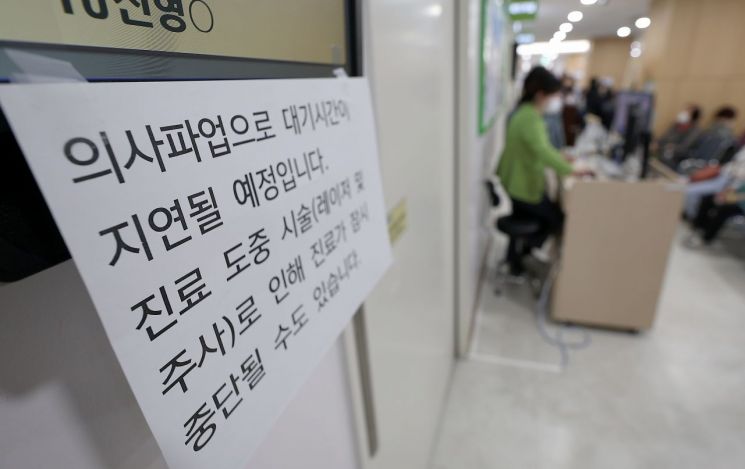
The Ministry of Health and Welfare stated in the data, “Even if 10,000 doctors are added by 2035, the number of doctors per 1,000 people will increase only slightly from 2.1 to 2.3, which is still insufficient compared to the OECD average of 3.7,” and analyzed that “the scale of 2,000 additional doctors cannot be considered large given our reality of doctor shortages and the growing medical service gaps in the future.”
According to the Ministry, major advanced countries overseas have significantly increased medical school quotas over the past 20 years. The UK expanded its medical school quota from 5,700 in 2000 to 11,000 in 2021, an increase of 5,300 (93%). France increased from 3,850 in 2000 to 10,000 in 2020, a 160% rise, and the US increased from 18,000 in 2000 to 28,000 in 2021, a 57% increase.
Meanwhile, on the 10th, the government submitted 47 documents and 2 separate reference materials to the Seoul High Court. This was in response to the court’s request during the appeal hearing for the suspension of enforcement related to medical school quota increases. The government and court had planned to disclose the materials after the ruling, but Lee Byung-chul, the legal representative of the medical community, disclosed the materials the day before.
© The Asia Business Daily(www.asiae.co.kr). All rights reserved.