62% of All Households Are Single-Person Households
High Rate Increases Risk of Solitary Deaths
Public-Private Cooperation Including 'Gwanak-Type Solitary Death Prevention Project'
'Social Reintegration Support Specialized Project' Launches This Month
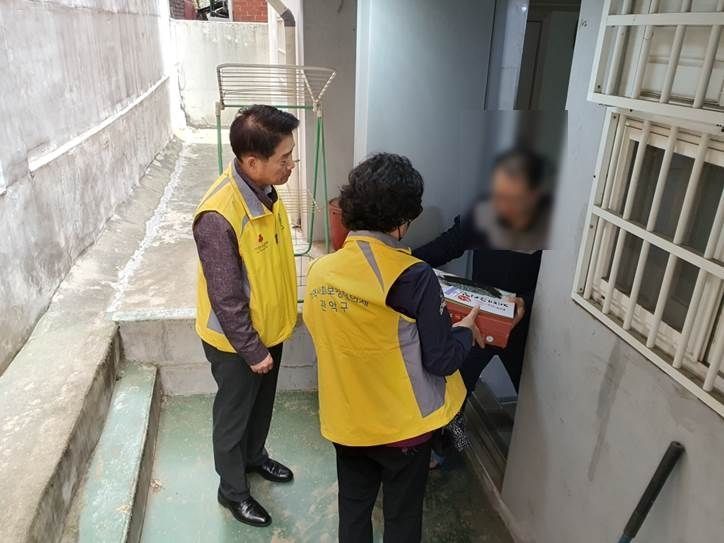 Residents of Gwanak-gu are participating in the Our Neighborhood Shareholder Day activities. (Photo by Gwanak-gu Office)
Gwanak-gu, Seoul (Mayor Park Jun-hee) announced on the 9th that it is promoting various public-private partnership projects, including the ‘Gwanak-style Solitary Death Prevention Project,’ to prevent solitary deaths and identify households in crisis. The proportion of single-person households in Gwanak-gu reaches 62% of all households. This is the highest rate among local governments nationwide, indicating a high possibility of isolation and solitary deaths.
Accordingly, the district formed the ‘Gwanak-gu Solitary Death Prevention Council’ last August, consisting of Gwanak Police Station, Gwanak Fire Station, social welfare centers, the Gwanak Branch of the Korea Association of Realtors, and managers of rental apartments, aiming to create a safe welfare community together with residents.
Gwanak-gu has discussed the ‘Gwanak-style Solitary Death Prevention Project’ with the prevention council and, as a result, was selected for the Seoul Welfare Foundation pilot project. It signed an agreement with the Seoul Welfare Foundation and Sillim Comprehensive Social Welfare Center and started a ‘Specialized Project to Support the Social Reintegration of Isolated and Reclusive Households’ from this month.
The district enacted the ‘Ordinance on the Activation of Crisis Household Discovery in Gwanak-gu, Seoul’ and newly introduced the ‘Reward Program for Reporting Crisis Households’ this year. ‘Reporting crisis households’ involves residents identifying neighbors facing difficulties due to unemployment, business closure, or illness and informing public institutions so that the individuals can receive necessary social welfare services. Any resident who discovers a crisis household can participate.
The ‘Resident Caring Day, Our Neighborhood Jujudei’ also continues. The district designates the 25th of every month, when neighborhood association meetings are held, as ‘Jujudei.’ Together with neighborhood leaders who know the area best, they patrol every corner of the neighborhood to check on residents who may need help. In addition to regular activity days, they conduct patrols during heatwaves, cold waves, heavy rains, holidays, and extended breaks.
Neighborhood leaders focus on households with accumulated mail, delivered beverages, or newspapers in front of their doors or mailboxes. If a household is suspected to be in crisis, they promptly report it to the welfare officer at the local community service center. Upon receiving a report, the welfare officer immediately conducts an on-site investigation, assesses the household’s welfare needs, and connects them to one-on-one customized welfare services.
Additionally, the district operates public-private partnership programs such as the ‘Shintongbangtong Welfare Platform,’ which discovers crisis households in collaboration with the Gwanak Branch of the Korea Association of Realtors; the ‘Our Neighborhood Care Team,’ a dedicated group of residents checking on high-risk welfare recipients; and dementia-safe stores run together with local residents.
Meanwhile, the district is also conducting educational welfare activities through public-private cooperation. The ‘Todak Todak Village School,’ which supports the holistic growth of children and adolescents, discovers various local educational stakeholders and excellent educational content to provide high-quality after-school programs. When selected as village education content, residents directly design excellent educational content and conduct after-school classes on climate and ecological environment, literature, arts and physical education, psychological and emotional support, and career exploration in unused spaces within and around schools, helping children enjoy a rich educational environment.
Furthermore, the district is promoting academic cooperation projects with Seoul National University within the area. These include ‘SAM (SNU Active Mentoring) Mentoring,’ where Seoul National University students mentor local youth in learning and career counseling; ‘Gwanak Citizens’ University,’ which offers lifelong learning opportunities to local residents; and the ‘Gwanak Creative Arts Gifted Education Center,’ which discovers talented art prodigies and provides systematic art education. The district is striving to provide educational opportunities to residents in various ways.
Mayor Park Jun-hee said, “Together with residents, we will continue to communicate tirelessly until the day when all 500,000 Gwanak-gu citizens live happily, paying attention to our neighbors around us.”
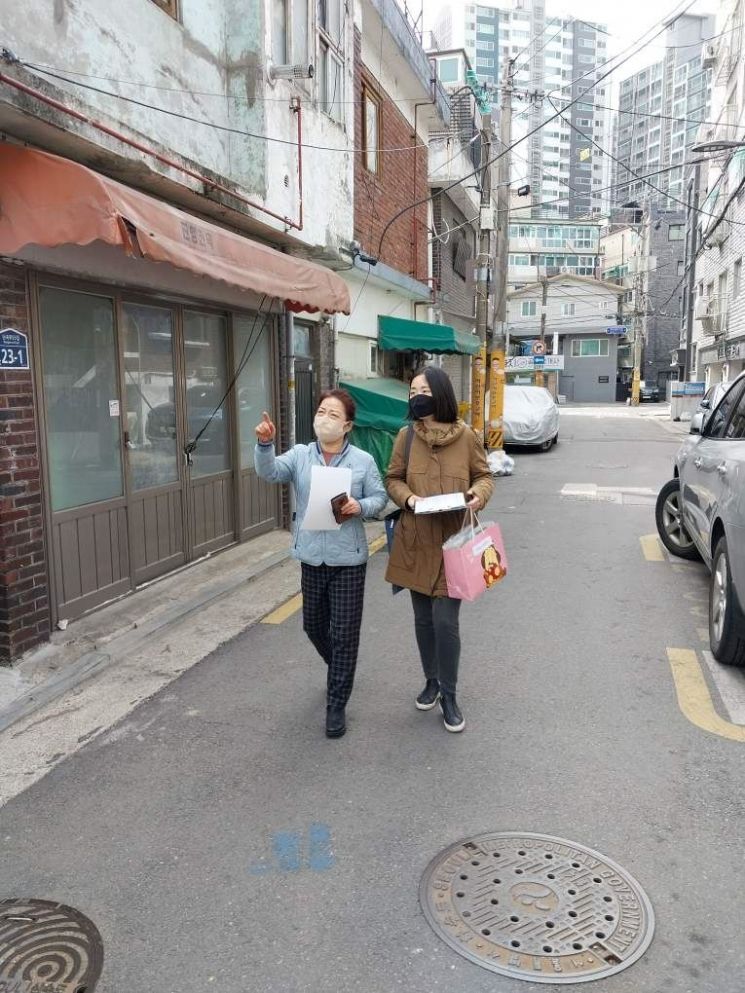 A certified real estate agent and a welfare officer from the community service center are working to identify vulnerable households. (Photo by Gwanak-gu Office)
© The Asia Business Daily(www.asiae.co.kr). All rights reserved.
![Clutching a Stolen Dior Bag, Saying "I Hate Being Poor but Real"... The Grotesque Con of a "Human Knockoff" [Slate]](https://cwcontent.asiae.co.kr/asiaresize/183/2026021902243444107_1771435474.jpg)

















