Ministry of Health, Labour and Welfare Research Team Estimates
12.9% in 2025 → 17.7% in 2060 'Sharp Increase'
Considering Pre-Dementia Stages, Scale Grows Larger
A projection has emerged that by 2030, one in seven elderly people aged 65 and over in Japan will be dementia patients. As the aging population rapidly progresses, it is estimated that by 2060, about 18% of those aged 65 and over will suffer from dementia, prompting the Japanese government to begin taking measures.
On the 8th, a research team from Japan's Ministry of Health, Labour and Welfare conducted dementia diagnoses on elderly people aged 65 and over in four local governments nationwide, estimating the future scale of elderly dementia patients across Japan, according to reports by NHK and Nihon Keizai Shimbun. According to the research results, the number of elderly dementia patients in Japan in 2030 is expected to reach 5.23 million, an increase of 800,000 compared to 2022. This accounts for 14% of the elderly population aged 65 and over.
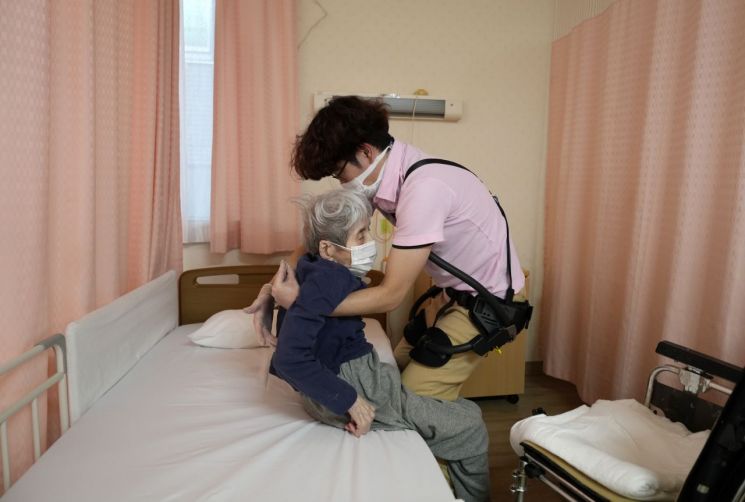
The research team predicted that this number will steadily increase to 5.87 million in 2050 and 6.45 million in 2060. Dementia patients are expected to rise from 4.71 million in 2025, which is 12.9% of the elderly population, to 6.45 million in 2060, which is 17.7%, an increase of 4.8 percentage points (1.74 million people) over 35 years.
By age group, the rate was only 1.1% for those aged 65-69, but increased to 7.1% for those aged 75-79, and reached 50.3% for those aged 90 and above, showing a higher proportion of dementia patients with advancing age. Additionally, among dementia patients aged 90 and above, 55.1% were female and 36.6% were male, with females outnumbering males. For those aged 85-89, females also had a higher rate at 37.2% compared to males at 25.2%.
The number of patients with mild cognitive impairment (MCI), which appears in the pre-dementia stage, is also estimated to reach 5.93 million in 2030 and 6.32 million in 2060. Including these, Nihon Keizai reported that the total number of dementia and MCI patients will exceed 11 million in 2030 alone.
Japan already entered a super-aged society in 2006, with over 20% of its population aged 65 and over. Currently, nearly three out of ten people are elderly, and as aging deepens, the number of dementia patients is also increasing. The number of single-person households with dementia patients living alone is also expected to rise, increasing calls for the government and local authorities to find solutions.
In response, based on this projection, the Japanese government plans to decide on the basic plan for policies under the 'Basic Act on Dementia' enacted in January this year at a cabinet meeting this fall.
The Basic Act on Dementia includes provisions to establish the Dementia Policy Promotion Headquarters, headed by the Prime Minister, to formulate a basic plan so that dementia patients can live with dignity and hope. It also aims to develop policies for the maintenance of medical institutions to ensure appropriate medical support regardless of region, and to support the development and distribution of products that are easy for dementia patients to use.
© The Asia Business Daily(www.asiae.co.kr). All rights reserved.
![User Who Sold Erroneously Deposited Bitcoins to Repay Debt and Fund Entertainment... What Did the Supreme Court Decide in 2021? [Legal Issue Check]](https://cwcontent.asiae.co.kr/asiaresize/183/2026020910431234020_1770601391.png)
















