Acquittal in 1st Trial → Conviction in 2nd Trial → Acquittal in 3rd Trial Ruling
The Supreme Court overturned the second trial ruling that sentenced classmates listed as accomplices in a suicide note?written by a middle school classmate confessing to a group sexual assault 15 years ago?as decisive evidence, and sent the case back to the Seoul High Court.
The Supreme Court ruled that the suicide note, as expert evidence, could not be recognized as credible evidence because it was difficult to consider that it was written in a 'particularly credible state' (teuksin sangtae).
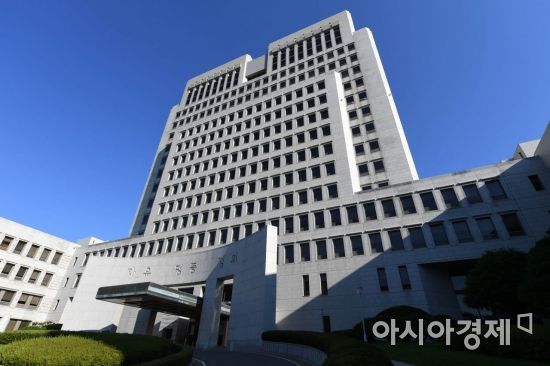
According to the legal community on the 7th, the Supreme Court's Third Division (Presiding Justice Lee Heung-gu) overturned the original ruling that sentenced three men indicted for special rape under the Sexual Violence Punishment Act to 2 years and 6 months in prison each and ordered them to complete 40 hours of sexual violence treatment programs, and remanded the case to the Seoul High Court.
The court stated the reason for overturning and remanding: "The original court's judgment, which recognized the evidentiary value of the suicide note in this case and used it as the main evidence to find the accused guilty, misapplied the law regarding the 'particularly credible state' under Article 314 of the Criminal Procedure Act, which affected the judgment."
Mr. A died in March 2021 after leaving a suicide note in an apartment in Yangcheon-gu, Seoul. The note contained an apology saying "I am very sorry" and a confession of having intoxicated and gang-raped a middle school junior victim in 2006 along with three friends.
The note described how they called the victim, who had dated one of the three friends for about a month before breaking up, under the pretext of helping her get back together with that friend, made her drink two bottles of soju, and then committed a sexual crime against the unconscious victim together. The note also included reflections on his past mistakes and a wish that "this case will definitely be resolved... and the statute of limitations still remains...".
The police treated Mr. A's death as a suspicious death and began investigating the special rape charges based on the suicide note.
The three individuals named as accomplices in Mr. A's note denied the crime, saying "We don't remember."
However, the victim testified to the investigative agency that she actually returned home intoxicated on the presumed day of the crime and had blood on her underwear, consistent with the contents of Mr. A's note.
The victim visited a gynecology clinic with her mother the day after the presumed crime date and was prescribed contraceptive pills, but it was found that the doctor at the time did not make a clear judgment related to sexual violence.
The prosecution indicted the three men on special rape charges in December 2021.
The first trial court denied the evidentiary value of Mr. A's suicide note and acquitted the three men.
The key issue in the trial was whether Mr. A's suicide note could be used as evidence in a criminal trial. According to the Criminal Procedure Act, when a party related to the case has died and cannot testify directly in court, the evidence such as a written statement left by that person can only be used if it is proven that it was written in a 'particularly credible state.'
The 'particularly credible state' is recognized when there is almost no possibility of falsehood in the content or writing process, and there are specific external circumstances guaranteeing the credibility or voluntariness (spontaneity) of the content.
The court stated, "The suicide note written by the deceased does not meet the requirements of Article 313 Paragraph 1 and Article 314 of the Criminal Procedure Act, so it has no evidentiary value. Nevertheless, this court admitted the evidence and conducted an evidentiary investigation, so through this judgment, a decision to exclude this evidence will be made."
Furthermore, the court said, "Even if the evidentiary value of the suicide note in this case could be recognized, the note is the only evidence consistent with the charges, but as seen above, its core contents conflict with the victim's and other witnesses' testimonies and other objective circumstances. Even according to the victim's testimony, it is unclear whether sexual violence occurred at the time, and no traces of sexual violence were found during the gynecological examination immediately after the incident. Considering these circumstances, it is difficult to believe the suicide note as is, and the note alone is insufficient to recognize the charges, with no other evidence to support it," and acquitted the defendants.
The court based its judgment on several points: ▲ the victim's testimony about the process of being called out matched other witnesses' testimonies but differed from the contents of Mr. A's note; ▲ the gynecologist at the time did not find signs of sexual crime and prescribed emergency contraceptive pills saying, "I'm not sure, but if you are worried, I will prescribe them"; ▲ the doctor did not report the sexual crime to investigative agencies despite the legal obligation; ▲ and Mr. A, who suffered severe depression before death, might have experienced delusions or hallucinations.
On the other hand, the second trial court recognized the evidentiary value and credibility of Mr. A's suicide note, sentenced the three men to 2 years and 6 months imprisonment, and ordered 40 hours of sexual violence treatment programs.
The court cited as grounds: ▲ the testimony of a professional psychological expert (a gynecologist) that in cases where a 14-year-old victim with no sexual experience was raped, it might be difficult to visually confirm; ▲ the opinion of a professional psychological expert (psychiatrist) that there was no evidence of a pathological mental state such as hallucinations or delusions when writing the note; ▲ that before his death, Mr. A searched keywords closely related to the case such as 'statute of limitations,' 'special rape suspended sentence,' and 'juvenile special rape confession' on the internet, and received paid legal consultations about 'the starting point of the statute of limitations after the revision of the age of majority in civil law,' 'when the statute of limitations resumes for adults if interrupted during minority,' and 'the starting date of the statute of limitations under the Child and Youth Sexual Protection Act or Sexual Violence Punishment Act before and after the revision of the age of majority in civil law'; ▲ and that there was no motive or reason for Mr. A to write the note falsely to falsely accuse the defendants.
However, the Supreme Court's judgment was different. The Supreme Court ruled that the suicide note could not be used as evidence and overturned the original ruling.
The court stated, "The contents of the suicide note cannot be evaluated as sufficiently credible to the extent that it does not require verification through cross-examination in court (a procedure where the defendant's side questions witnesses)."
Additionally, the court noted that Mr. A had never mentioned the case to anyone for 15 years, including the friend with whom he drank the day before his death, and that the note might have been written to criminally punish the three defendants, so it cannot be assumed that only the truth was recorded.
The court pointed out, "The motive for writing the suicide note is unclear, and the investigative agencies have not detailed the circumstances or specific meaning of its creation. Moreover, it was written more than 14 years after the incident, its main contents are not specific or detailed, and it is not sufficiently supported by other evidence."
It added, "Some parts clearly contradict the victim's testimony and others. If cross-examination of the deceased had been possible, specific and detailed statements would have emerged, revealing possible memory errors, exaggerations, distortions, or false statements."
Since the evidentiary value of Mr. A's suicide note, which was virtually the only evidence for conviction, was denied by the Supreme Court, it is highly likely that the three men will be acquitted in the retrial.
© The Asia Business Daily(www.asiae.co.kr). All rights reserved.
![Clutching a Stolen Dior Bag, Saying "I Hate Being Poor but Real"... The Grotesque Con of a "Human Knockoff" [Slate]](https://cwcontent.asiae.co.kr/asiaresize/183/2026021902243444107_1771435474.jpg)
















