"Peaked in Mid-April... Decline Begins as Harvest of Cultivated Volume Starts"
Green Onion Stable with Open-Field Harvest in Late May, Radish in Mid-June
Government to Implement Tariff Quotas on Some Items Including Carrots and Cabbage
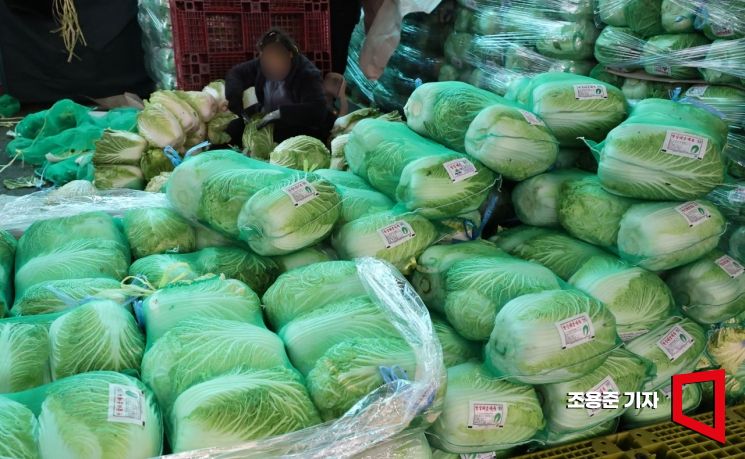
Prices of vegetables such as baechu (Korean cabbage) and yangbaechu (cabbage) have generally been declining. The government expects that green onions and radishes, which are still showing strong prices, will stabilize in late May and mid-June when open-field cultivation volumes are shipped.
The Ministry of Agriculture, Food and Rural Affairs announced on the 7th that wholesale prices of vegetables such as baechu, yangbaechu, carrots, and green onions, which had surged due to poor winter crop conditions, peaked in mid-April and have shifted to a downward trend as the harvest of facility-grown crops began.
According to the ministry, the cultivation period (from sowing to harvest) for baechu, yangbaechu, radish, and carrots is about 3 to 4 months. These vegetables are produced only in Jeju and Jeonnam during winter and in Gangwon and northern Gyeongbuk during summer, making open-field harvesting difficult in early spring. Therefore, winter storage stocks and facility-grown harvests supply the market. The area of facility cultivation, which incurs high production costs, is influenced by the winter vegetable prices and production volumes at the time of transplanting (January to February).
For the 2023 winter crops of baechu, yangbaechu, and carrots, there were concerns about a sharp price drop due to increased cultivation areas. In fact, prices remained low until early January and February this year, leading to an overall decrease in spring facility cultivation areas.
Regarding the recent surge in open-field vegetable prices last month, a ministry official explained, "Frequent snow and rain in February and March this year caused a decrease in production and a rapid decline in quality. Harvesting in production areas ended earlier than usual, extending the demand period for stored products by about 1 to 2 weeks, which reduced the average daily supply. Additionally, the area of facility-grown baechu, yangbaechu, and carrots harvested in early spring decreased, and poor crop conditions due to insufficient sunlight compounded the situation." Accordingly, the government continues to supply stockpiled items such as baechu and radish to the market, with baechu being released in record volumes for spring.
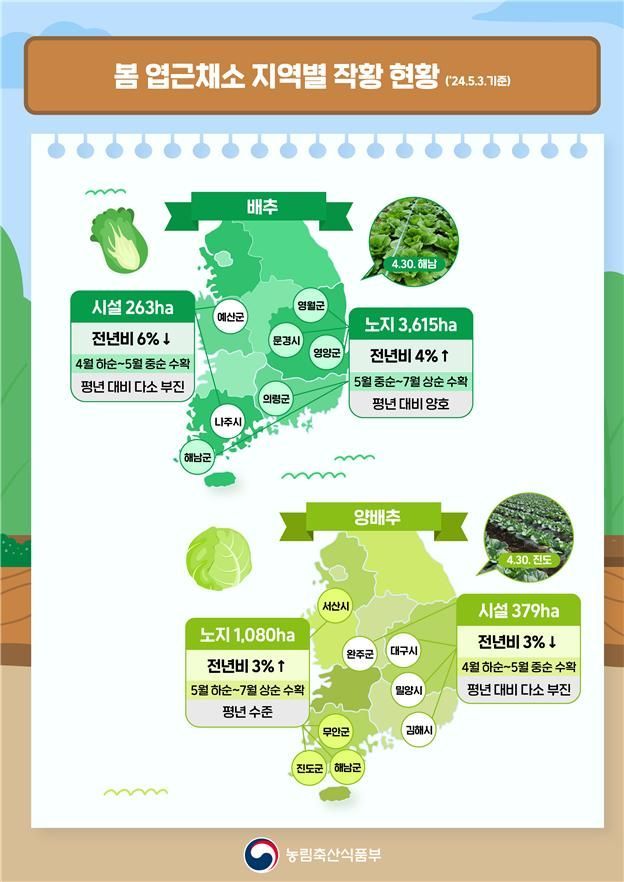
Baechu prices began to decline from late April as facility-grown crops were shipped from Yesan, Chungnam, and Naju, Jeonnam. Prices are down 11.8% compared to the mid-April peak. However, due to high demand from kimchi manufacturers depleting winter baechu stocks and limited facility-grown shipments, prices are expected to remain higher than last year for the time being. The ministry anticipates that once open-field baechu, with a cultivation area about 4% larger than last year, is harvested from late May, prices will quickly stabilize to last year’s levels.
Yangbaechu prices also began to decline from late April as facility-grown crops were shipped from Miryang, Gyeongnam, and Daegu, falling 6.4% from the peak. However, prices are expected to remain higher than last year for some time due to poor crop conditions in certain regions. Once open-field yangbaechu, with a cultivation area about 3% larger than last year, is harvested from June, prices are expected to gradually stabilize to last year’s levels.
Winter radishes were harvested in production areas until late April, similar to average years, and production increased compared to last year, maintaining relatively low prices. However, frequent rain during the harvest period lowered quality, resulting in fewer high-quality stored radishes, and the facility cultivation area decreased compared to last year. Prices are expected to remain high in May but gradually stabilize to average levels after mid-June when open-field radishes are shipped from Gochang, Jeonbuk.
Green onions in Jeonnam finished shipping winter green onions, and spring green onion shipments were delayed due to frequent rain and low temperatures in February and March, leading to prices expected to remain higher than last year for the time being. However, prices are expected to gradually stabilize once spring green onions are actively shipped from Wanju and Buan in Jeonbuk and Pocheon in Gyeonggi from late May.
Park Soon-yeon, Director of Distribution and Consumption Policy, stated, "To quickly stabilize the supply and demand of vegetables such as baechu, radish, and green onions, we will make every effort to manage spring growth. For some items with supply difficulties such as carrots and yangbaechu, we will pursue tariff quotas to reduce the burden on prices. The government plans to proactively secure record-high stockpiles of major open-field vegetables such as baechu and radish in May and June, anticipating supply instability after summer. Additionally, for garlic farmers facing difficulties in securing sales channels due to low prices and poor quality, we will support farm management stability through the Vegetable Price Stabilization Support Project."
© The Asia Business Daily(www.asiae.co.kr). All rights reserved.


















