'Bank of Korea's Policy Response to High Inflation After the Pandemic' Paper
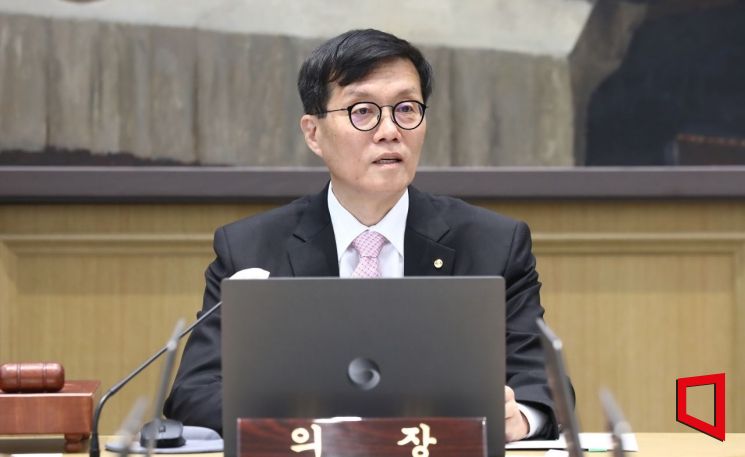
Lee Chang-yong, Governor of the Bank of Korea, stated that the Bank of Korea and the government have contributed to price stability through various policy responses following the COVID-19 pandemic.
According to industry sources on the 6th, Governor Lee recently co-authored a paper titled "The Bank of Korea's Policy Response to High Inflation after the Pandemic" with Park Young-hwan, Head of the Policy Coordination Team at the Monetary Policy Department of the Bank of Korea, published in the Korean Economic Association's academic journal, where he made these claims.
The paper explained that in response to the high inflation following the pandemic, the Bank of Korea implemented various policies such as early interest rate hikes, strengthened price stability measures, responses to exchange rate increases, and measures to address financial instability.
Governor Lee mentioned that through the Bank of Korea's response process, several lessons were learned, including policy coordination between the central bank and the government, differences in labor market conditions, responses to exchange rate increases, and policy responses and institutional improvements for financial stability.
He particularly evaluated that unlike major advanced countries, Korea achieved effective policy coordination between monetary and fiscal policies aimed at price stability, as the government operated fiscal policy conservatively under a sound fiscal framework.
Comparing the fiscal situations of the United States and Korea last year, the paper estimated that while the U.S. fiscal expenditure growth rate was about +6% year-on-year, Korea's was around -6%. Regarding the cyclically adjusted fiscal deficit, the U.S. still had a large deficit of about -8 to -9% of GDP, whereas Korea's was estimated at around -1%.
While the government operated fiscal volume conservatively, it mitigated the domestic energy price transmission effects of international oil prices and exchange rate shocks through micro-level tax support measures. As a result, Korea's consumer price index (CPI) energy price increase rate from 2021 to 2022 was 26.5%, significantly lower than that of the U.S. (51.4%) and the Eurozone (54.5%), the paper emphasized.
Governor Lee explained, "This smooth policy coordination significantly contributed to Korea's inflation rate having a lower peak than major countries and peaking out relatively earlier."
Smaller Decline in Labor Supply Also Contributed to Lower Inflation
He also pointed out that differences in the labor market were among the main reasons Korea's inflation rate was lower compared to major countries. While the U.S. experienced structural factors such as the great resignation and reduced immigration, causing a very slow recovery in labor supply, Korea had relatively less labor supply reduction during the pandemic due to successful quarantine measures. Furthermore, after easing quarantine measures, labor supply quickly recovered as economic activity among the elderly and women increased.
Additionally, during the inflation response process, the Bank of Korea and the government responded more flexibly to exchange rate increases than in the past. This was attributed to the level of foreign exchange reserves exceeding $400 billion and structural changes in the domestic foreign exchange market, which increased the tolerance for exchange rate rises compared to before.
He noted that during periods of rapid interest rate hikes, unexpected financial instability can occur, so it is necessary to operate monetary policy while considering financial stability. At the end of 2022, a local government declared default on real estate project financing (PF), triggering instability in the real estate-related funding market, and the anxiety spread to the commercial paper (CP) and corporate bond markets.
Although the Bank of Korea was continuing monetary tightening to combat inflation, it explained that liquidity support measures were inevitable as a central bank that must pay attention not only to price stability but also to financial stability.
Governor Lee emphasized, "Some opinions suggest that the Bank of Korea's monetary tightening is weaker than that of major advanced countries. While the nominal policy interest rate is lower than in major advanced countries, when considering the real policy interest rate adjusted for inflation, Korea's monetary tightening is by no means weak." He added, "The Bank of Korea raised rates as quickly as possible according to domestic price conditions, and thanks to this monetary tightening, the inflation rate has continued a trend of gradual slowdown."
However, he added, "The pace of slowdown in domestic consumer price inflation is likely to be more gradual than initially expected, and uncertainty in the inflation outlook has greatly increased. Unlike in 2022, policy interest rates are now at a restrictive level, and there are significant trade-offs among policy variables. Therefore, it is a challenging task to operate monetary policy delicately while carefully considering these factors."
© The Asia Business Daily(www.asiae.co.kr). All rights reserved.

















