Clear Sales Decline After Price Increase
US Grocery Budget Hits Highest in 30 Years
Major U.S. food and beverage brands such as Starbucks and McDonald's are experiencing difficulties due to declining sales following consecutive price hikes. Analysts suggest that consumers, feeling the limits of their grocery spending, are tightening their wallets.
On the 5th (local time), The Wall Street Journal (WSJ) reported that food companies that raised prices expecting consumer loyalty to remain unchanged after the COVID-19 pandemic are being shunned.
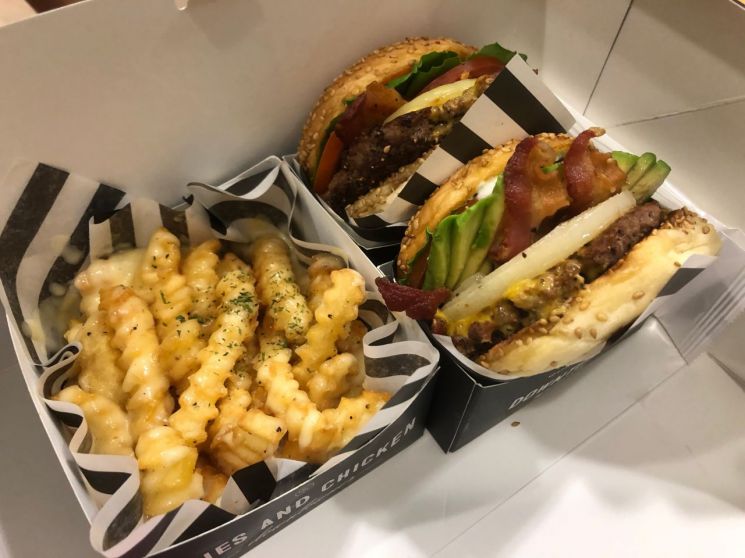
According to market research firm Revenue Management Solutions, the number of fast food customers in the U.S. decreased by 3.5% in the first quarter (January to March) compared to the previous year, and this decline was directly reflected in corporate earnings.
In March this year, McDonald's first-quarter earnings per share were $2.70, lower than the market expectation of $2.72, despite prices being 33% higher than in 2019. McDonald's management warned that spending restraint is particularly evident among low-income groups, and the recent decline in consumption is surprisingly significant.
American consumers struggling with inflation are reportedly feeling a heavy price burden on everyday food and beverages. Dennis Montenaro (75), who lives in Laguna Niguel, California, was shocked when he ordered a bacon egg bagel and coffee at McDonald's recently and saw a receipt totaling $9.67 (about 13,000 KRW). He vowed, "Fast food is over for me now."
David Michael (58), a lawyer living in Eldorado Hills, California, has stopped going to McDonald's for months after seeing the price of soda rise from $1 to $1.69, despite having visited almost weekly.
He also quit Starbucks after the price of a tall-sized caf? mocha rose to $5.25. Michael said, "Honestly, it's not unbearable, but the fact that it's nearly doubled compared to before is unacceptable."
Starbucks announced on the 30th of last month that the number of visitors to its U.S. stores dropped sharply by 7% in the first quarter. Same-store sales shrank by 4% compared to the previous year.
The WSJ pointed out, "Interestingly, while consumers who felt burdened by dining out prices used to seek alternatives mainly at supermarkets, now some major grocery retailers are also experiencing sales declines."
For example, Kraft Heinz reported a 1.2% decrease in sales in the first quarter of this year, Kellogg's (maker of Pringles) saw North American sales drop by 5%, and Dirk Van de Put, CEO of Mondel?z, famous for Oreo, stated, "We have crossed a certain price point, and it is having a significant impact."
According to the U.S. Department of Labor, grocery prices have risen 26% over the past three years. Currently, groceries account for the highest proportion of U.S. household budgets in 30 years. There is also research showing that Americans are visiting more grocery stores to find even slightly cheaper products. According to market research firm Numerator, U.S. consumers purchased groceries from an average of 20.7 retail stores from March last year to February this year, a significant increase from 16.8 stores four years ago.
In response to changing consumer attitudes, companies are shifting strategies to offer discounts even at the cost of their margins. McDonald's and Starbucks have started more promotions, and Mondel?z plans to introduce products with reduced quantity and lower prices alongside discounts.
© The Asia Business Daily(www.asiae.co.kr). All rights reserved.
!["The Woman Who Threw Herself into the Water Clutching a Stolen Dior Bag"...A Grotesque Success Story That Shakes the Korean Psyche [Slate]](https://cwcontent.asiae.co.kr/asiaresize/183/2026021902243444107_1771435474.jpg)
















