Adoption of Proposal Urging Normalization of Medical Field and Medical Reform
The Changwon Special City Council in Gyeongnam unanimously adopted a “Resolution Urging the Normalization of Medical Sites and Medical Reform” demanding the cessation of the medical strike sparked by the government’s policy to increase the number of medical school students.
At the first plenary session of the 133rd meeting on the afternoon of the 3rd, Park Seung-yeop, a city council member from the People Power Party who led the proposal of the resolution, stated, “The shortage of medical personnel and the concentration of non-essential medical staff in non-reimbursable and cosmetic fields have put the local public healthcare ecosystem on the brink of collapse.”
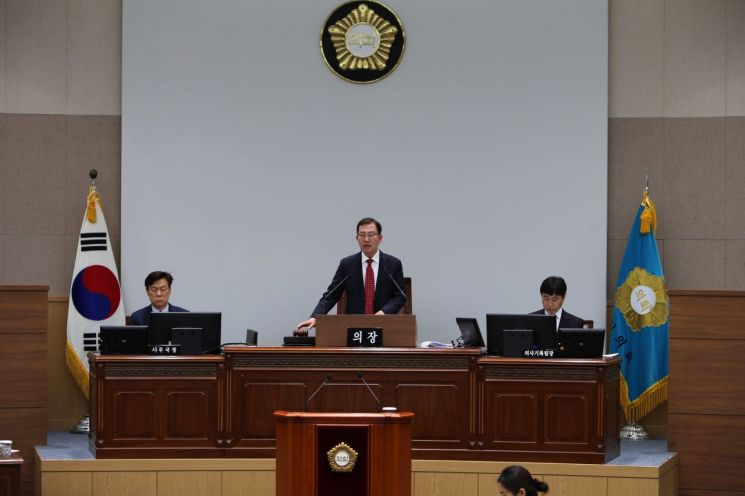 Kim I-geun, Chairman of Changwon City Council, is striking the gavel to announce the adoption of the proposal.
 [Photo by Lee Se-ryeong]
He pointed out, “Last year, Sangcheong Medical Center in Gyeongnam offered an annual salary of over 300 million won to recruit an internal medicine specialist, but no one applied. Among the 226 basic local governments in Korea, 98, or 40%, are emergency medical vulnerable areas, and in Gyeongnam Province, there is not a single emergency medicine specialist in 10 out of 18 cities and counties.”
“The phenomenon of pediatric open runs, where parents wait from 5 a.m. to make hospital appointments, is very difficult but a familiar reality for young parents raising children,” he said, adding, “Medical reform is an urgent task that can no longer be postponed to save regional and essential medical care.”
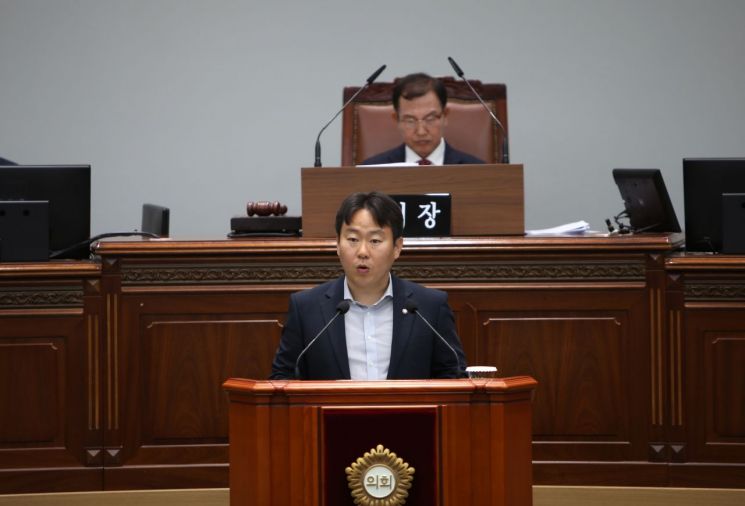 Park Seung-yeop, a member of the Changwon City Council in Gyeongnam from the People Power Party, is leading the proposal for the "Resolution to Normalize Medical Sites and Urge Medical Reform."
 [Photo by Lee Se-ryeong]
He also said, “The Korean Medical Association is forcing the medical strike by holding citizens’ health security hostage, creating a sense of crisis in medical sites.”
“Patients are trembling with anxiety due to refusal of emergency treatment, postponement or cancellation of surgeries, forced discharges, and inability to undergo examinations caused by the medical strike,” he said, urging, “Stop actions that threaten citizen safety for the stable regional and essential medical care and normalization of medical sites.”
The resolution includes demands for ▲expansion of medical personnel to stabilize regional and essential medical care ▲strengthening regional medical care through securing excellent personnel, increasing investment, and minimizing outflow to the metropolitan area ▲restructuring fair payment and compensation systems friendly to essential medical care ▲establishing management systems for non-reimbursable and cosmetic medical care to resolve imbalances between essential and non-essential medical care through fair compensation.
It also includes ▲creating a stable treatment environment through the introduction of a special medical accident law based on communication and compensation for victims ▲withdrawal of the medical strike ▲and active dialogue between the government and the Korean Medical Association for medical normalization.
The resolution adopted by the city council is scheduled to be sent to the President, the Speaker of the National Assembly, the Minister of Health and Welfare, the Korean Medical Association, and others.
© The Asia Business Daily(www.asiae.co.kr). All rights reserved.


















