'Regional Emergency Medical Center', Designated by the Ministry of Health and Welfare as the Top Institution under the Emergency Medical Service Act
Serving as a Hub Hospital for Severe Emergency Patient Care and Disaster Medical Preparedness
Busan City has officially designated Inje University Haeundae Paik Hospital as a Regional Emergency Medical Center.
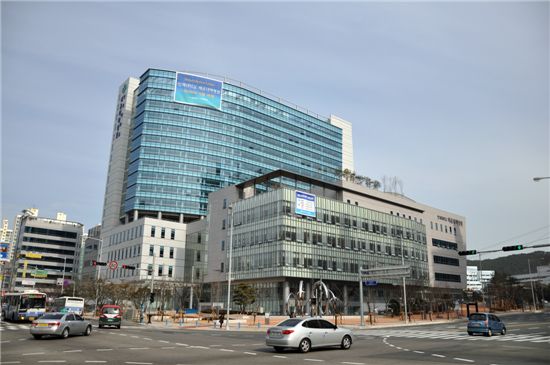 Haeundae Paik Hospital.
The city has been continuously seeking solutions together with the local medical community to restore the appropriate level of the Regional Emergency Medical Center. As a result, in May of last year, Inje University Haeundae Paik Hospital was selected in the Ministry of Health and Welfare's additional public recruitment for Regional Emergency Medical Centers.
Subsequently, after expanding facilities, equipment, and personnel that did not meet the legal standards during the first on-site evaluation, the hospital underwent an additional on-site evaluation (April 2024) and received final designation from the Ministry of Health and Welfare on April 30. With this, the city has secured two Regional Emergency Medical Centers.
The two Regional Emergency Medical Centers are Dong-A University Hospital and Inje University Haeundae Paik Hospital.
Severe emergency patients can now receive surgery in the emergency-dedicated operating room at Inje University Haeundae Paik Hospital, and receive treatment in the emergency-dedicated intensive care unit and emergency-dedicated wards, enabling systematic medical services.
Inje University Haeundae Paik Hospital invested 3.4 billion KRW to renovate facilities within the emergency room and established an emergency-dedicated operating room, emergency-dedicated inpatient rooms, and emergency-dedicated intensive care units to ensure systematic treatment even in emergency situations.
Additionally, the hospital secured equipment such as mobile myocardial enzyme analyzers and core body temperature measuring devices, and prioritized the use of devices like intracranial pressure monitors and extracorporeal membrane oxygenation (ECMO) for emergency patients. Approximately 100 personnel, including doctors, nurses, and emergency medical information managers, were reinforced to provide 24-hour emergency care.
In particular, by expanding the pediatric emergency treatment area and securing dedicated pediatric emergency specialists and nurses focusing on pediatric emergency patients, 24-hour pediatric emergency care has become possible, which is expected to contribute to strengthening essential medical services.
Furthermore, to prepare for mass casualty incidents due to disasters, a Regional Disaster Medical Assistance Team (DMAT) has been formed and operated, fulfilling the role of a disaster base hospital in the East Busan area for disaster medical response.
The Regional Disaster Medical Assistance Team (DMAT) consists of three teams, each composed of one doctor, two nurses or emergency medical technicians, and one administrative staff member, and is operated so that up to two teams can be dispatched simultaneously.
In the event of a disaster, the teams are dispatched to the scene to assess the scale of casualties, determine treatment priorities based on triage, and perform medical activities within the on-site emergency medical post, including treating the injured.
Lee Sora, Director of the City’s Citizen Health Bureau, stated, “The additional designation of Inje University Haeundae Paik Hospital as a Regional Emergency Medical Center will expand the emergency care infrastructure in East Busan, alleviate the regional disparity in emergency medical capacity that was concentrated in West Busan, and play a significant role in improving the overall quality of emergency medical services in Busan City.”
© The Asia Business Daily(www.asiae.co.kr). All rights reserved.
![From Hostess to Organ Seller to High Society... The Grotesque Scam of a "Human Counterfeit" Shaking the Korean Psyche [Slate]](https://cwcontent.asiae.co.kr/asiaresize/183/2026021902243444107_1771435474.jpg)















