'Measures to Prevent Malicious Complaints and Protect Public Officials' Announced
Malicious Complaint Blocking Devices by Complaint Application Method
Improvements from Prevention and Response to Protection of Affected Public Officials
From now on, all civil complaint calls received by administrative agencies will be automatically recorded. In particular, civil complaint officers can forcibly terminate calls if malicious complainants use abusive language, threats, sexual harassment, or other verbal abuse. Officers who suffer damage from malicious complaints may also take up to six days of official sick leave.
The reality is that civil servants cannot strongly respond to malicious complaints simply because they are public officials. The government has decided to take strong measures at the institutional level, including reporting illegal acts.
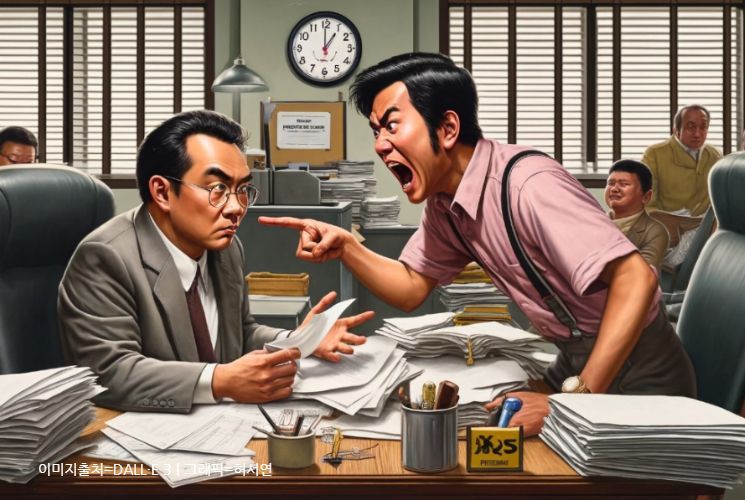
The government announced the "Measures to Prevent Malicious Complaints and Strengthen the Protection of Civil Complaint Officers," defining malicious complaints as illegal acts and obstruction of official duties to protect civil servants from malicious complainants. Earlier, in 2022, the government amended the Civil Complaint Handling Act to specify the protection obligations of agency heads and mandatory protective measures that each agency must implement for civil complaint officers. Accordingly, since 2023, each administrative agency has been implementing protective measures such as installing safety devices like CCTV, emergency bells, and safety partitions in complaint offices, and deploying safety personnel.
However, situations where complainants threaten the safety of civil complaint officers and complaint offices through illegal acts such as verbal abuse and assault, or cause disruptions to the handling of other complainants by filing complaints without justifiable reasons, have repeatedly occurred. In March, a tragic case occurred where a Gimpo-si public official died after suffering from online harassment and a large volume of complaint calls following road repair work.
Therefore, malicious complaints will now be defined as illegal acts and obstruction of official duties by complainants, with the types of malicious complaints further subdivided. For example, illegal acts include verbal abuse, defamation, sexual harassment, assault, property damage, and threats, while obstruction of official duties is classified into repetitive types, time-restrictive types, and unreasonable demands. Blocking measures for malicious complaints will also be established according to the complaint submission method, such as phone, internet, or in-person visits. Until now, civil complaint officers had to listen to complainants’ abusive language or long unrelated statements over the phone. However, going forward, calls can be terminated if complainants use abusive language, threats, sexual harassment, or other verbal abuse, and each agency will set a recommended call duration per call; calls exceeding this time due to unreasonable demands may also be terminated.
If a large number of complaints are submitted in a short time through online complaint channels, intentionally causing significant disruption to work processing, temporary restrictions on system use will be imposed. For in-person visits, a reservation system will be introduced to set a recommended time per visit. To prevent administrative resource waste caused by malicious complaints, the scope of complaints that can be closed will also be expanded. Similar to calls, complaints submitted in writing that contain a significant amount of abusive language, threats, or sexual harassment can be closed.
When malicious complaints occur, agencies will actively respond at the institutional level and promote various support measures for recovery and healing, including counseling for affected officers. Each agency must establish an annual implementation plan for protective measures, and the Ministry of the Interior and Safety will evaluate these through comprehensive civil complaint service assessments. Additionally, personnel benefits and protective devices will be provided to civil complaint officers. Civil complaint officers will receive additional points related to promotion by specifying civil complaint work as a job characteristic-related scoring item, and an additional allowance will be paid according to the difficulty and volume of the complaint work handled.
© The Asia Business Daily(www.asiae.co.kr). All rights reserved.

















