Disclosure of 14 Major Cases in Accounting Review and Audit
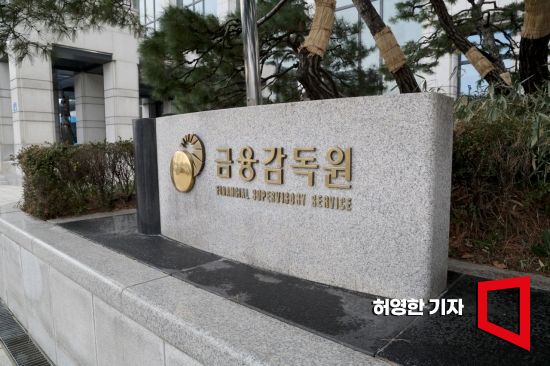
The Financial Supervisory Service (FSS) announced on the 2nd that it has disclosed 14 cases of accounting review and audit findings for 2023.
By type, there were 6 cases related to sales and cost of sales, 4 cases of false recognition of other assets such as derivatives, 2 cases of overstatement of inventory assets, and 2 cases of omitted notes. The number of cases related to investment stocks, which had been steadily occurring until now, recorded zero.
The most frequent type was false recognition of sales and cost of sales. Company A, a semiconductor design and manufacturing firm, recorded operating losses for three consecutive years and faced the risk of being designated as a management item. In response, the company committed illegal acts such as issuing fabricated tax invoices and manipulating financial transactions despite not engaging in used phone distribution business to inflate its operating performance. It recognized false sales and cost of sales and presented these to the auditor.
The FSS stated, "When a company initiates a business unrelated to its core operations just before being designated as a management item, auditors should verify the nature and commencement circumstances of the new business and reflect this in the audit procedures. They must assess whether the transaction is related to the risk of fraud by management and systematically consider the consistency and reliability of the company's claims to reduce audit risk."
Company B, which manufactures and installs double insulation pipes for large construction firms, attempted a new listing on KOSDAQ but failed due to an increase in losses and a decrease in sales. Subsequently, the company arbitrarily inflated the contract amount (contract price) for construction sites expected to incur losses and recognized construction revenue. Eventually, accounts receivable from clients that could not be collected accumulated, and when the auditor raised concerns about the actual existence of these receivables, the company wrote off the entire amount as bad debt (expense) at once.
The FSS emphasized, "Auditors should comprehensively consider financial incentives such as the company's attempt to list on KOSDAQ and recognize the significant risk of misstatement in revenue recognition, planning and performing specific substantive procedures accordingly. When conducting continuous audits, sufficient audit evidence must be obtained to prove the consistency and legitimacy of the company's claims secured in prior periods. In particular, attention should be paid to handling significant errors affecting prior period financial statements, considering the incentive to conceal fabricated accounts accumulated over a long period."
There were also cases of false recognition of derivatives and other assets. For example, Group C devised a plan where D Company (an affiliate) would issue convertible bonds to raise funds needed for C Company's paid-in capital increase, and E Company (a paper company) would secure a loan from a financial institution using these bonds as collateral and acquire them. When the loan amount E Company received from the financial institution as collateral for the convertible bonds was less than the issuance price of the bonds, C Company entered into a false contract to purchase call options and part of the convertible bonds based on the bonds from E Company and provided the shortfall funds to E Company.
The FSS pointed out, "When auditors verify that a company has acquired financial assets such as call options and convertible bonds (CB), they must obtain sufficient audit evidence such as contracts, fair value evaluation details, and payment proofs to confirm the existence and appropriateness of the asset valuation. Especially when important contract details like the exercise price are missing or the basis for valuation is unclear, auditors should perform enhanced audit procedures such as reviewing additional documents or requesting explanations from the company."
The FSS plans to distribute the main review and audit findings to companies and auditors through the Korea Listed Companies Association, KOSDAQ Association, and the Korean Institute of Certified Public Accountants to prevent similar cases and assist investor decision-making.
Meanwhile, the FSS has been disclosing representative audit findings to help companies and auditors apply the Korean International Financial Reporting Standards (K-IFRS). With this additional announcement of 14 cases, a total of 155 cases have been disclosed over 13 years since 2011.
© The Asia Business Daily(www.asiae.co.kr). All rights reserved.
![Clutching a Stolen Dior Bag, Saying "I Hate Being Poor but Real"... The Grotesque Con of a "Human Knockoff" [Slate]](https://cwcontent.asiae.co.kr/asiaresize/183/2026021902243444107_1771435474.jpg)
















