31 Universities Except Cha Medical School Have Completed Submission
Increase Reduced from Initial 2000 to Around 1400
2000 Increase to Apply from '2026 College Admission'
Korean Council for University Education Review Scheduled After Mid-May
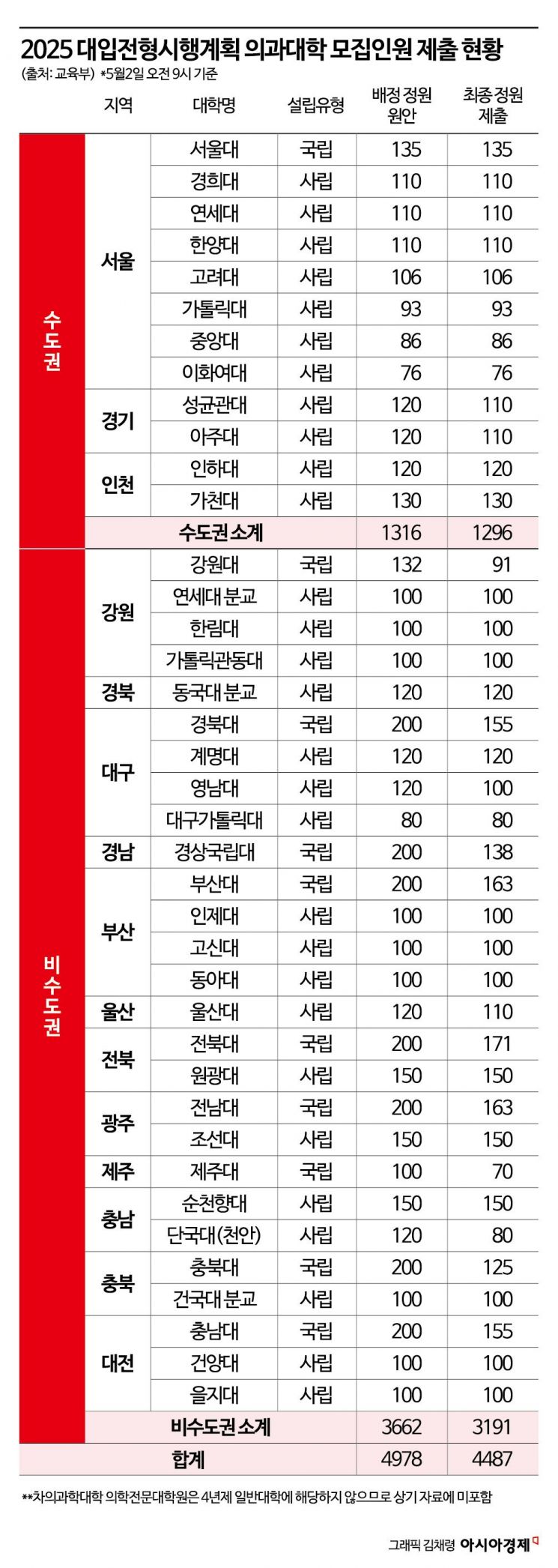
Thirty-one medical schools nationwide, which have increased their enrollment quotas, have submitted their medical school admission numbers for the 2025 academic year. The total increase submitted amounts to 1,469 students, raising the total quota to 4,487. Including Cha Medical School, which has not yet submitted, the final quota is expected to reach approximately 4,567 students.
Increase Scale Reduced... '2,000 Students' Standard for 2026 Academic Year
According to the "2025 Academic Year Medical School Admission Quota Submission Status" announced by the Ministry of Education and the Korea Council for University Education on the 2nd, among the 32 medical schools nationwide that increased their quotas for the 2025 academic year, 31 schools excluding Cha Medical School have decided on their admission numbers for next year and submitted changes to the admission plan to the Council. As Cha Medical School, a graduate medical school, is not obligated to change its admission plan, it is expected to decide on its admission numbers within this month.
At a pre-briefing held at the Government Complex Sejong on the same day, Im Sohee, Director of the Talent Selection System Division at the Ministry of Education, explained, "Depending on Cha Medical School's admission number decision, the final increase in admission numbers may vary between 1,489 and 1,509." Accordingly, the admission numbers for 40 medical schools nationwide are expected to be decided between a minimum of 4,547 and a maximum of 4,567, up from the current 3,058.
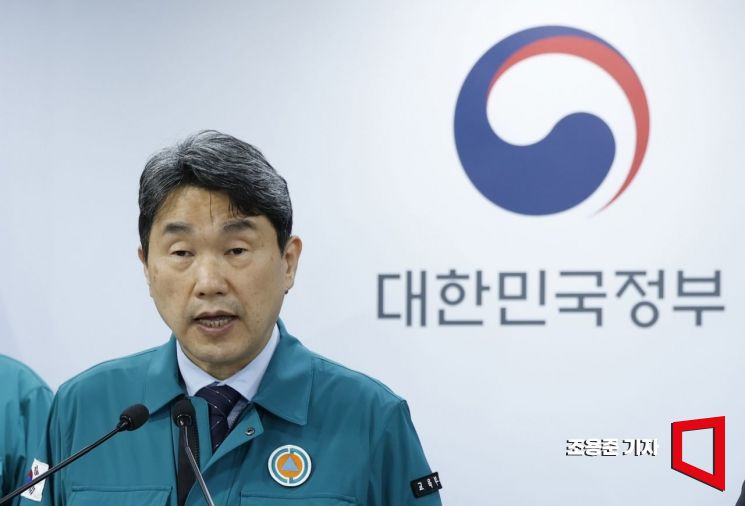 Lee Ju-ho, Deputy Prime Minister for Social Affairs and Minister of Education, is making an announcement on the allocation of 2,000 medical school quotas on the 20th at the Joint Briefing Room of the Government Seoul Office in Jongno-gu, Seoul. Photo by Jo Yong-jun jun21@
The government initially maintained the policy of increasing medical school quotas by 2,000 students, but allowed each university to reduce their allocated increase by up to 50% for the 2025 academic year admissions upon requests from some national universities. The 2026 academic year admission plan, which includes the number of students to be admitted by department, will apply the originally announced 2,000-student increase as planned.
Regarding the scale of the increase, Shim Mincheol, Director of Talent Policy Planning at the Ministry of Education, said, "Universities autonomously chose within 50-100% of the increase," adding, "In the ongoing conflict between the medical community and the government, there were concerns about confusion due to the unsettled 2025 admission numbers that students and parents were curious about, so we accepted the proposal made by the presidents of six universities."
However, the possibility of changes in the increase scale for the 2026 academic year remains open. Director Shim said about the 2026 quota, "So far, it has been allocated based on the 2,000-student increase standard. (Included in the plan) are 1,960 students excluding 40 from Cha Medical School," adding, "The 2026 plan must be officially announced by April 30, so it has been organized." He further stated, "Although this figure (2026 admission plan) is finalized, if the Korean Medical Association presents a reasonable unified proposal, it can be reconsidered."
Non-Capital Region National Universities Submit '50% of Existing Increase'
All nine non-capital region flagship national universities will admit only 50% of their increased quotas. The quotas submitted are: ▲Kangwon National University (increase of 42) ▲Kyungpook National University (45) ▲Gyeongsang National University (62) ▲Pusan National University (38) ▲Chonbuk National University (29) ▲Chonnam National University (38) ▲Jeju National University (30) ▲Chungbuk National University (76 increase) ▲Chungnam National University (45).
On the other hand, most private universities will admit the full increase. Among the 22 private universities that confirmed and submitted their admission numbers this time, only five?Dankook University (Cheonan), Sungkyunkwan University, Ajou University, Yeungnam University, and Ulsan University?decided to reduce their increased quotas. Sungkyunkwan University, Ajou University, and Ulsan University each reflected only 70 out of the existing 80 increased quotas, admitting 110 students each (current quota 40). Yeungnam University reduced its increase from 44 to 24 students, admitting a total of 100 including the existing quota of 76.
The remaining 17 universities, including ▲Inha University (increase of 71) ▲Gachon University (90) ▲Yonsei University branch (7) ▲Hallym University (24) ▲Catholic Kwandong University (51) ▲Dongguk University branch (71) ▲Keimyung University (44) ▲Daegu Catholic University (40) ▲Inje University (7) ▲Kosin University (24) ▲Dong-A University (51) ▲Wonkwang University (57) ▲Chosun University (25) ▲Konkuk University branch (60) ▲Eulji University (60) ▲Konyang University (51) ▲Soonchunhyang University (57), fully reflected their increased quotas in admissions.
By region, the capital region medical schools submitted 1,296 students, down 20 from the previously allocated 1,316, while non-capital regions submitted 3,191 students, down 471 from 3,662.
Legal Roadblocks, 'One Mountain After Another'
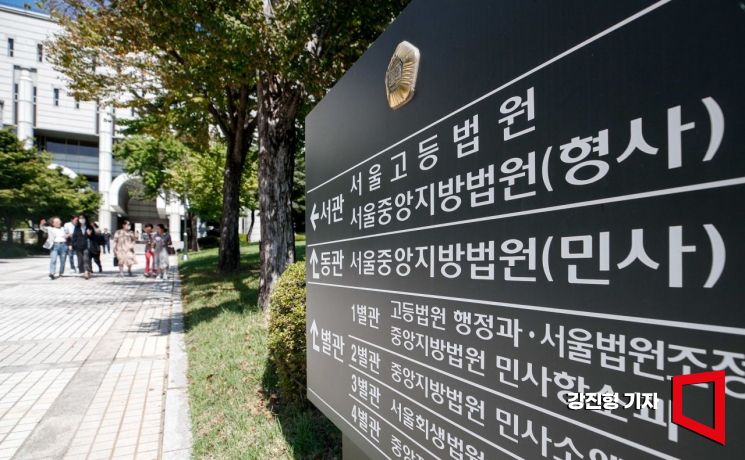
The Council for University Education is scheduled to hold an admission committee meeting by the end of this month to review the changes submitted by each university to the admission plan in principle. Since some universities may submit their revised admission plans by mid-month at the latest, the main review is expected to take place after mid-month.
However, a variable is the court's injunction issued on the government's medical school quota increase policy on the 30th of last month. The Seoul High Court, during the appeal hearing for the suspension of the quota increase, demanded that approval for the increase be withheld until mid-May, stating, "Final approval should not be granted before the court's decision."
Regarding this, Director Shim said, "We will sincerely and thoroughly submit the supporting documents (for the increase) to make it understandable." When asked about the "scenario if the injunction is accepted," he replied, "It depends on how the court decides. In the worst case, the 2,000-student increase will be suspended until the main lawsuit verdict, so the existing admission process must be used, and the admission plan will have to be significantly revised."
He also explained, "Not only universities but also students and parents will experience confusion until the main lawsuit verdict is reached," adding, "Regarding the submission of the allocation committee meeting minutes, we are keeping all possibilities open and reviewing them. We plan to make every effort to present the evidence supporting our claims."
© The Asia Business Daily(www.asiae.co.kr). All rights reserved.



















