Apology from Restaurant over 'Bigae Samgyeopsal' Controversy
Consistent Criticism in Past Reviews
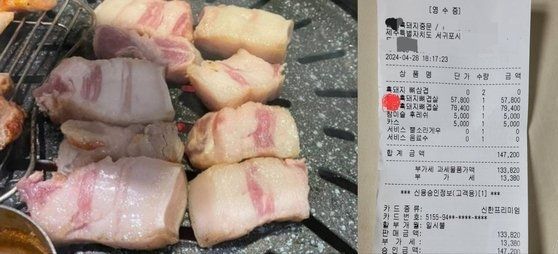
A famous Jeju pork restaurant at the center of controversy for serving pork belly mostly consisting of fat to customers has issued an apology. However, reactions from some netizens, including the victims, remain cold.
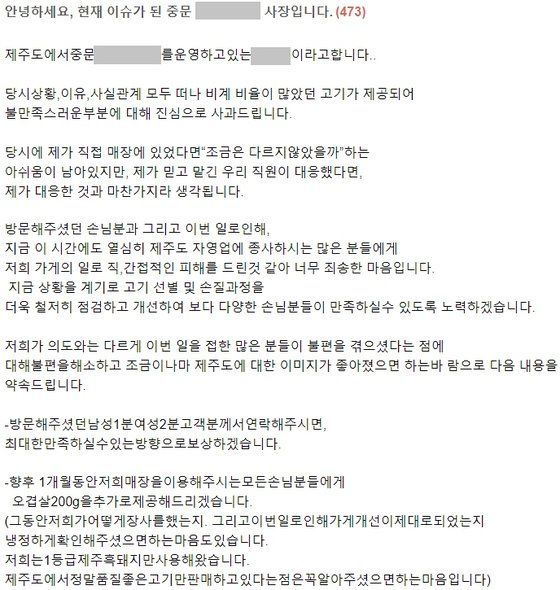
The restaurant owner, Mr. A, posted an apology on an online community on the 30th of last month, stating, "Regardless of the situation, reasons, or facts at the time, I sincerely apologize for the unsatisfactory parts." He added, "I regret that if I had been at the store myself at the time, things might have been somewhat different, but since our trusted staff responded, I believe it is the same as if I had responded myself."
He continued, "I feel very sorry for causing direct and indirect harm to the customers who visited and to many people currently working hard in Jeju's self-employed sector because of our store's issue," and promised, "We will take this situation as an opportunity to more thoroughly inspect and improve the meat selection and trimming process to ensure a wider range of customers can be satisfied."
"If the affected customers who visited contact us, we will compensate them in a way that maximizes their satisfaction," he pledged, adding, "For the next month, we will provide an additional 200g of Ogyeopsal to every customer who visits the store." He also said they would send Jeju black pork meat or products to places in need.
Earlier, on the 29th, Mr. B, who has been living in Jeju for a year, visited a famous Jeju pork belly restaurant and publicized the fact that the pork belly served had a high fat content. Photos posted by Mr. B show that over 98% of the pork belly on the grill was fat. When Mr. B complained to the staff, the employee responded, "This amount of meat is quite a lot," and Mr. B eventually paid about 150,000 KRW before leaving the store.
Customer Mr. B stated that he does not need compensation despite the owner's apology. He said, "In a world where everything can be solved with money, I don't want to sell my conscience for a few pennies of compensation," and added, "I think the whole nation should know what they have done to consumers so far."
This controversy has also brought renewed attention to past reviews of the restaurant. On Google reviews, there have been consistent criticisms about the excessive fat, such as "It feels like eating beef tripe, not pork belly" and "Meat with 90% fat." Photos attached to the reviews also show pork belly covered in fat.
Damage Continues Despite Government Recommendations
The Ministry of Agriculture, Food and Rural Affairs created and distributed a 'Pork Belly Quality Management Manual' last October, which includes recommended fat content standards for pork belly. According to the manual, small-packaged pork belly should have fat layers no thicker than 1 cm, and Ogyeopsal no thicker than 1.5 cm. It is recommended to remove or consider discarding excessively fatty parts.
However, even recently, pork belly with excessive fat continues to be served frequently, raising criticism that the manual is merely a recommendation. Since pork was the most consumed among the three major meats (pork, beef, and chicken) by Koreans last year, and pork belly is the most preferred cut (62.3%), the need for self-regulation is being emphasized.
© The Asia Business Daily(www.asiae.co.kr). All rights reserved.


















