The 3rd Plenary Session of the 20th Central Committee of the Communist Party of China (the 3rd Plenum) will be held in July. Through the 3rd Plenum, the Party is expected to specify the future direction of economic policy and discuss recent risks such as the real estate slump and lack of demand.
On the 30th, China's state-run Xinhua News Agency reported that the Central Political Bureau of the Communist Party of China held a meeting chaired by General Secretary (President) Xi Jinping and decided to hold the 3rd Plenum in July. Xinhua explained the main agenda as "the Central Political Bureau reporting work to the Central Committee and focusing on further in-depth comprehensive reforms and promoting Chinese-style modernization."
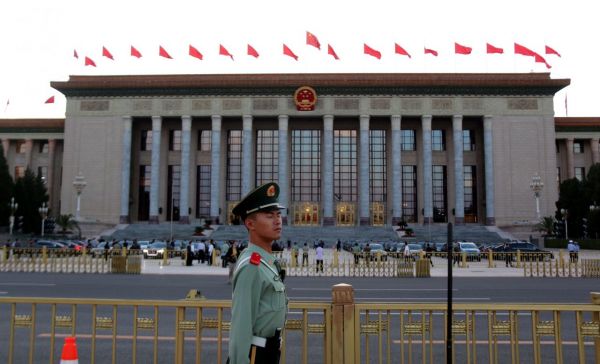
The 3rd Plenum, one of seven plenary sessions held between the five-year National Party Congresses, is an event that sets the leadership's economic policy direction. In the past, Deng Xiaoping, then President, declared China's reform and opening-up policy at the 1978 3rd Plenum, and President Xi also announced market-oriented reform policies at this event in his first year in office in 2013.
According to past convention, it should have been held in October-November last year after the 20th Party Congress in October 2022, but it was eventually postponed until about four months after the conclusion of the Two Sessions (National People's Congress and Chinese People's Political Consultative Conference) in the new year. This is the first time since 1984 that the 3rd Plenum was not held in the year following the Party Congress.
At the meeting, the current economic situation and economic work analysis, as well as "opinions on several policies and measures to continuously promote the high-quality development of the integrated Yangtze River Delta," were reviewed. The core is to integrate the policy of strengthening the Shanghai-centered network with China's "high-quality development" direction.
Xinhua diagnosed that "the economy still faces many challenges," stating, "Demand remains insufficient, pressure on enterprises is considerable, and there are risks in many key areas." It added, "Domestic economic circulation is not smooth, and the complexity, severity, and uncertainty of the external environment have clearly increased."
© The Asia Business Daily(www.asiae.co.kr). All rights reserved.
![Clutching a Stolen Dior Bag, Saying "I Hate Being Poor but Real"... The Grotesque Con of a "Human Knockoff" [Slate]](https://cwcontent.asiae.co.kr/asiaresize/183/2026021902243444107_1771435474.jpg)
















