"Additional 6.3 Billion Won Secured in Tax Revenue" Extraordinary Measures
Operation of On-Site Investigation Team to Ensure Lawful Taxation
Strict Crackdown on Illegal Parking and Stopping Fines Intensified
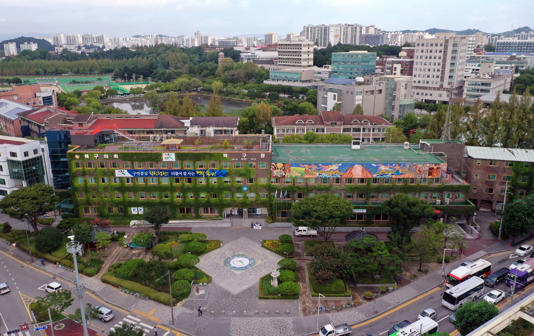
Gwangju Metropolitan City Buk-gu is facing a fiscal cliff, triggering a red alert on its finances. This is due to expanding difficulties in collecting local taxes amid a real estate market downturn. Expanding independent revenue sources has emerged as an urgent task.
According to Buk-gu on the 30th, local tax revenue based on this year's main budget is 92.7 billion KRW, and non-tax revenue is 36.6 billion KRW. This represents a decrease of 2.5% and 20%, respectively, compared to last year's budget.
The scale of tax revenue had expanded for three consecutive years since 2021 but the upward trend was halted this year. Key factors include reduced central government subsidies, the real estate market slump, and falling housing prices leading to decreased local tax income.
In fact, facing financial deterioration, various projects were scaled back or abolished, and event operation expenses, which could be seen as wasteful, were cut by 37% from last year to 1.8 billion KRW.
Buk-gu plans to pursue tax revenue increase measures in various sectors while maintaining this austerity stance. The target for additional secured revenue is 6.3 billion KRW.
First, to secure additional acquisition tax and property tax, which constitute a large portion of local tax revenue, a 'Field Investigation Team' will be operated. For properties eligible for property tax reductions, such as religious facilities, post-management will be conducted to filter out inappropriate cases. Unauthorized land use changes on rice paddies, dry fields, and forest land, buildings used before approval, and illegal buildings will also be investigated to levy taxes accordingly.
A 'Non-Tax Revenue Countermeasure Task Force,' led by the deputy district mayor, will also be formed to secure revenue. Plans include increasing public deposit interest income (800 million KRW) through tight management of the district treasury and securing more cadastral survey adjustment funds (1.3 billion KRW). An additional 100 million KRW will be collected through parking and traffic fines.
Alongside this, responsibility collection for last year's local tax arrears will be strengthened. Using big data, customized collection actions (such as seizure of accounts receivable and credit delinquency registration) will be carried out for small and large arrears. Employees will be required to submit responsibility collection progress reports to thoroughly manage performance.
Moreover, Buk-gu intends to overcome the tax revenue shortage by reviewing excellent cases of tax administration policies and collection techniques while visiting the Local Tax Research Institute and local governments nationwide, applying them to practical tax administration.
A district official said, "Concerns about an unprecedented tax revenue shortfall are growing, and the financial situation is not good. Despite the difficult environment, we will strive to prevent tax evasion and realize lawful taxation to lead district development and the realization of residents' welfare."
© The Asia Business Daily(www.asiae.co.kr). All rights reserved.

















