Economic Minister Denies One-Fifth Reduction in 5 Minutes
But Sovereign Wealth Fund Hesitates to Approve Budget
Many Risks Including Funding Shortage and Middle East War
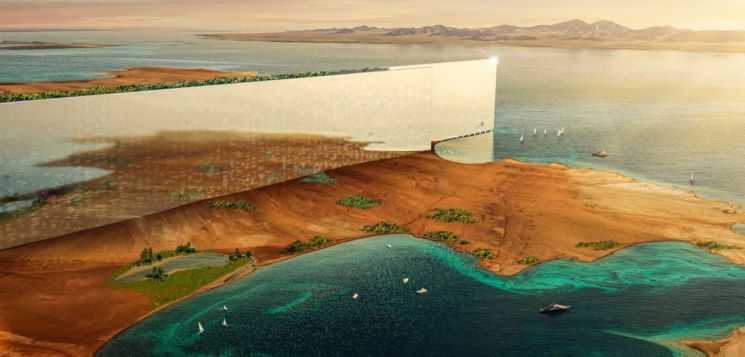
Saudi Arabia's mega construction project, 'Neom City,' faced reports from foreign media suggesting it would be scaled down, but the Saudi Minister of Economy and Planning directly refuted these claims. However, as the Saudi sovereign wealth fund, which has been responsible for financing the project, is reportedly reducing its investments and doubts about the project's execution capabilities grow, the initial investment enthusiasm is gradually cooling compared to the early stages. Risks such as the Middle East war, which could impact the project, are scattered, and investors' concerns that financing may become even more difficult in the future have not subsided.
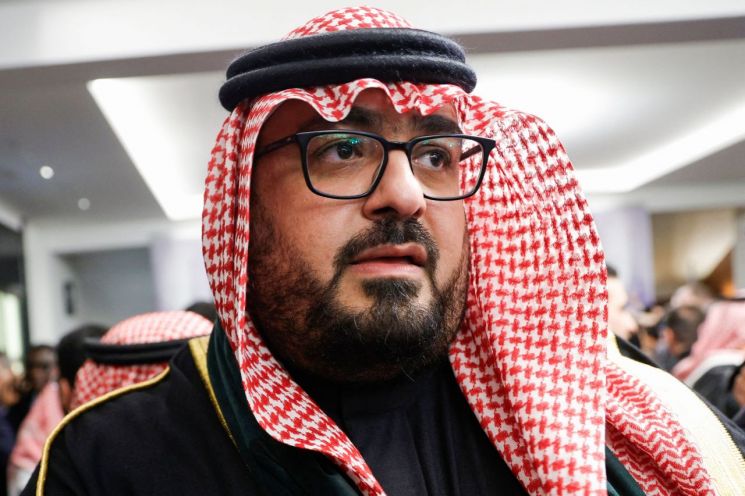
Saudi Sovereign Wealth Fund Does Not Approve This Year’s Budget Allocation... Cooling Investment Enthusiasm
On the 29th of last month (local time), the Saudi Minister of Economy and Planning directly refuted the rumors of Neom City project downsizing, but the Saudi Public Investment Fund (PIF), which has been leading the project’s financing, has yet to approve the Neom project budget. According to the Wall Street Journal (WSJ), PIF is facing difficulties in allocating the Neom project budget, which amounts to $1.5 trillion (approximately 2064 trillion KRW), due to a significant decrease in its available funds. Besides the Neom project, PIF has invested in sports industries such as football and golf, as well as various assets, causing its cash reserves to drop sharply from around $50 billion to about $15 billion.
WSJ pointed out that as PIF hesitates to disburse this year’s budget, investment banks have also started to halt loans and investments related to the Neom project. With increasing difficulties in financing, the Saudi government is also considering issuing bonds for the Neom project. HSBC, Al Rajhi Bank?the largest Islamic bank?and Saudi National Bank are expected to act as lead managers, with plans to issue bonds worth approximately $1.3 billion as early as the second half of this year.
Massive capital injection is required to revive the Neom project. Tim Callen, a visiting researcher at the Arab Gulf States Institute, told WSJ, "The Saudi government will need to inject an additional $270 billion into PIF by 2030," adding, "Considering oil prices and various issues, the Saudi government will have to take on more financial risks in the future, such as increasing debt or lowering reserves."
Bloomberg also cited sources related to the Neom City project earlier last month, reporting that "the originally planned Neom City The Line, which was to accommodate a population of 1.5 million by 2030, will be drastically scaled down to about 300,000 people," and that "an anonymous source expressed concerns that the original plan was to build a 170 km linear megacity across the desert by 2030, but only a 2.4 km section might be completed by then."
Concerns Over Long-Term Project Stagnation Amid Middle East Escalation
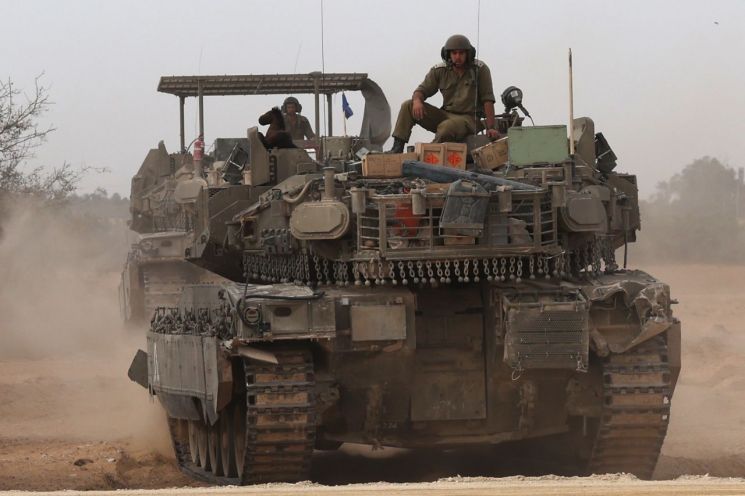 An Israel Defense Forces (IDF) tank unit moving near Rafah, the central city in southern Gaza Strip. [Image source=EPA·Yonhap News]
Another significant variable weighing on the Neom project is the geopolitical crisis in the Middle East, including the conflict between Israel and Hamas. Recently, with Israel and Iran conducting their first-ever mainland airstrikes and fears of escalation growing, concerns have emerged that large-scale construction projects themselves may become difficult to carry out.
According to the British BBC, following attacks on ships in the Red Sea by Yemen’s Houthi rebels earlier this year, shipping rates passing through the Red Sea-Suez Canal have surged significantly. Investment bank Jefferies reported that in January, freight rates for trade ships traveling from Asia to Europe averaged $3,500 per 1 FEU (one 40-foot container), more than doubling from $1,550 last year. For Saudi Arabia, which mainly imports large-scale construction materials from China and other Asian regions, the rise in material costs is becoming a major burden.
As a result, some speculate that the Neom project could face long-term stagnation similar to the King Abdullah Economic City (KAEC), a project ambitiously pursued but ultimately failed by the Saudi government in the past. Saudi Arabia planned in 2007 to invest $26.7 billion to build an economic megacity for 2 million people, but the outbreak of war with Yemen’s Houthi rebels and civil wars in various Middle Eastern countries caused the project itself to stall. Currently, the city’s population is only about 10,000.
Saudi Minister of Economy and Planning: "Proceeding According to Original Plan"
Meanwhile, Faisal Al-Ibrahim, Saudi Arabia’s Minister of Economy and Planning, dismissed various rumors related to Neom City. At the World Economic Forum (WEF) Riyadh Special Meeting, he stated, "The scale of the Neom project is not being reduced and is proceeding according to the original plan," adding, "We have started an unprecedented project, are carrying it out, and will witness unprecedented developments in the future."
Minister Al-Ibrahim emphasized that the Neom project itself includes several projects beyond The Line. He explained, "This is a long-term project with a modular design," and "Various large-scale projects are moving around the Neom project. We will review which projects to prioritize while monitoring market responses going forward."
© The Asia Business Daily(www.asiae.co.kr). All rights reserved.
![Clutching a Stolen Dior Bag, Saying "I Hate Being Poor but Real"... The Grotesque Con of a "Human Knockoff" [Slate]](https://cwcontent.asiae.co.kr/asiaresize/183/2026021902243444107_1771435474.jpg)


















