Record Oil Production in the US
Signs of Foundation Weakening at Largest Oil Field
Frequent Earthquakes and Other Abnormal Signals Detected
Growing Concerns from Environmental Groups and Residents
The U.S. fossil fuel industry is producing record amounts of crude oil, causing unusual signs such as the ground swelling or sinking at the country’s largest oil fields. Environmental groups warn that “their reckless drilling operations could bring disasters like earthquakes to local residents” and have called for regulatory authorities to intervene.
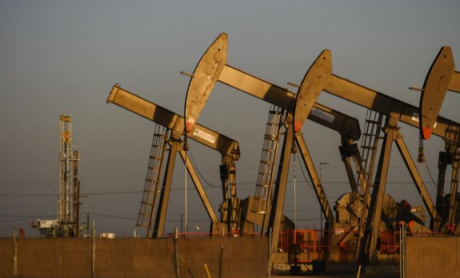
On the 28th (local time), The Wall Street Journal (WSJ) reported that an analysis of satellite data showed that fossil fuel companies’ massive crude oil drilling has caused major parts of the Permian Basin in the U.S. to sink by 11 inches since 2015. The water used for drilling (wastewater) flows into deep underground reservoirs, causing a phenomenon where the ground in some areas has risen by 5 inches.
Last year, the U.S. produced a record-breaking crude oil output exceeding 13 million barrels per day. It is estimated that a huge amount of water was also used to drill through shale (a type of sedimentary rock) containing crude oil. According to water analysis firm B3 Insight, fossil fuel companies disposed of about 382 million barrels of wastewater in 2013, which surged to approximately 3.4 billion barrels last year. This amount is roughly equivalent to the volume of water consumed by New York City over about five months.
The Permian Basin is the largest shale oil deposit in the U.S., located in western Texas and southeastern New Mexico. Approximately 6 million barrels of crude oil are produced daily in the Permian Basin. About half of this production comes from the Delaware Basin, a sub-basin of the Permian Basin. The daily crude oil production in the Delaware Basin exceeds that of Kuwait. WSJ stated, “Some parts of the Delaware land have sunk more than 5 inches, while other areas have risen more than 2 inches.” Normally, the ground in typical regions moves less than one-tenth of an inch annually.
The massive volume of wastewater resulting from record crude oil drilling is also causing the ground near the Permian Basin to rise. Because New Mexico has regulations on wastewater disposal, the ground in Texas is rising relatively more. WSJ reported that “the drilling industry transports more than 2 million barrels of water daily from New Mexico to Texas.”
Concerns are growing over the reckless development by fossil fuel companies as terrain changes are observed. According to B3 Insight, earthquakes of magnitude 2.5 or higher observed in the Permian Basin surged from 42 occurrences in 2017 to 671 in 2022. In the 20th century, U.S. oil production caused the ground at Long Beach Harbor in California to sink 29 feet, resulting in billions of dollars in damages. Recently, the Netherlands began shutting down Europe’s largest natural gas field early due to earthquakes related to gas extraction.
There are also concerns that wastewater could contaminate nearby drinking water sources. Environmental groups recently requested the federal government to review how state governments regulate water injection in these areas, and the U.S. Environmental Protection Agency has expressed its intention to review these petitions. Chevron’s Cody Komisky, a district science advisor, predicted, “Managing produced wastewater will likely be a significant challenge faced by companies in the Permian Basin.”
WSJ suggested that for fossil fuel companies to continue development in harmony with local residents, new methods need to be devised during the drilling process. Some companies are reportedly exploring geological layers where water injection is unnecessary or developing ways to purify water for reuse in agriculture. However, WSJ added, “It remains unclear whether these methods will pass regulatory approval or how much they will cost.”
© The Asia Business Daily(www.asiae.co.kr). All rights reserved.
![From Hostess to Organ Seller to High Society... The Grotesque Scam of a "Human Counterfeit" Shaking the Korean Psyche [Slate]](https://cwcontent.asiae.co.kr/asiaresize/183/2026021902243444107_1771435474.jpg)
















