Expected Announcement at Next Month's Fiscal Strategy Meeting
President Yoon's "Breakthrough Improvement in R&D" Forecast Accelerates Policy Response
President Yoon Seok-yeol's statement that he would "revolutionize R&D preliminary feasibility studies (PFS)" was not empty talk. As the government is moving toward abolishing PFS for research and development (R&D) projects exceeding 50 billion won, investments in the three major game-changer fields pointed out by President Yoon are expected to gain momentum.
According to the Ministry of Economy and Finance and the Ministry of Science and ICT on the 29th, a reform of the R&D system including the abolition of R&D PFS is expected to be announced at the fiscal strategy meeting scheduled for the 9th of next month. Since the opposition party won a landslide victory in the 22nd general election, President Yoon had refrained from external activities, but he attended the Science and ICT Day event on the 22nd and declared that he would drastically change the R&D PFS, which has shifted the weight toward abolishing the PFS.
The Ministry of Science and ICT, which has been concerned about the PFS system reform, remains cautious. In a press release distributed late at night on the 28th, the ministry stated, "We are reviewing related system reforms to strengthen R&D investment that is truly R&D, but no detailed decisions have been made yet." However, a key official from the ministry said, "We are in consultation with the Ministry of Economy and Finance."
The Ministry of Science and ICT has key executives in the Science and Technology Innovation Bureau responsible for PFS and R&D budgets, including Ryu Gwang-jun, head of the Science and Technology Innovation Bureau, and Lee Sang-yoon, director of the Performance Evaluation Policy Division, both of whom are former officials from the Ministry of Economy and Finance. This has raised expectations for smooth consultations with the Ministry of Economy and Finance more than ever. Before moving to the Ministry of Science and ICT, Director Ryu served as the head of the R&D budget division at the Ministry of Economy and Finance, and Director Lee was appointed through personnel exchanges with the Ministry of Economy and Finance, laying the groundwork for smooth inter-ministerial consultations.
Exemption from R&D PFS has been a long-standing wish in Korea's science and technology sector. Although advanced technologies change rapidly, the PFS system has acted as a barrier preventing timely R&D investments.
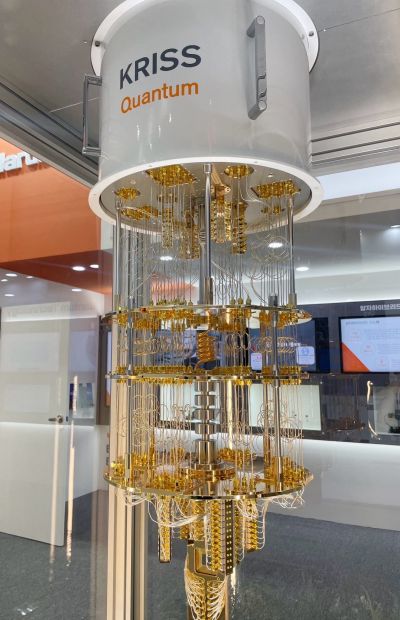
A representative example is the quantum field. While overseas quantum computers with a scale of 1,000 qubits appeared at the end of last year, Korea is currently developing a quantum computer with a scale of 20 qubits by the end of this year. The Ministry of Science and ICT is promoting a project to develop core technologies in quantum computing and quantum communication with a budget of 996 billion won over eight years, but after applying for PFS last year, the review was postponed, and it is difficult to guarantee passing this year as well. Quantum technology is one of the three major game-changer technologies designated by President Yoon along with AI semiconductors and advanced bio.
The low Earth orbit communication satellite project, which will receive 480 billion won in investment, has already failed the PFS twice, and since the PFS results are scheduled to be announced next month, it is understood to be within the scope of the PFS system reform.
A research team in the quantum field welcomed the move, saying, "Since we are in a catching-up situation in quantum technology, abolishing the PFS will enable a swift response."
© The Asia Business Daily(www.asiae.co.kr). All rights reserved.
![User Who Sold Erroneously Deposited Bitcoins to Repay Debt and Fund Entertainment... What Did the Supreme Court Decide in 2021? [Legal Issue Check]](https://cwcontent.asiae.co.kr/asiaresize/183/2026020910431234020_1770601391.png)















