Hankyung Association Survey on Legislative Directions Desired by Companies
Tax Support for Countermeasure Projects, Deregulation Ranked First
Future Tasks: Low Birthrate and Aging, Growth Engine Development Ranked Sequentially
Six out of ten domestic companies identified "restoring economic vitality" as a key priority for the 22nd National Assembly. Companies emphasized the urgent need for tax support from the National Assembly and deregulation to promote private-sector-led growth.
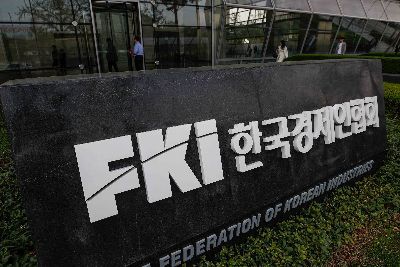 On the 12th, employees of tenant companies were moving at the Korea Economic Association in Yeouido, Seoul. Photo by Jinhyung Kang aymsdream@
On the 29th, the Korea Economic Association (KEA) announced that in a survey conducted by Monoresearch from the 12th to the 17th targeting the top 1,000 companies by sales, 60.6% of the 170 respondent companies said that the top priority for the 22nd National Assembly should be "restoring economic vitality." This was followed by "political reform" (14.7%), "social integration" (11.8%), "welfare and culture" (10.0%), and "resolution of inter-Korean issues" (2.9%).
KEA stated, "The ongoing low-growth trend and the recent occurrence of the '3 highs' (exchange rates, oil prices, and inflation) have increased uncertainty in the domestic and international economic environment, reflecting companies' demands for the 22nd National Assembly to take measures to restore economic vitality."
Among companies prioritizing economic vitality restoration, the most desired measures were tax support (28.9%) and deregulation (27.8%). These were followed by measures to increase labor market flexibility (16.7%) and systems to foster innovative industries (14.4%).
As for issues the 22nd National Assembly should consider to prepare for the future, the most frequently cited was measures to address low birth rates and aging population (35.4%). Next were fostering next-generation growth engines (21.1%), labor market flexibility (20.8%), and economic security (8.6%).
Additionally, companies stated that legislative directions needed to improve the business environment include sufficient communication with companies (41.8%), incentive-based policies rather than penalties (20.6%), and policies aligned with global standards (15.3%).
Among economic-related bills pending in the 21st National Assembly, the bills companies most hope to see passed include the Restriction of Special Taxation Act related to tax support for national strategic technologies and research and development (R&D) (30.9%) and the Serious Accident Punishment Act, which includes a grace period for workplaces with fewer than 50 employees (28.1%). Other bills mentioned were the Commercial Act allowing dual-class voting rights (12.5%), the Distribution Industry Development Act related to deregulation of large discount stores (9.1%), and the Framework Act on Service Industry Development (6.9%).
Among laws passed by the 21st National Assembly that have helped corporate activities, companies cited the Tax Act related to corporate tax rate reduction and the introduction of temporary investment tax credits (57.6%), the Chemical Substances Control Act (Hwapyung·Hwakan Act) which eased regulations on chemical substance evaluation and management (17.1%), and the K-Chips Act supporting semiconductor industry investment (14.1%).
Lee Sang-ho, Head of the Economic and Industrial Division at KEA, said, "Companies hope that the 22nd National Assembly will play a leading role in improving the business environment. We expect that the 22nd National Assembly will establish deregulation measures for private-sector-led growth and enact various laws and systems that can design Korea’s future, including addressing low birth rates, aging population, and discovering new growth engines."
© The Asia Business Daily(www.asiae.co.kr). All rights reserved.

















