Korea Maritime Institute, Public Awareness Survey
After Mackerel, Squid, Gim, Flatfish, Shrimp, and Hairtail Follow
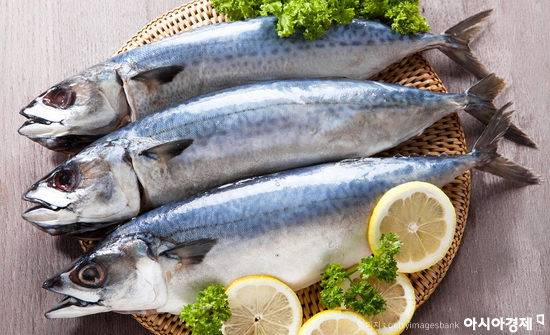
A survey revealed that the seafood most favored by our people is mackerel.
On the 28th, the Korea Maritime Institute announced the results of a public perception survey conducted to mark its 40th anniversary. According to the results, among the survey participants, the seafood most liked was mackerel (14.0%). Following that were squid (12.9%), gim (seaweed) (10.4%), flatfish (7.8%), shrimp (6.5%), hairtail (6.5%), and salmon (3.7%).
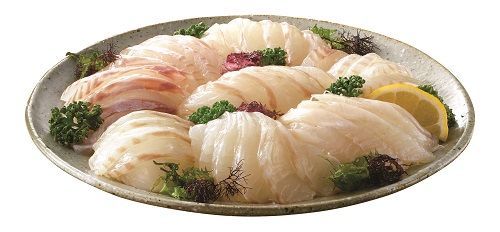
Regarding favorite sashimi, four out of ten respondents answered flatfish (40.6%), showing that flatfish holds overwhelming popularity as sashimi. Following flatfish, the preferred sashimi were salmon (11.3%), red seabream (5.7%), yellowtail (5.4%), sea bream (4.1%), and squid (3.5%).
More than half of the respondents said they eat seafood at home (55.0%). After home, the places where seafood is consumed were sashimi restaurants (17.0%), general restaurants (15.5%), and through delivery (7.2%), in that order. As for seafood purchase locations, large supermarkets (46.9%) were dominant, surpassing traditional markets (21.1%) and online shopping (13.9%) by two to three times.
Nearly half of our people do not trust seafood origin labeling. Only 45.9% responded that they trust seafood origin labeling, which did not reach half, while more respondents answered neutral (38.8%) or do not trust (15.2%). Regarding urgent improvement tasks related to seafood, the most cited was enhancing safety (30.0%). Next were lowering prices (27.8%) and securing transaction transparency such as origin labeling (18.9%).
Meanwhile, in this survey, the top two favorite seafood items, mackerel and squid, have been experiencing precarious price instability due to continuous declines in catch volumes. Especially, due to rising sea surface temperatures caused by global warming, squid that were once common on the East Coast have become rare enough to be called "gold squid." According to Statistics Korea's "2023 Fisheries Production Trend Survey," the amount of squid caught in coastal waters last year was 23,343 tons, only half compared to 46,274 tons in 2018, five years ago. Ten years ago, more than 100,000 tons of squid were caught annually, so the current amount is about one-fifth of that ten years ago.
The same applies to mackerel. Medium and large-sized mackerel, which consumers frequently seek in domestic fishing grounds, are increasingly scarce, and only small-sized hammerhead mackerel, mainly exported as feed, are being caught. Hammerhead mackerel has no domestic demand and is mainly exported to Africa. The production volume of medium and large-sized mackerel was 19,610 tons in 2022 but decreased by 11.6% to 17,344 tons last year.
The Ministry of Oceans and Fisheries plans to increase the stockpile of squid and mackerel from 32,000 tons last year to 44,000 tons this year to manage their prices. Additionally, it will conduct support surveys in overseas fishing grounds, investigating waters in regions such as Africa where squid resources are abundant, and will carry out trials to determine whether actual fishing is feasible.
© The Asia Business Daily(www.asiae.co.kr). All rights reserved.
![From Bar Hostess to Organ Seller to High Society... The Grotesque Con of a "Human Counterfeit" [Slate]](https://cwcontent.asiae.co.kr/asiaresize/183/2026021902243444107_1771435474.jpg)

















