The United States is reportedly urging its allies to strengthen restrictions on the transfer and export of semiconductor technology to China, according to major foreign media on the 25th (local time).
According to five sources familiar with the matter, the U.S. is requesting South Korea, Japan, and the Netherlands to further tighten existing semiconductor export controls. This includes banning allied engineers from working at advanced semiconductor factories in China.
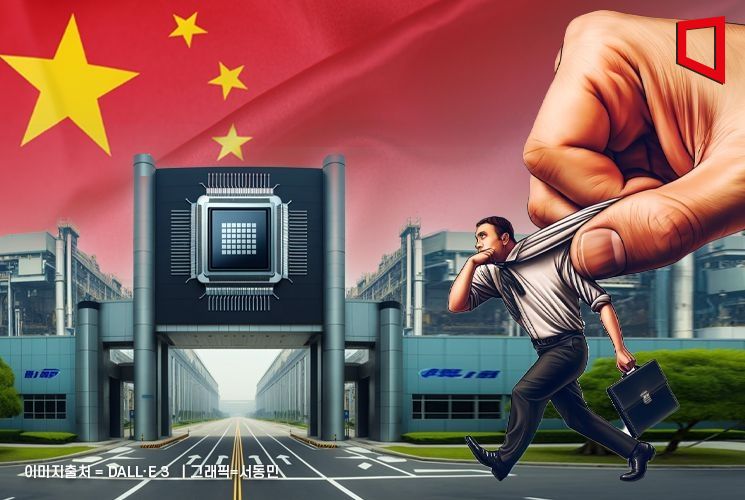
The Biden administration announced strong export control measures in October 2022 that prohibit the sale of equipment and technology capable of producing advanced semiconductors to Chinese companies. It also bans U.S. nationals from working for Chinese semiconductor firms, effectively prohibiting direct and indirect support of China's semiconductor industry by individuals and companies. However, there are fewer restrictions on Chinese companies hiring engineers from South Korea, Japan, or the Netherlands.
Kevin Wolf, a partner at Akin Gump and an export control expert, said, "To make controls on China more effective and to create a level playing field for U.S. industries, allied countries should prohibit their companies from providing advanced semiconductor production support services in China."
The U.S. is urging its allies to join sanctions because Chinese companies have begun acquiring advanced semiconductor development capabilities faster than expected. A representative example is Huawei's release of the 5G smartphone 'Mate 60 Pro' when U.S. Commerce Secretary Gina Raimondo visited China in August last year. Huawei was once the world's number one smartphone manufacturer by shipment volume but had been unable to release high-performance 5G smartphones for years due to being on the U.S. sanctions list. However, last year it launched the Mate 60 Pro equipped with a 7nm chip developed with its own technology, which was seen as a symbol of China's technological revival. This has raised doubts about the effectiveness of U.S. sanctions.
In response, the U.S. is applying the Foreign Direct Product Rule (FDPR), which blocks Chinese companies from obtaining products containing U.S. technology even if third-country companies manufacture them in third countries, targeting Huawei. However, U.S. allies have not implemented such measures. A source familiar with the matter said the U.S. hopes its allies will use the existing export control system rather than creating new regulatory frameworks like the FDPR.
Since the U.S. imposed semiconductor sanctions on China in 2022, its allies have strengthened export controls on semiconductor-related technologies. However, some Asian companies reportedly express dissatisfaction that while the U.S. pressures its allies, it allows certain American companies like Qualcomm to supply chips to Huawei and others.
Similar opinions exist within the U.S. On the same day, Republican Senators Marco Rubio, vice chairman of the Senate Intelligence Committee, and Elise Stefanik urged Secretary Raimondo to revoke export licenses related to Huawei's development of laptops using Intel chips. There have also been media reports that Chinese universities and research institutions circumvented strong U.S. export controls to obtain Nvidia AI chips through servers manufactured by companies in the U.S., Taiwan, and other countries.
Additionally, according to sources, some officials in allied countries argue that having their engineers stationed at Chinese companies is necessary to monitor local activities.
Valdis Dombrovskis, EU Commissioner for Trade, stated, "This is a fundamental issue concerning individual freedoms," and indicated that EU countries would be reluctant to restrict their nationals from working in China.
Meanwhile, on the same day, the U.S. announced it would provide $6.1 billion in subsidies and $7.5 billion in loans to Micron Technology, the country's largest memory semiconductor manufacturer. The U.S. plans to invest a total of $52.7 billion over five years to strengthen its semiconductor production capabilities.
© The Asia Business Daily(www.asiae.co.kr). All rights reserved.

















