Earthquake Occurred 103 Times on 22-23rd
"No Damage" Announced by TSMC Draws 'Attention'
Actions Defying Experts' 'Crisis' Predictions
Announcement of '1.6nm' Process Semiconductor Production
"If TSMC truly experienced no impact despite 103 strong earthquakes occurring over two days, that would be a remarkable fact."
On the 25th, the U.S. technology media outlet 'Tom's Hardware' wrote this about TSMC, which announced that "there was no damage to the factory" after a series of earthquakes near Hualien County, Taiwan, on the 22nd and 23rd Korean time. The media stated, "While there is a possibility that the extent of the damage may be disclosed later, currently there are no rumors or internal reports of earthquake damage to TSMC or its customers," and added, "Micron, Foxconn, and others have not issued any particular response and are operating smoothly."
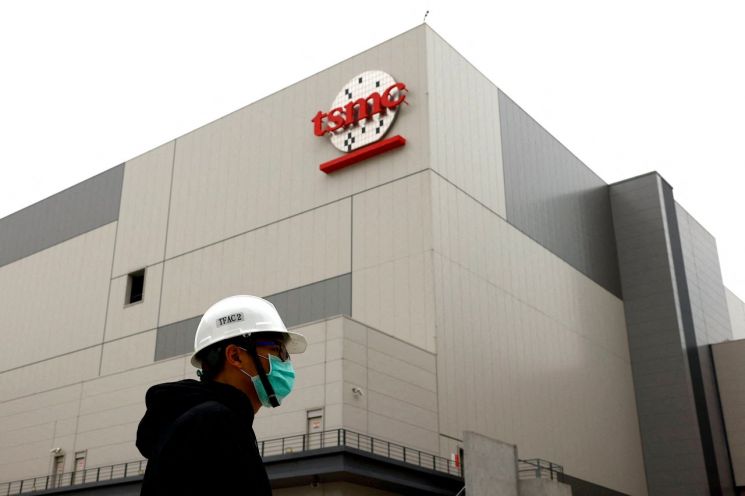
According to the industry on the 28th, major foreign media outlets, as well as those in the U.S. and Taiwan, have recently released similar reports. Most focused on the fact that despite 103 earthquakes of magnitude 4.0 or higher occurring in Taiwan on the 22nd and 23rd, including 27 earthquakes exceeding magnitude 5, TSMC's production processes appeared unaffected. 'State News Global,' which mainly reports news from the Asia region, published an article titled "TSMC Processes Completely Unaffected by Taiwan Earthquakes," emphasizing that "TSMC highlighted that production personnel safely evacuated without harm and that critical facilities within the factory were not damaged," and reported, "(Accordingly) there was no damage in the capital markets due to the earthquakes. TSMC's stock price even rose by 1.6%."
This trend contrasts with the forecasts made by global media and experts, including those in South Korea, following the major Taiwan earthquake earlier this month, drawing significant industry attention. After a magnitude 7.2 earthquake struck Taiwan on the 3rd, domestic and international experts predicted that TSMC's semiconductor production would struggle to continue properly, anticipating a major disruption in the global semiconductor supply chain, including DRAM and foundry sectors. TSMC also announced losses of 3 billion Taiwan dollars (approximately 128 billion KRW) due to the earthquake on the 3rd, signaling the onset of 'earthquake risk.' However, the additional earthquakes on the 22nd and 23rd have completely overturned this narrative. Now, there is even speculation that the earthquakes could act as a positive factor for TSMC. In particular, TSMC's ability to protect workers safely and safeguard equipment amid ongoing earthquakes is analyzed to have earned the trust of its customers.
TSMC's surprise announcement on the 25th in Santa Clara, California, that semiconductor production using the 1.6-nanometer process will begin in the second half of 2026 also appears related to this. It is interpreted as a strategy to leverage the current trust to secure a definitive advantage in the semiconductor competition. Y.J. Mi, TSMC's Co-Chief Operating Officer (COO), emphasized at a technology conference, "Through the new chip manufacturing technology 'A16,' power can be supplied from the back of the chip, increasing the speed of artificial intelligence (AI) chips," adding, "This is an area where we compete with Intel."
TSMC also reassured concerned customers through its recent '20-F' report submitted to the U.S. Securities and Exchange Commission (SEC). In this report, TSMC emphasized that "the production outcomes we generate may be affected by natural disasters, industrial accidents, or impacts involving ourselves, customers, or suppliers depending on the region," but also stated, "We have well-established pre- and post-response measures for various risks and maintain insurance coverage across production facilities and processes."
However, concerns remain as TSMC may continue to face tests from ongoing earthquakes. The Central Weather Bureau (CWA) of Taiwan predicted on the 24th that "after the magnitude 7.2 earthquake on the 3rd, aftershocks have exceeded 1,203 occurrences over 20 days," and "there is a possibility that aftershocks will continue for a year in Taiwan." Wu Jen-fu, head of the CWA Earthquake Prediction Center, also stated that the possibility of a major earthquake in the future cannot be ruled out.
TSMC's developments are expected to influence Korean companies as well. Samsung Electronics is competing with TSMC for the number one position in the foundry market. As of now, TSMC holds a 60% market share, ranking first, while Samsung Electronics holds 13%, ranking second. SK Hynix signed a memorandum of understanding (MOU) with TSMC in mid-June to form a 'technology alliance.' They agreed to cooperate to strengthen production of next-generation artificial intelligence (AI) memory semiconductors, such as High Bandwidth Memory (HBM), and advanced packaging technology capabilities.
© The Asia Business Daily(www.asiae.co.kr). All rights reserved.
![Clutching a Stolen Dior Bag, Saying "I Hate Being Poor but Real"... The Grotesque Con of a "Human Knockoff" [Slate]](https://cwcontent.asiae.co.kr/asiaresize/183/2026021902243444107_1771435474.jpg)
















