A man in his 40s who killed a neighbor in his 70s in a fit of rage after arguing that a tree grown next door was blocking the solar panels on his house was sentenced to 23 years in prison.
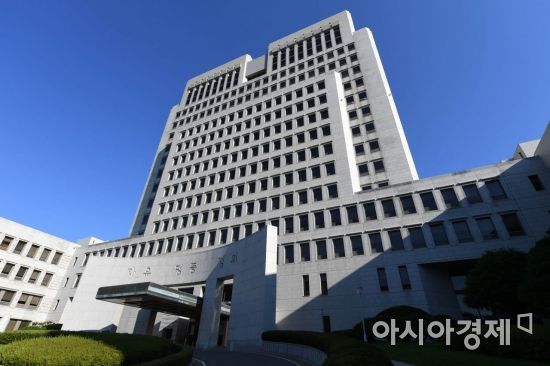
According to the legal community on the 26th, the Supreme Court's First Division (Presiding Justice No Tae-ak) upheld the original sentence of 23 years imprisonment and ordered the attachment of an electronic location tracking device for 10 years for Kang Mo (43), who was charged with murder, special injury, and violation of the Road Traffic Act (drunk driving).
Regarding Kang's appeal that the court erred in not reducing the sentence for voluntary surrender, the court stated, "Voluntary surrender under Article 52 of the Criminal Act means that the offender voluntarily reports their crime to the investigative authority responsible for the investigation and expresses the intention to seek disposition. Responding to official questioning or investigation by the authorities and confessing to the crime is only a confession, not voluntary surrender," and added, "there is no error in the lower court's application of the law regarding voluntary surrender."
Furthermore, regarding Kang's claim of unfair sentencing, the court explained, "Even considering the circumstances Kang raised in his appeal, it cannot be said that the sentencing of 23 years imprisonment by the appellate court, which overturned the first trial's 26-year sentence, is excessively unfair," thus rejecting Kang's appeal.
Kang was indicted for stabbing and killing A (72, male), who lived next door, while intoxicated on April 3 last year, and injuring A's wife B (67, female) who tried to intervene. He was also charged with drunk driving, having driven his car with a blood alcohol concentration of 0.100% immediately after the crime.
The couple, A and B, had peach trees in their field, and Kang had been arguing with A for years because the branches were blocking the solar panels on Kang's roof.
On the day of the crime, Kang approached A, who was working in the field, and verbally abused him with phrases like "XX, cut the tree," pushed A down, and provoked a confrontation.
However, when A said, "I planted it on my land, what does it matter? Get a survey done. I'm drunk, so let's talk later," and went inside to avoid him, Kang, feeling ignored, became enraged, came out of his house with a weapon, stabbed A to death, and stabbed B on the top of her right foot, causing injuries requiring six weeks of treatment.
Immediately after the crime, Kang, still intoxicated, fled about 2.7 km by car, then got out and told a passerby, C, "I killed someone, please report it," and stood on a nearby road until police arrived following C's report and arrested him.
The first trial court sentenced Kang to 26 years in prison and ordered the attachment of an electronic location tracking device for 10 years.
During the trial, A claimed that Kang had no intent to injure B and that Kang was mentally impaired due to intoxication and unable to distinguish objects, but this was not accepted.
Kang also argued that he should receive a reduced sentence for voluntary surrender because he asked the passerby to report the crime immediately after committing it. However, based on C's testimony, the court found it unclear whether Kang actually requested the report, as he only repeatedly said, "I killed someone," and did not recognize this as voluntary surrender.
The appellate court reduced the sentence to 23 years imprisonment.
The court considered factors such as Kang's confession to the entire crime including the special injury to B and his remorse, the fact that although A's bereaved family explicitly stated they would not accept compensation, Kang deposited 20 million won in escrow, and that the family could seize some of Kang's land to partially compensate for the financial damage.
Kang appealed, but the Supreme Court found no problem with the appellate court's judgment.
© The Asia Business Daily(www.asiae.co.kr). All rights reserved.
![Clutching a Stolen Dior Bag, Saying "I Hate Being Poor but Real"... The Grotesque Con of a "Human Knockoff" [Slate]](https://cwcontent.asiae.co.kr/asiaresize/183/2026021902243444107_1771435474.jpg)
















