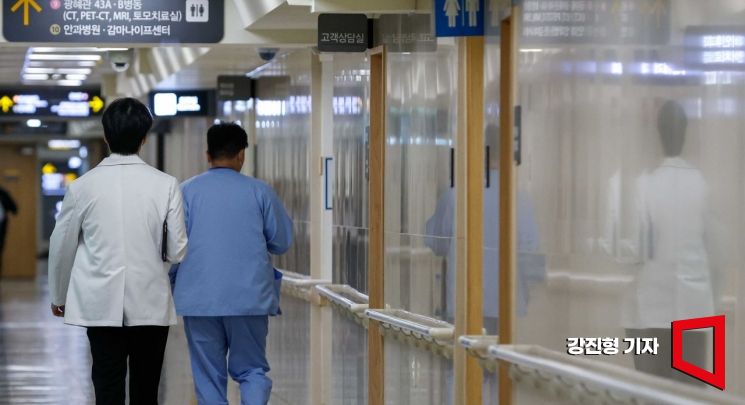
As the medical crisis continues with residents collectively resigning over the increase in medical school quotas, the number of outpatient prescriptions at tertiary hospitals has decreased by as much as 13%, causing adverse effects across the industry.
Global healthcare big data company Korea IQVIA announced on the 25th that, based on KNDA, a pharmacy dispensing data survey, the outpatient pharmaceutical market in March showed a 6.4% decrease in the number of prescriptions and a 3.9% decrease in prescription amounts compared to the same month last year. In particular, tertiary hospitals, where the impact of resident resignations was expected to be greatest, saw a 13.3% drop in prescription numbers. However, the decrease in prescription amounts was 3.7%, similar to the overall average of 3.9%. IQVIA explained, "This is analyzed to be because outpatients received long-term prescriptions due to concerns about the ongoing medical gap."
The average prescription duration, the period for which patients receive medication at one time, also increased by 3.5%. This was most pronounced in tertiary hospitals, where the average prescription duration rose from 70 days in March last year to 77.3 days last month, a 10.6% increase. Additionally, in terms of medication dispensing types, repeat dispensing?where the same patient receives prescriptions and dispensing again?decreased by 9.2%, while new dispensing for new patients dropped by 21.4%, showing a larger decline.
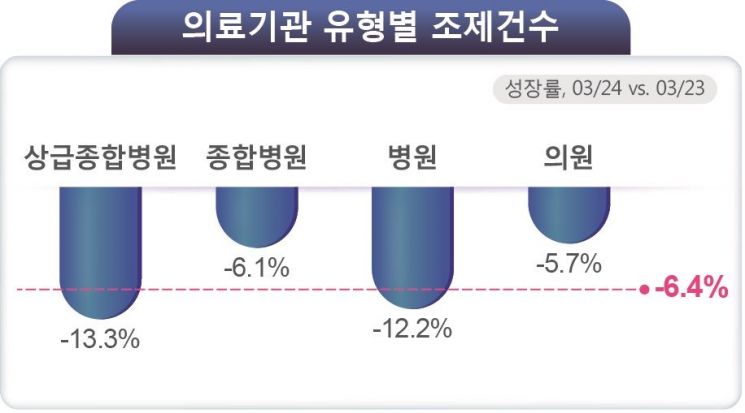 Number of Outpatient Prescription Dispensing Cases by Type of Medical Institution in Q1 2024 [Image Source=Korea IQVIA]
Although there were expectations that patients would move to primary and secondary medical institutions such as general hospitals and clinics due to reduced treatment capacity at tertiary hospitals caused by resident departures?temporarily increasing the number and amount of prescriptions at these institutions?the actual data showed a decline across the board. In particular, hospitals experienced a 12.2% decrease in prescription numbers and a 5.7% decrease in prescription amounts, showing a larger decline than the average.
By drug type, original drugs and sales related to acute diseases showed significant decreases. Compared to the same month last year, original drugs saw a 4.3% decrease in prescription amounts, and generics (copy drugs) decreased by 2.6%. Consequently, foreign pharmaceutical companies, which have a large share of original drugs, experienced a 4.6% sales decline, greater than the 2.6% decline seen by domestic pharmaceutical companies. By disease, chronic diseases such as arteriosclerosis (-0.9%), hypertension (-4.4%), and diabetes (-3.5%) showed relatively small decreases, but antibiotics (-20.6%), anti-rheumatics (-15.6%), and antivirals (-16.1%)?mainly used for acute diseases?showed relatively large declines.
IQVIA also analyzed that the sales decline felt by pharmaceutical companies may be even greater than these data trends suggest. The company explained that a significant number of its cooperating panel wholesalers are experiencing cash flow difficulties due to reduced order volumes and delayed payments caused by financial difficulties at some medical institutions. As a result, some wholesalers are managing inventory conservatively, which could impact pharmaceutical company sales.
This decline in the pharmaceutical market is expected to be even more pronounced in the inpatient pharmaceutical market, which is directly affected by resident departures, as well as in the outpatient pharmaceutical market. According to unprocessed data compiled so far, IQVIA expects the inpatient pharmaceutical market in the first quarter of this year to shrink by 5.4% compared to the previous quarter, the fourth quarter of last year. However, it increased by 0.3% compared to the same period last year. IQVIA stated, "Considering that the actual impact of resident resignations lasted just over a month from late February, this is a significant decline. If the current situation continues and affects the entire second quarter, the decline is expected to be in double digits or more."
© The Asia Business Daily(www.asiae.co.kr). All rights reserved.
!["The Woman Who Threw Herself into the Water Clutching a Stolen Dior Bag"...A Grotesque Success Story That Shakes the Korean Psyche [Slate]](https://cwcontent.asiae.co.kr/asiaresize/183/2026021902243444107_1771435474.jpg)

















