Average Age of Victims of Quasi-Rape and Sexual Abuse: 12 Years
Most Victims Are Girls, 92%
60% of Victims and Perpetrators Know Each Other
38% Met Through 'Chat Apps'
The average age of victims convicted of sex crimes against children and adolescents has been decreasing over the past five years. Approximately 25% of all victims were under the age of 13, and most victims were female children and adolescent girls.
According to the "Trend and Analysis of Sex Crimes Against Children and Adolescents" released by the Ministry of Gender Equality and Family on the 25th, in 2022, there were 2,913 offenders who were subject to personal information registration due to sex crimes against children and adolescents, and the total number of victims was 3,736.
This analysis is based on 2,913 court rulings in 2022 where offenders under 19 years old were convicted of sex crimes against children and adolescents and were ordered to register their personal information. According to the Sexual Violence Punishment Act, those convicted of crimes subject to registration must register their personal information.
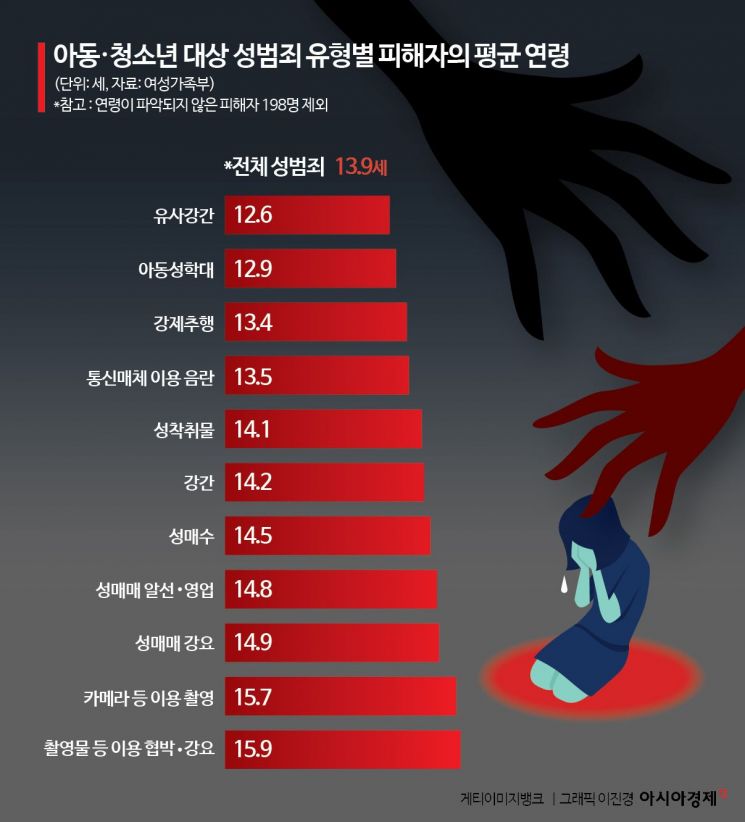
The analysis showed that the average age of victims decreased from 14.6 years in 2017 to 13.9 years in 2022, a drop of 0.7 years over five years. Notably, 25.4% of all victims were under 13 years old. By crime type, the average ages were lowest in the following order: ▲Quasi-rape (12.6 years) ▲Child sexual abuse (12.9 years) ▲Forcible molestation (13.4 years) ▲Obscenity using communication media (13.5 years) ▲Sexual exploitation materials (14.1 years) ▲Rape (14.2 years).
Among the child and adolescent victims, 91.5% were female. In sexual violence crimes, the proportion of male child and adolescent victims also increased from 6.5% and 3.5% in 2017 to 7.8% and 5.8% in 2022, respectively.
Among offenders, 11.7% were minors under 19 years old, and 12.8% of offenders were repeat offenders with prior convictions of the same type. By crime type, the proportions were highest in the following order: ▲Forcible molestation (31.9%) ▲Rape (24.0%) ▲Child and adolescent sexual exploitation materials (16.8%) ▲Sex purchase (6.0%).
Notably, 59.9% of cases involved offenders known to the victims. Among these, the largest group (33.7%) were people met through internet chatting, etc. Strangers accounted for 29.4%, and family and relatives 7.6%. The initial contact route between victim and offender was highest via 'chatting apps' (37.6%), followed by social networking services (SNS) (25.8%) and messengers (12.6%). Additionally, chatting apps, SNS, and messengers were heavily used as channels for sex purchase and sex trade mediation/sales crimes, with usage rates of 83.3% (sex purchase) and 93.8% (sex trade mediation/sales), respectively.
Among digital sex crime victims, video-related harm accounted for 49.1% and photo-related harm 48.3%. The method of producing sexual images of child and adolescent victims through inducement or threats, where victims self-record or produce images, increased significantly from 19.1% in 2019 to 52.9% in 2022. Also, the production of 'deepfake' videos, which synthesize victims' faces with obscene materials, rose from 1 case in 2019 to 14 cases in 2022. Cases involving threats of distribution also increased from 8.5% in 2019 to 20.8%.
The final sentencing results were probation (54.8%), imprisonment (38.3%), and fines (6.3%) in that order. Compared to 2017, the proportion of imprisonment sentences increased, while fines decreased. Crime types with high imprisonment rates included forced prostitution (78.8%) and sex trade mediation/sales (75.8%). The imprisonment rate for sexual exploitation material crimes also rose to 38.0% in 2022.
© The Asia Business Daily(www.asiae.co.kr). All rights reserved.

















