In New Zealand, carried by Rocket Lab launch vehicle to space
11 clustered satellites expected to monitor Korean Peninsula security and disaster situations in real time
The first domestically developed ultra-small class practical Earth observation satellite, Ultra-Small Constellation Satellite No. 1, is scheduled to be launched at 7:08:57 a.m. on the 24th (10:08 a.m. local time) from the Mahia launch site in New Zealand, the Ministry of Science and ICT announced on the 23rd.
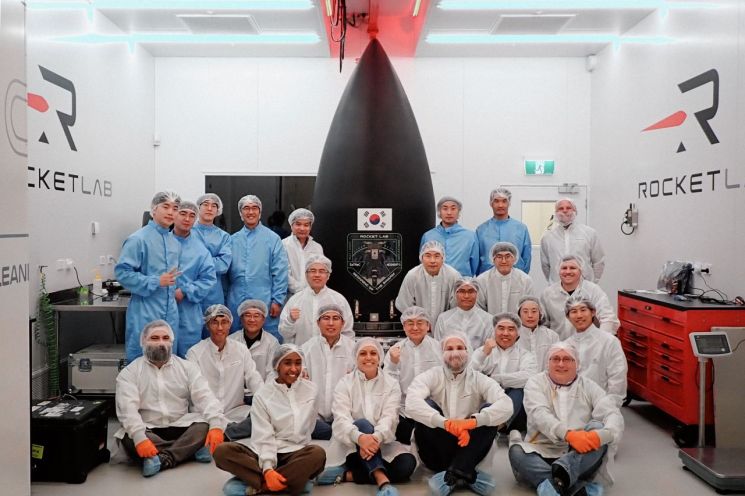 Researchers from Korea and the United States are taking a commemorative photo after completing the installation of their respective satellites on the upper stage of Rocket Lab's launch vehicle. Photo by Rocket Lab
The Ultra-Small Constellation Satellites (a total of 11 units) are practical Earth observation satellites developed by KAIST with support from the Ministry of Science and ICT to conduct high-frequency, precise monitoring of the Korean Peninsula and surrounding waters, and to respond swiftly to national security and disaster situations.
Ultra-Small Constellation Satellite No. 1, which arrived at the Mahia launch site in New Zealand on the 6th, has completed final checks for launch, including satellite status inspection and integration with the launch vehicle. It is currently mounted on Rocket Lab’s ‘Electron’ rocket, awaiting launch. Rocket Lab will also launch a spacecraft for NASA’s Solar Sail project. According to photos released by Rocket Lab, our Ultra-Small Constellation Satellite No. 1 is positioned at the top of the launch vehicle, with NASA’s Solar Sail spacecraft placed at the bottom.
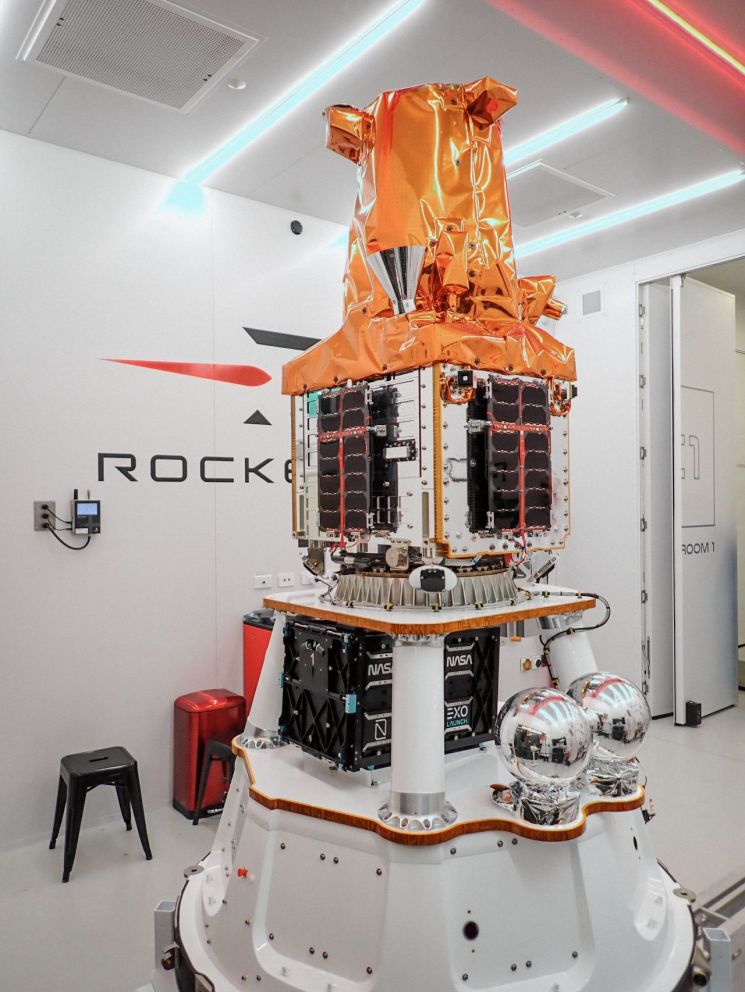 The ultra-small cluster satellite developed by Korea (top) is installed on the upper part of the launch vehicle along with NASA's Solar Sail spacecraft (bottom). Photo by Rocket Lab
The Ministry of Science and ICT and KAIST held a comprehensive inspection meeting of the launch management team (headed by the Ministry’s New Space Policy Team Leader) at 3 p.m. local time (6 p.m. local time) on the same day to review the launch preparation status and local weather conditions, and decided to proceed with launch operation procedures including fueling.
Ultra-Small Constellation Satellite No. 1 will separate from the rocket approximately 50 minutes after launch (7:58 a.m. Korean time on the 24th (Wednesday) at 7:08 a.m.), and about 4 hours and 24 minutes after launch (11:32 a.m. Korean time), communication with the ground station at the Korea Aerospace Research Institute in Daejeon will confirm the final success of the launch.
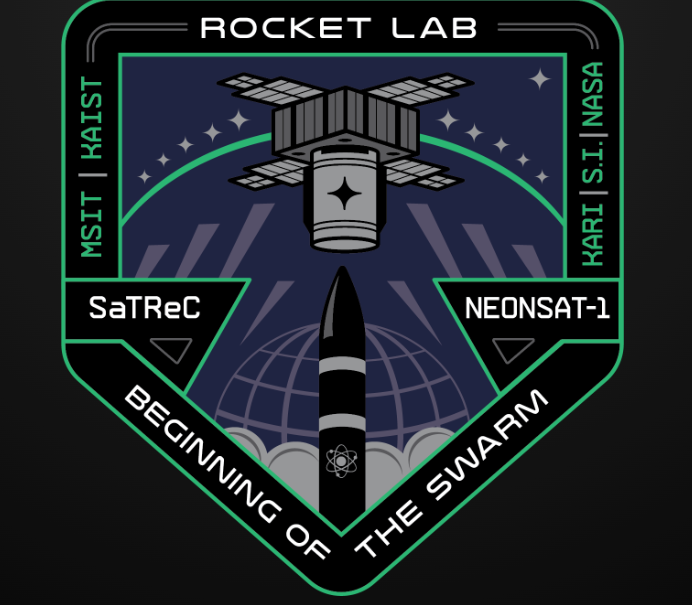
To ensure the successful launch of Ultra-Small Constellation Satellite No. 1, more than 10 researchers from the launch management team dispatched locally, KAIST, KARI, and Satrec Initiative are closely monitoring the situation ahead of the final launch.
Developed under the concepts of lightweight, low power consumption, and low cost, the Ultra-Small Constellation Satellites will be launched in full by 2027, totaling 11 units. Through constellation operation, they plan to secure images of the Korean Peninsula and surrounding waters, enhancing the speed and accuracy of national security and disaster response. The No. 1 satellite to be launched this time will verify the satellite’s performance and the quality of observation images before constellation operation, and supply optical images with approximately 1-meter resolution from an altitude of about 500 km for about three years.
© The Asia Business Daily(www.asiae.co.kr). All rights reserved.
![Clutching a Stolen Dior Bag, Saying "I Hate Being Poor but Real"... The Grotesque Con of a "Human Knockoff" [Slate]](https://cwcontent.asiae.co.kr/asiaresize/183/2026021902243444107_1771435474.jpg)


















