The Time for Two Pups to Become Independent is Approaching
A family of otters, designated as a natural monument and a Class I endangered wild species, has been discovered in Ulsan.
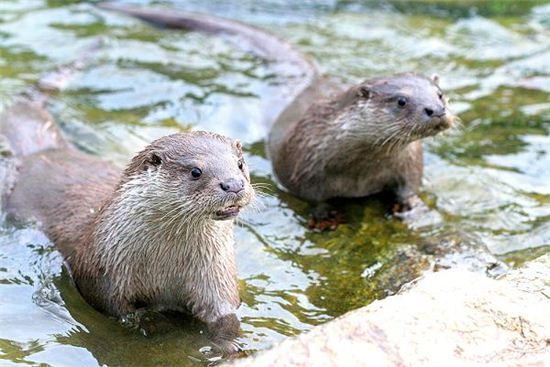 The otter, a natural monument and a Class I endangered wild species. The photo is not directly related to the content of the article. [Image source=Cultural Heritage Administration]
On the 23rd, Ulsan City announced that otters were confirmed to be inhabiting the Hae-yagang River sandbar (河中島) in Mangyang-ri, Onyang-eup, Ulju-gun. Earlier, a resident living in Mangyang-ri discovered an otter while walking along the stream in front of their house, took photos, and reported it to the city. Following this report, on the 13th of last month, the city confirmed otter droppings near the sandbar in Hae-yagang River where the otters were found and installed unmanned observation cameras. Subsequently, on the 15th of the same month, two otters were captured on camera, with two individuals and one individual separately recorded. On the 2nd, three otters were observed together.
Since then, the otters have been continuously captured on camera moving through the rising river waters. Although visibility was not clear due to rain and fog, the otters were seen repeatedly using the sandbar as a feeding and resting area.
Han Sang-hoon, a wildlife expert and director of the Korean Peninsula Wildlife Research Institute, said, "The presence of otters near urban areas indicates abundant food sources; they tend to hide during the day and are mainly active at night." He emphasized, "It is important to maintain the habitat environment as it is now for them to continue living here." He added, "The two young otters have grown to a size similar to their mother and seem to be at an age to become independent." Ulsan City also stated that it is making efforts to preserve the habitat environment.
Meanwhile, otters were designated as Natural Monument No. 330 in 1982 due to a decline in their population and were classified as a Class I endangered wild species in 2012 for protection. They resemble weasels but are much larger. Their heads are round, noses are rounded, eyes are small, and ears are short, covered by wrinkled skin and hidden in fur. Their legs are short with webbed toes to facilitate movement between water and land. They primarily eat fish but have developed canine teeth that allow them to consume amphibians and crustaceans as well. Earlier, on the 15th, three otters swimming were also captured on camera at Geumma Reservoir in Iksan-si, Jeonbuk.
© The Asia Business Daily(www.asiae.co.kr). All rights reserved.












