Concerns Arise as MZ Generation Joins Companies
Biweekly 4-Day Workweeks, Experiential Programs Introduced
Corporate Culture Is Changing
The cement and ready-mixed concrete industries have started improving their rigid corporate cultures by changing new employee training to experiential programs and introducing a biweekly four-day workweek. This wave of change began with the entry of the MZ generation (Millennials + Generation Z).
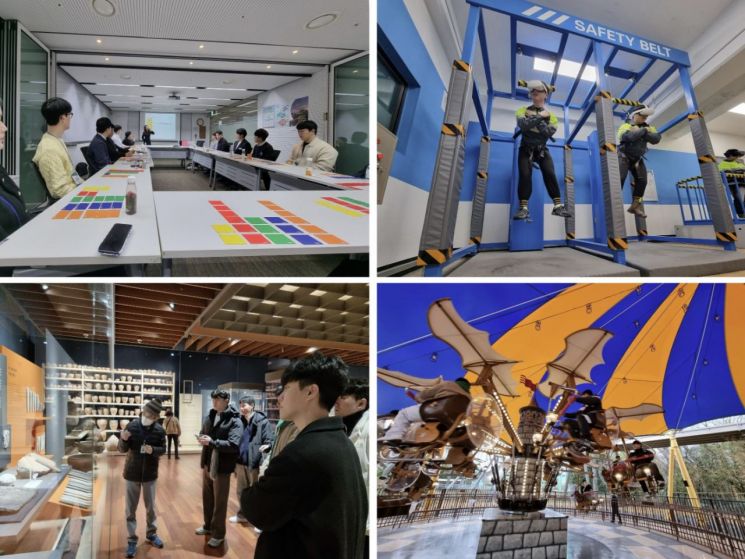
Halla Cement and Asia Cement announced on the 24th that they implemented a management-level open recruitment induction program tailored to the characteristics of the MZ generation from February to last month.
The biggest change was a significant expansion of on-site experiential activities and communication programs instead of the previous one-way, listening-focused, rote learning. This considered that the MZ generation is accustomed to moving, experiencing, and communicating directly. New employees visited Asia Cement's Safety Experience Center, where they received safety training by wearing safety belts and experiencing falls. They also toured production plants and participated in empathy-enhancing workshops.
Moreover, new employees participated in various programs such as riding amusement rides at the theme park Gyeongju World, pottery-making experiences, and watching musical performances. A Halla Cement training official explained, “As the proportion of the MZ generation is increasing among all employees, we are designing training courses that consider their characteristics.”
Hanil Cement introduced a biweekly four-day workweek at its Danyang plant starting this month. Among the 10 working days over two weeks, employees work one hour longer for 8 days and take every other Friday off. About 100 employees, excluding production workers who work in four shifts three teams to operate production equipment 24 hours, are subject to the biweekly four-day workweek. Hanil Cement has been piloting a 4.5-day workweek and a biweekly four-day workweek since July last year. Employee surveys showed much higher satisfaction with the biweekly four-day workweek, so they decided to adopt it.
The company found the biweekly four-day workweek as a solution to alleviate the difficulties MZ generation employees face working in provincial areas. MZ generation new employees consider accessibility to Seoul and the metropolitan area an important criterion when choosing a workplace. A Hanil Cement official said, “It is a supplementary measure to overcome the geographical limitations of the plant,” adding, “To enhance employee welfare, we arranged for employees to have three consecutive days off starting Friday.”
Sampeo Group’s dress code liberalization is recently regarded as fully established. In 2020, Sampeo Group became the first in the ready-mixed concrete industry to allow casual attire such as T-shirts, jeans, and sneakers. Until then, the dress code required formal suits.
An industry insider said, “The cement and ready-mixed concrete industries, which are traditional manufacturing sectors, had rigid corporate cultures, but in the past three to four years, the entire industry has been trying to soften the company atmosphere,” adding, “Although the trigger was for MZ generation new employees, it is now having the effect of increasing job satisfaction for all employees.”
© The Asia Business Daily(www.asiae.co.kr). All rights reserved.

















