88 Cats Die After Consuming Specific Product
"Repeated Incidents Due to Government Mismanagement," Netizens Criticize
A nationwide total of 88 cases have been confirmed in which pet cats raised at home suffered from unexplained lethargy and neuro-muscular disorders and died. The affected cats shared the common factor of having consumed a specific brand of pet food. Inadequate pet food verification and management systems are increasing anxiety among pet owners. As of the 20th, the animal protection organization Life has received reports of 236 affected pet cats, of which 88 have died.
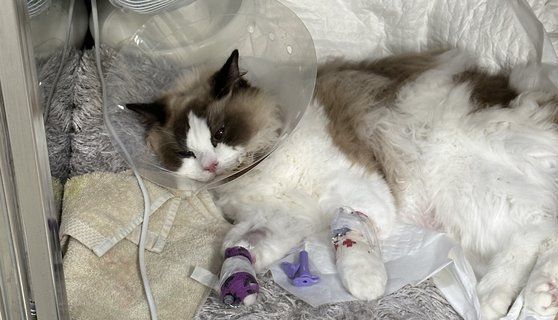 Cats of the Ragdoll breed showing similar neurological symptoms and hospitalized at an animal hospital (Seongnam-si, Gyeonggi-do), along with cats that recently died in groups nationwide.
 [Photo by Animal Protection Organization Life]
All these cats were found to have eaten pet food produced by a specific manufacturer between January and April of this year. The pet food produced by this manufacturer under the Original Equipment Manufacturer (OEM) method is known to include about 20 different types. Shim In-seop, the representative of Life, stated, "The damage occurred regardless of the cats' age or breed, and the only common factor is the pet food," adding, "We expect the number of deceased animals to exceed 100 within this week."
The exact cause of this incident has not yet been identified. Earlier, on the 19th, the Ministry of Agriculture, Food and Rural Affairs announced that among about 30 pet food samples submitted for testing, three had been tested so far with no significant issues found. The ministry is analyzing the presence of 78 harmful substances across five categories?heavy metals, mycotoxins, residual pesticides, veterinary drugs, and melamine?as well as seven types of viruses and two types of parasites in the pet food.
Some Companies Halt Pet Food Sales as Issue Escalates
 In an online cafe where cat owners gather, there is a growing concern that "the problem that appeared in 2015 has recurred." The photo is not related to the specific content of the article. [Photo by Pixabay]
In response to the controversy, some companies have stopped selling the problematic pet food, but it is still available in the market from other sellers. Representative Shim said, "In a situation where the damage is spreading, the government should take 'preemptive recall' measures." Pet owners are expressing frustration over what they perceive as lax regulations.
Last year, the Ministry of Agriculture, Food and Rural Affairs revised the 'Post-Import Management Standards for Imported Feed' and 'Feed Inspection Standards,' allowing animal-derived raw materials that fail customs inspections and foods processed from them to be recycled as pet food. This is not the first time concerns about pet food safety have arisen. Last year, avian influenza (AI) virus was detected in cat food, and it was revealed that the manufacturer had not properly sterilized or pasteurized the product.
On internet cafes where cat owners gather, there is a growing concern that "the problem that appeared in 2015 has recurred." One netizen said, "At that time, manufacturers sued those who raised issues about the pet food based on government investigation results, which prevented people from naming the pet food brands, but ultimately led to more serious problems."
Some voices are calling for the establishment of separate legislation for managing pet food. A representative from the Korean Veterinary Medical Association said, "The harmful substance standards in the Feed Control Act are mostly based on livestock animals such as cattle and chickens," adding, "Feed management standards that reflect the different characteristics of each species are necessary."
© The Asia Business Daily(www.asiae.co.kr). All rights reserved.
!["The Woman Who Threw Herself into the Water Clutching a Stolen Dior Bag"...A Grotesque Success Story That Shakes the Korean Psyche [Slate]](https://cwcontent.asiae.co.kr/asiaresize/183/2026021902243444107_1771435474.jpg)

















