Third Public Debate of the Pension Reform Special Committee on the 20th
Discussion on the Relationship Between National Pension and Basic Pension
At the National Pension reform debate, opposing views emerged regarding the scope of basic pension recipients: one side argued that it should be "maintained at the current level of the bottom 70% income bracket," while the other advocated for "gradual reduction and differentiated benefits."
On the 20th, the Public Deliberation Committee under the National Assembly's Special Committee on Pension Reform held a deliberative debate titled "The Relationship Between National Pension and Basic Pension" with experts and 500 citizen representatives at five KBS broadcasting stations nationwide, including Seoul. This was the third debate following the topics "The Necessity and Issues of Pension Reform" on the 13th and "Adjustment of Income Replacement Rate and Pension Insurance Premium Rate" on the 14th.
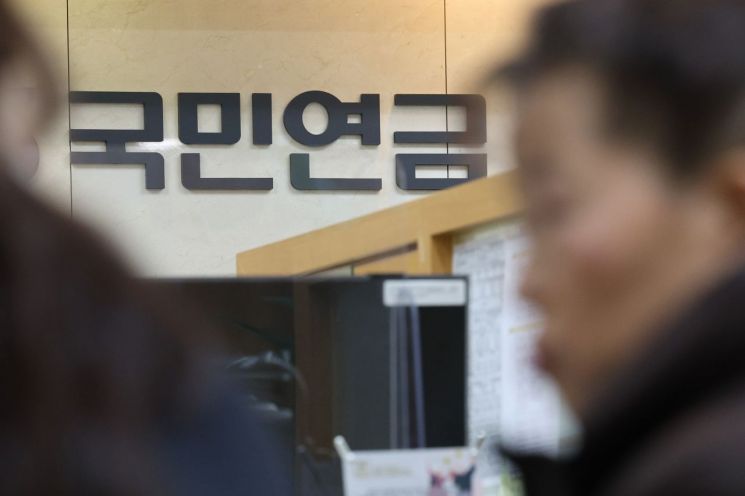
Professor Joo Eun-seon of the Department of Social Welfare at Kyonggi University, who advocates strengthening old-age income security, stated, "The basic pension was originally introduced to fill the gap in coverage created when the income replacement rate of the National Pension dropped from 60% to 40%. Reducing the scope of basic pension recipients will not guarantee proper support for those elderly who truly need it because the benefit level of the National Pension is too low."
Professor Joo explained, "As of 2022, 70% of elderly pension recipients receive 600,000 won or less, and the average National Pension amount is 586,000 won. Under these circumstances, the basic pension amount cannot be raised above that level, and even if concentrated on the poorest elderly, it cannot meet the necessary level. Reducing the number of basic pension recipients does not automatically mean we can increase pension amounts."
She added, "Currently, an approach that broadly maintains both the National Pension and basic pension 'dams' (coverage) is necessary. The range of elderly poverty is too wide, and the National Pension level is too low. It would be more effective to provide additional income support such as housing allowances to the more impoverished elderly," she emphasized.
Professor Kim Soo-wan of the Department of Social Welfare at Kangnam University, who emphasizes fiscal stability, said, "Over the past 17 years, the number of elderly in our country has increased significantly from 5 million to nearly 10 million, and accordingly, about 6.5 million elderly, or 70%, receive the basic pension."
He pointed out, "At the same time, as education, income, and asset levels have risen, the selection criterion for the bottom 70% of elderly increased from 680,000 won 15 years ago to 2.13 million won now, but the elderly poverty rate has not improved accordingly. Last year, the elderly poverty rate in our country was 40.4%. Even if 7 out of 10 elderly receive more than 300,000 won in basic pension, 4 out of 10 remain in poverty, indicating that the current basic pension amount is insufficient."
Professor Kim said, "At this point, the most important mission of the basic pension amount is to solve elderly poverty. The basic pension payment criteria are rapidly increasing to arbitrarily match the bottom 70% income threshold, but we should operate a basic pension system that raises the amount less steeply according to the rising median income and provides slightly more to the impoverished."
Professor Kim Tae-il of the Department of Public Administration at Korea University also proposed, "Currently, basic pension is paid to two-thirds of all elderly, which significantly helps their living, but it is still insufficient for those who are truly impoverished. We should be able to provide more to those individuals. Instead of maintaining the 70% threshold, the payment criteria should be changed to around the median income."
However, Professor Jegal Hyun-sook of the Department of Social Welfare at Hanshin University said, "Middle-income elderly are not middle class; they belong to the lower-income group within the entire population. Also, since the National Pension benefit level is low now, it is practically impossible to give more only to low-income elderly. If pension amounts or the number of recipients are reduced, the scale of elderly poverty could increase accordingly."
The Public Deliberation Committee will hold a total of four debates by the 21st. After all debates conclude, a survey will be conducted among participating citizens. The Pension Special Committee plans to discuss reform proposals based on the debate results.
© The Asia Business Daily(www.asiae.co.kr). All rights reserved.

















