Daedong Hospital "Best Care and Response for Aortic Dissection Patients"
According to the Ministry of Health and Welfare's investigation into a patient who died after being transferred to a university hospital in Busan recently, appropriate measures were taken during the transfer process.
Daedong Hospital (Director Lee Kwang-jae) announced on the 20th that it would correct misinformation regarding the patient who died after being transferred to a university hospital with a diagnosis of aortic dissection, as reported by some media outlets.
The Ministry of Health and Welfare announced on the 18th that its investigation into the transfer process of a woman in her 60s from Gimhae, Gyeongnam to Busan found no inappropriate actions during emergency treatment and transfer.
According to the Ministry, at 4:09 p.m. on the 31st, the Gyeongnam Fire Headquarters received a report that a woman in her 60s, Ms. A, was experiencing chest pain. Fourteen minutes later, at 4:23 p.m., they arrived at the location, provided emergency care to Ms. A, and simultaneously searched for a nearby hospital capable of treatment.
They requested patient transfer to a total of seven hospitals, including one regional emergency medical center in the nearby area, but only Daedong Hospital’s regional emergency medical center expressed willingness to accept the patient.
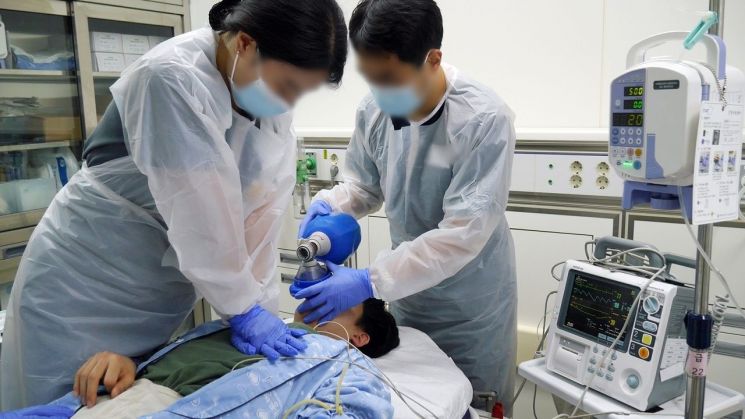
The patient was immediately transferred to Daedong Hospital and received emergency examinations and treatment. The medical staff at Daedong Hospital’s regional emergency medical center checked the patient’s condition upon arrival by 119 and performed an electrocardiogram, prescribed vasodilators, and promptly conducted emergency tests including blood tests and chest radiography.
The medical staff personally assessed the patient’s condition, explained the necessity of a contrast-enhanced chest CT scan to the guardian, and obtained consent. To prevent risks related to contrast agent side effects, the emergency medicine department head confirmed the urine test results before immediately performing the CT scan. The patient showed signs of thoracic aortic dissection on the CT, and the guardian was informed of the emergency situation.
They sought the university hospital where surgery could be performed most quickly and requested a transfer. It was confirmed that the patient’s condition was stabilized until the transfer.
Daedong Hospital stated that despite the recent serious medical crisis, including the resident doctor strike, emergency medicine specialists have been working in three shifts to maintain the normal operation of the emergency medical system and have been present on site.
Daedong Hospital emphasized, “Even when it was difficult to accept patients due to the medical crisis, we actively accepted and treated patients and took responsibility through appropriate measures until the transfer to the university hospital.”
© The Asia Business Daily(www.asiae.co.kr). All rights reserved.

















