The Bank of Korea Announces Survey Results on Financial Institutions' Lending Practices
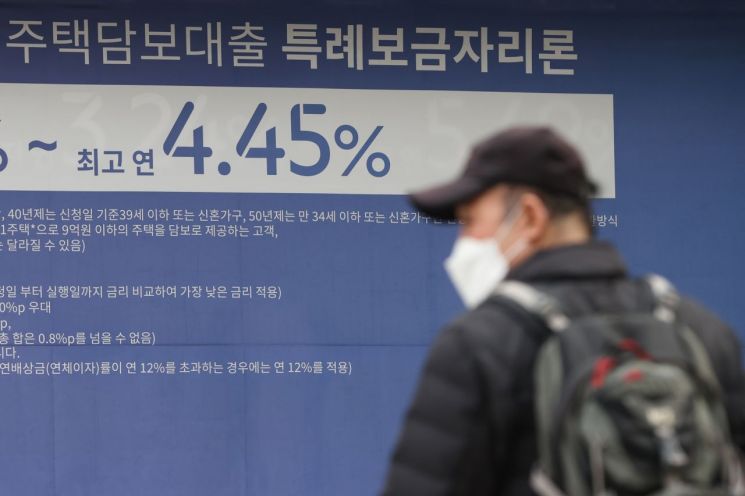
Domestic banks are expected to somewhat lower the loan thresholds for corporate and household housing loans in the second quarter (April to June) of this year. In contrast, non-bank financial institutions are projected to maintain high loan thresholds.
According to the "Financial Institution Lending Behavior Survey Results (Q1 2024 Trends and Q2 Outlook)" released by the Bank of Korea on the 19th, the lending attitude outlook index for domestic banks in the second quarter rose by 2 points to -1 compared to the previous quarter (-3).
This survey targeted the heads of credit operations at a total of 204 financial institutions, assessing lending attitudes, credit risk, and loan demand to produce an index ranging between 100 and -100. A positive (+) index indicates easing lending attitudes, increased credit risk, and rising loan demand, while a negative (-) index indicates the opposite.
By borrower type, domestic banks' lending attitudes toward household housing loans are expected to ease somewhat in response to increased demand for housing funds. Loan demand for household housing is projected to increase slightly due to expectations of changes in the housing market and actual demand-driven purchase needs.
Conversely, lending attitudes toward general household loans are expected to tighten somewhat as banks preemptively reduce loan limits in preparation for the expanded application of the stress DSR (Debt Service Ratio). The stress DSR was first applied to newly originated mortgage loans in February and is planned to be applied to bank credit loans from the second half of this year.
Lending attitudes toward corporations are expected to ease somewhat as banks strengthen operations centered on creditworthy companies, including both large enterprises and small and medium-sized enterprises (SMEs).
In the second quarter, corporate credit risk is expected to remain high, particularly among SMEs in financially vulnerable sectors such as construction and accommodation and food services. The delinquency rate on construction loans by domestic banks rose from 0.41% at the end of 2022 to 0.87% at the end of last year. For accommodation and food services, it increased from 0.47% to 0.95% over the same period.
Household credit risk is also expected to remain high as the debt repayment burden intensifies due to rising loan interest rates. Household loan interest rates increased from 4.66% at the end of 2022 to 5.08% at the end of last year, while delinquency rates rose from 0.24% to 0.35% during the same period.
Regarding loan demand in the second quarter, corporate demand is expected to continue increasing amid growing working capital needs due to economic uncertainty, along with ongoing efforts to secure facility funds in advance.
Lending attitudes of non-bank financial institutions such as savings banks are expected to maintain a tightening trend across all sectors. The Bank of Korea explained that this is mainly due to persistent concerns over profitability and asset soundness caused by high delinquency rates in some non-bank sectors.
© The Asia Business Daily(www.asiae.co.kr). All rights reserved.
![Clutching a Stolen Dior Bag, Saying "I Hate Being Poor but Real"... The Grotesque Con of a "Human Knockoff" [Slate]](https://cwcontent.asiae.co.kr/asiaresize/183/2026021902243444107_1771435474.jpg)
















