Concealed Visit to 'Group Infection Incident' Location
Subject to 'Up to 2 Years Imprisonment or Fine up to 20 Million Won'
A fine was confirmed for a public official in their 20s who deliberately omitted their movements during an epidemiological investigation by the health center after being diagnosed with COVID-19. The individual concealed the fact that they had visited a facility where a COVID-19 cluster infection occurred, and the maximum fine under the law was imposed.
According to the legal community on the 19th, the Supreme Court's 3rd Division (Presiding Justice No Jeong-hee) upheld the original ruling that sentenced A (27) to a fine of 20 million KRW on charges of violating the Infectious Disease Control and Prevention Act.
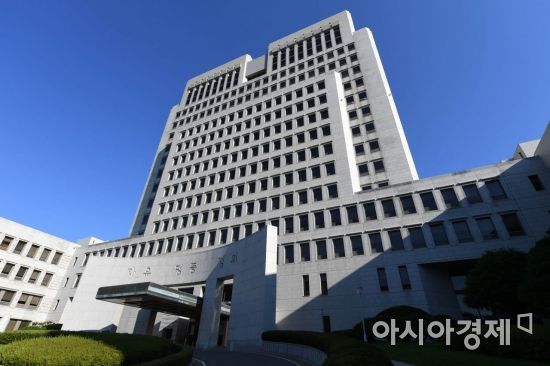
The court stated the reason for dismissing A's appeal was that "there was no error in the original court's judgment that violated the rules of logic and experience, exceeded the limits of free evaluation of evidence, or misunderstood the doctrines related to internal delegation of administrative authority and the principle of legality in criminal law."
A, who was an employee of an agency under the Ministry of the Interior and Safety, was prosecuted for deliberately not disclosing to the epidemiological investigator that they had visited the BTJ Yeolbang Center, a religious facility in Sangju, Gyeongbuk, and a church in Daejeon between November and December 2020.
A was diagnosed positive on January 12, 2021. That evening, when contacted by a health center epidemiological investigator and asked about their movements before the diagnosis, A stated, "I only visited the BTJ Yeolbang Center before November 2020, I don't know Church B, I attended Church C only until November 2020, and the church I currently attend is Church D in Daejeon."
However, A had actually attended a 2-day overnight gathering held at the BTJ Yeolbang Center from November 27 to 28, 2020. A also knew Church B and had visited it on November 30, December 7, and December 14 of the same year, and had visited Church C on December 10 and December 17, 2020.
At the time A gave false statements, quarantine authorities were actively tracking visitors' movements due to a cluster infection outbreak at the BTJ Yeolbang Center in Sangju.
The prosecutor charged A with deliberately omitting and concealing facts during the epidemiological investigation conducted by Daejeon Metropolitan City.
Article 18(3) of the Infectious Disease Control and Prevention Act prohibits ▲refusing, obstructing, or evading epidemiological investigations without justifiable reasons (Item 1), ▲giving false statements or submitting false materials (Item 2), and ▲deliberately omitting or concealing facts (Item 3) during epidemiological investigations conducted by the Director of the Korea Disease Control and Prevention Agency or local government heads.
Violations of this are punishable under Article 79(1) of the same law by imprisonment of up to 2 years or a fine of up to 20 million KRW.
The first-instance court chose a fine instead of imprisonment but imposed the maximum fine of 20 million KRW as stipulated by law.
The court stated, "This crime disregarded the national and public efforts to prevent and contain the spread of an unprecedented global pandemic in this century. Especially, the defendant, as a COVID-19 positive individual, should have clearly disclosed their movements but instead concealed them, thereby obstructing the epidemiological investigation, which is highly blameworthy. Considering the large-scale cluster infection at the BTJ Yeolbang Center and all other circumstances comprehensively, the sentence was determined."
In the second trial, A argued that the epidemiological investigator who called them was not a formal epidemiological investigator, making the investigation itself illegal, and that investigations into movements earlier than 14 days before the diagnosis could not be considered epidemiological investigations under the Infectious Disease Control and Prevention Act.
However, the court rejected A's claims and upheld the 20 million KRW fine imposed by the first-instance court.
First, the court found that the investigator who questioned A was a member of the epidemiological investigation team with proper qualifications to conduct the investigation.
At the time, the investigator who called A had been appointed as an epidemiological investigator and assigned as a trainee epidemiological investigator but had not completed the legally mandated two-year epidemiological investigator training course, thus lacking formal qualifications as an epidemiological investigator. However, the court noted that under relevant laws, members of the epidemiological investigation team other than epidemiological investigators can conduct investigations. The investigator in question was a nurse and a public official responsible for quarantine and epidemiological investigations, designated as a member of the Yuseong District epidemiological investigation team by the head of the Yuseong District Health Center in Daejeon Metropolitan City, so there was no issue with their qualifications.
Additionally, the court held that the government's response guidelines listing "date of symptom onset, patient movements, infection source and route, activities within 14 days before symptom onset (domestic and international activities), etc." do not imply that confirming the movements of an infectious disease patient is limited to within 14 days before the diagnosis or symptom onset.
The court stated, "Epidemiological investigators or team members may investigate the movements of infectious disease patients to the extent necessary to identify the source or route of infection in specific situations."
The Supreme Court also found no problem with the second-instance court's judgment.
© The Asia Business Daily(www.asiae.co.kr). All rights reserved.

















