Policy to Boost Consumption Stalled
"Banking System in China Under State Control"
The number of debtors in China who fail to repay their debts on time is increasing, and household debt is also rising.
It has been pointed out that the number of defaulters on the Chinese government's blacklist has exceeded 8 million, posing a burden on the Chinese economy. This figure represents a 50% increase compared to the end of 2019, currently totaling approximately 8.3 million people.
The Wall Street Journal (WSJ) reported on the 17th (local time) that the scale of household debt in China has also increased by 50% over the past five years, reaching $11 trillion (about 1,510.3 trillion won). The surge in household debt is largely attributed to the past real estate boom.
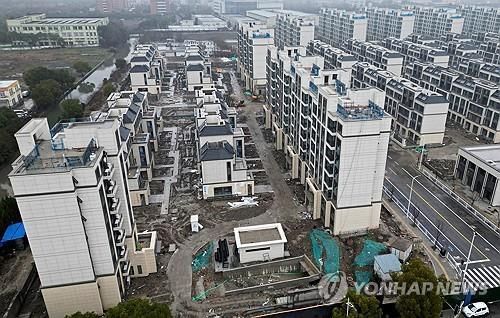
Previously, Chinese people borrowed huge sums of money to buy real estate. It was for investment purposes, but with the recent end of the real estate boom and falling housing prices, many are struggling with debts they cannot manage.
There has been an increase in cases where houses are put up for foreclosure or debt liquidation. According to data from the China Index Academy, a real estate market research institution, about 390,000 homes in China were foreclosed and auctioned last year, a 43% increase compared to the previous year. In January alone, 100,400 homes were auctioned, showing an even steeper rise.
If placed on the Chinese authorities' debt blacklist, wages can be seized, employment in government-related positions is prohibited, and purchases of high-speed train tickets, airline tickets, and stays at luxury hotels are restricted. In severe cases, detention may occur. In Beijing, defaulters are monitored through measures such as wage seizure and blocking access to official positions.

Economists believe that since the banking system in China is under state control, it is unlikely that a U.S.-style financial crisis will hit China due to household debt issues. However, they point out that falling housing prices, the risk of deflation (a decline in prices during economic downturn), and high unemployment rates pose burdens on the Chinese leadership's efforts to increase consumption.
Consumption is decreasing, and debtors often face strong regulations that block opportunities to improve economic conditions, ultimately making it difficult to repay debts. Many Chinese consumers are under economic pressure, and Western companies such as Apple and General Motors (GM) have reported declining sales in China.
In fact, Chinese consumption is significantly decreasing. On the 16th, the Chinese government announced that retail sales in the first quarter increased by 4.7% year-on-year, which is below the overall economic growth rate of 5.3%.
© The Asia Business Daily(www.asiae.co.kr). All rights reserved.
![User Who Sold Erroneously Deposited Bitcoins to Repay Debt and Fund Entertainment... What Did the Supreme Court Decide in 2021? [Legal Issue Check]](https://cwcontent.asiae.co.kr/asiaresize/183/2026020910431234020_1770601391.png)

















