90% Reproduction Rate with VR, Driving Simulator
Used for Safety Evaluation of Underground Expressways
Drove on the highway at a speed of 120 km/h. Then the vehicle entered the Busan Seunghak Tunnel. This tunnel will be installed 40 meters underground between Eomgung-dong, Sasang-gu and Jungang-dong, Jung-gu in Busan. It stretches up to 7 km in length. Inside the moving car, the end of the tunnel became a single point. The new experience was brief. As I kept driving, a feeling of suffocation came over me. Two vehicles were running side by side ahead, so I couldn’t overtake. When the road driving simulator’s end sound played, the driving session ended.
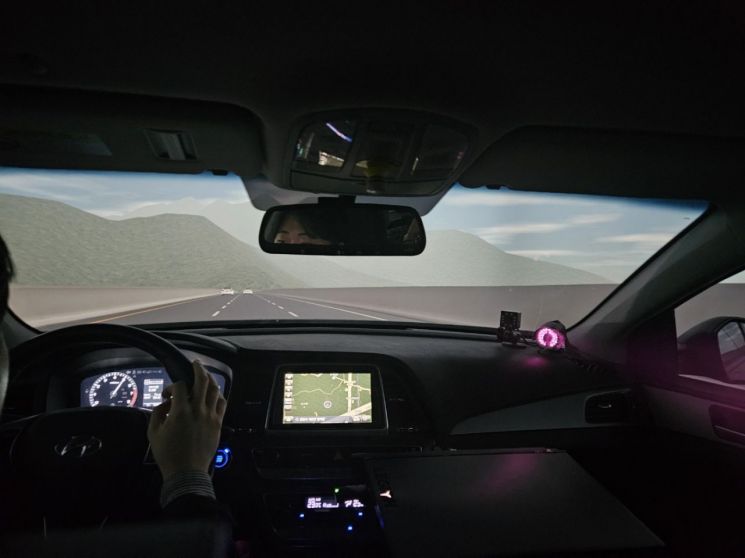
"So realistic it causes motion sickness"... Simulator creates various scenarios in underground highways
On the 17th, I visited the Road Driving Simulator Experiment Center at the Korea Expressway Corporation Road Traffic Research Institute in Dongtan, Gyeonggi-do. The facility I experienced is a simulator that uses virtual reality (VR) technology to allow drivers to experience actual driving situations. The researchers support road technology development through this. According to a survey conducted by the Road Traffic Research Institute targeting race car drivers, the simulator showed a reproduction rate of about 90%. I was also able to feel car sickness and the claustrophobia inside tunnels within the simulator. The road driving simulator, designed to closely mimic real car driving, collects biometric data such as the driver’s brain waves, eye movements, and pulse to evaluate road safety.
Since the end of last year, the Korea Expressway Corporation has been developing a simulator program that can replicate conditions similar to those of actual underground highways. So far, the simulator scenarios include seven situations such as congestion at tunnel entrances, accidents inside tunnels, and fog at tunnel exits. Using the simulator, it is possible to analyze how drivers respond in these situations.
The Busan Seunghak Tunnel, which I drove through during the simulator experience, is one of the simulator’s scenarios. The Seunghak Tunnel is a road planned to be built according to the underground highway plan. During the construction phase, design changes were made to the Seunghak Tunnel, and safety inspections were conducted using the simulator. A Korea Expressway Corporation official said, “The Seunghak Tunnel underwent design changes due to obstacles, and we conducted tests with the simulator to verify the safety of the redesigned tunnel.”
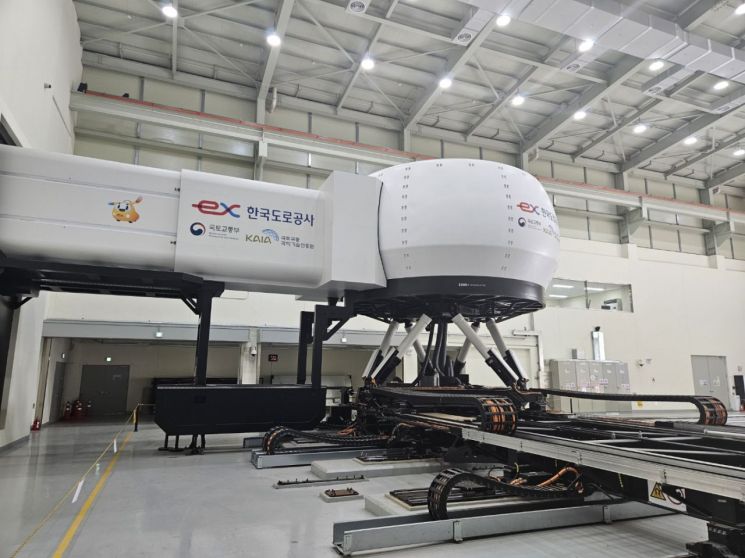
Simulator used diversely from driver safety to autonomous driving and drunk driving
In preparation for the opening of underground highways, the simulator can also help devise ways to prevent accidents. Underground highways are built more than 40 meters deep underground and require different safety equipment than regular highways. Drivers may feel claustrophobic or pressured when driving underground for extended periods, which can threaten safety. Additionally, if a fire occurs in an underground highway, smoke may block the view of vehicles ahead, potentially causing chain accidents. The simulator virtually recreates such situations to analyze and prepare responses.
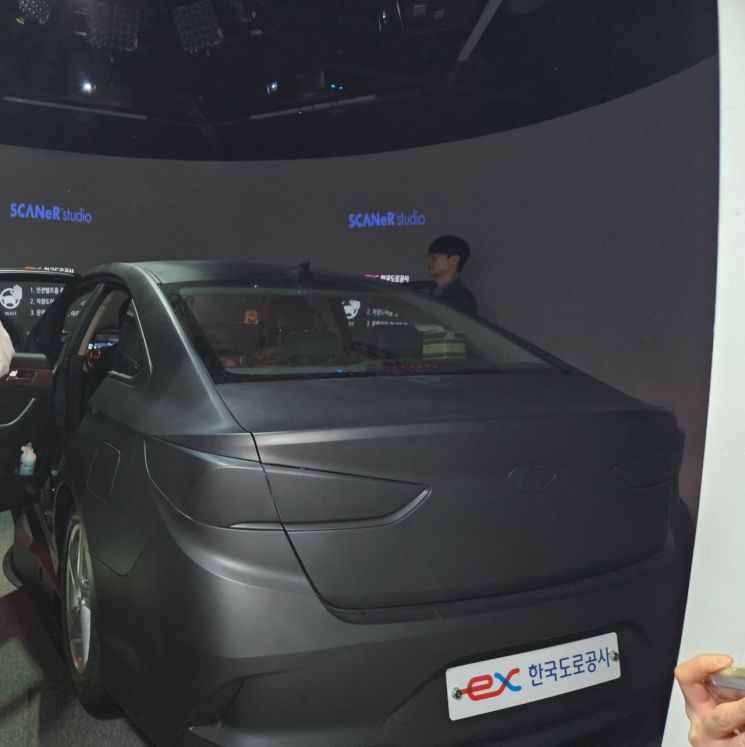 There is a vehicle inside the road driving simulator. The simulator operates when you get in the vehicle and start driving.
 [Photo by Seungwook Park]
Using data obtained through the simulator, researchers can propose necessary facilities for underground highways. For example, the simulator can identify sections where drivers feel the most fatigue on underground highways, leading to the installation of lighting or other measures. This research is being conducted as a government research and development (R&D) project starting this month. Facility plans are being developed based on various simulator scenarios.
The road driving simulator is used not only for Korea Expressway Corporation research but also widely in the private sector. The corporation collaborates with private entities on various studies such as autonomous driving and drunk driving using the simulator. A corporation official said, “The simulator experiment center conducts about 15 private experiments annually and hosts 40 to 50 visits and tours, making it accessible to the private sector as well.”
The Korea Expressway Corporation also plans to further advance the simulator in relation to autonomous driving. They aim to simulate autonomous driving scenarios to analyze inter-vehicle relationships and prevent collisions. Additionally, the Road Traffic Research Institute and LG AI Research Institute will develop an algorithm starting at the end of this month to detect drunk driving during driving. A corporation official stated, “We plan to develop an algorithm that determines intoxication by having 100 drivers simulate drunk driving in the simulator and analyzing their facial expressions and biometric data.”
© The Asia Business Daily(www.asiae.co.kr). All rights reserved.



















