Introduction of 5% Cap on Tax Base
'Second Home' in Population Decline Areas
1-Household Special Case Remains Unchanged
This year, single-homeowners will benefit from a fair market value ratio approximately 15 percentage points lower than that applied to multiple homeowners, reducing their tax burden. A new 'tax base ceiling system' will also be introduced to prevent a sharp increase in the tax base due to official property prices.
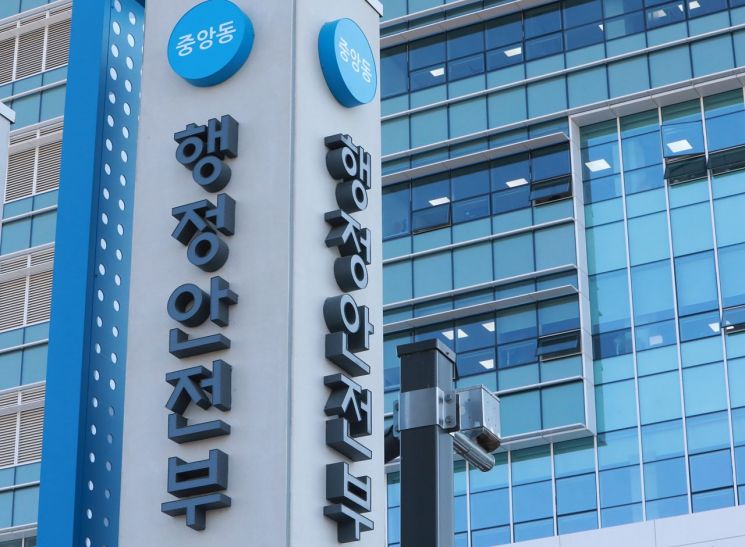
On the 18th, the Ministry of the Interior and Safety announced that the 'Local Tax Act Enforcement Decree and Enforcement Rules Amendment' will be publicly notified for legislative consultation from the 19th until July 9. The amendment includes improvements to the property tax system, local tax support measures reflecting the 2024 economic policy direction announced earlier this year, and support plans for the recovery of the construction industry.
First, to ease the property tax burden on single-homeowners, the 'special fair market value ratio' that was temporarily implemented will be applied again this year. The fair market value ratio determines the proportion of the official property price reflected when calculating the property tax base and was maintained at 60% until 2021. Due to the sharp rise in official property prices in 2021-2022, the government lowered this ratio to 45% in 2022 exclusively for single-homeowners to alleviate their tax burden. Last year, the ratio was set at 43% for homes valued up to 300 million KRW, 44% for up to 600 million KRW, and 45% for above 600 million KRW. For example, a single-homeowner owning a house with an official price of 350 million KRW would have paid 534,000 KRW in property tax at a 60% ratio without the special measure, but with the special rate (44%), they only pay 344,000 KRW.
A 'tax base ceiling system' will also be introduced to manage and prevent the tax base from rising excessively compared to the previous year. This aims to address the issue of the tax base directly reflecting sudden increases in official property prices. Previously, the property tax base was calculated by applying the fair market value ratio to the official property price. Starting this year, the lower amount between the 'current year's tax base' and the 'previous year's tax base increased by 5%' will be applied. Through these tax relief measures, the total housing property tax burden this year is estimated at approximately 5.8635 trillion KRW. The Ministry of the Interior and Safety explained that this is a 1.2% increase from last year's 5.7924 trillion KRW, which is lower than the official price increase rate of 1.3%.
Detailed implementation plans for special property tax support for single-homeowners to revitalize 'second homes' in population-declining areas are also included. From now on, even if an existing single-homeowner acquires an additional home in a population-declining area, they will still be considered a single-homeowner rather than a two-homeowner, maintaining the special fair market value ratio and other single-homeowner benefits. The target homes are those acquired after January 4 this year with an official price of 400 million KRW or less, located in 83 designated population-declining areas excluding the metropolitan area and major cities, as designated by the Minister of the Interior and Safety under the Special Act on Local Autonomy and Regional Balanced Development. Excluded areas are six locations: Gapyeong in Gyeonggi, Nam-gu and Seo-gu in Daegu, and Dong-gu, Seo-gu, and Yeongdo-gu in Busan.
Additionally, the legislative notice includes measures to support the resolution of unsold local apartments by applying the general corporate acquisition tax rate (1-3%) instead of the higher rate (12%) when purchasing such apartments. The scope of support has also been expanded to ease property tax burdens when vacant houses are demolished and the land is used for parking lots, rest areas, and similar purposes.
The amendment to the Local Tax Act Enforcement Decree and Enforcement Rules will undergo a 20-day public consultation period to gather opinions from various sectors, followed by approval at the Cabinet meeting on the 21st of next month, promulgation on the 28th, and immediate enforcement. It is expected to apply starting with this year’s property tax. Minister of the Interior and Safety Lee Sang-min stated, "This amendment was prepared to alleviate the housing cost burden on citizens while revitalizing the local housing market. Furthermore, we aim to improve the local tax system to enhance the residential environment in underserved areas."
© The Asia Business Daily(www.asiae.co.kr). All rights reserved.
![Clutching a Stolen Dior Bag, Saying "I Hate Being Poor but Real"... The Grotesque Con of a "Human Knockoff" [Slate]](https://cwcontent.asiae.co.kr/asiaresize/183/2026021902243444107_1771435474.jpg)
















