"By 2028, Deficit Reaches 1.5836 Trillion Won"
Ruling and Opposition Parties' Pledge to 'Expand Health Insurance Coverage' in General Election
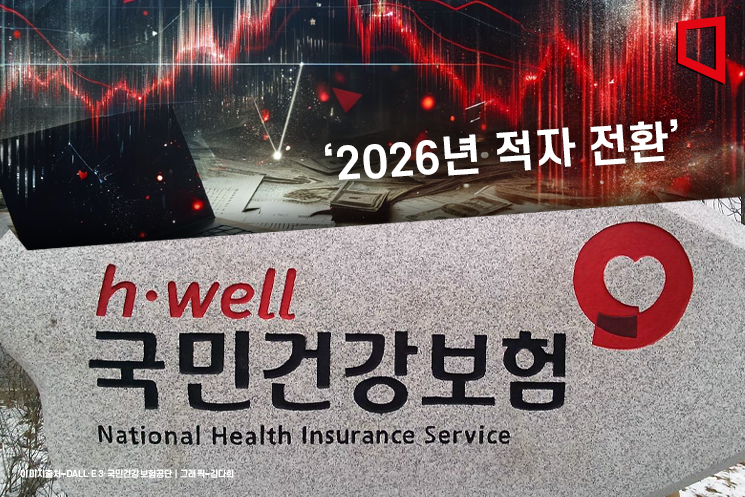
On the 15th, the National Assembly Legislative Research Office released a report titled "Key Contents and Issues of the 2nd Comprehensive National Health Insurance Plan." The warning presented in the report is serious. It states that the National Health Insurance finances will turn to a deficit of 307.2 billion KRW in 2026, and by 2028, the deficit will increase to 1.5836 trillion KRW. Additionally, there are criticisms that the Ministry of Health and Welfare's measures to reduce burdens?such as expanding property deductions for regional subscribers and abolishing automobile health insurance premiums?are unsatisfactory in terms of discovering new revenue sources.
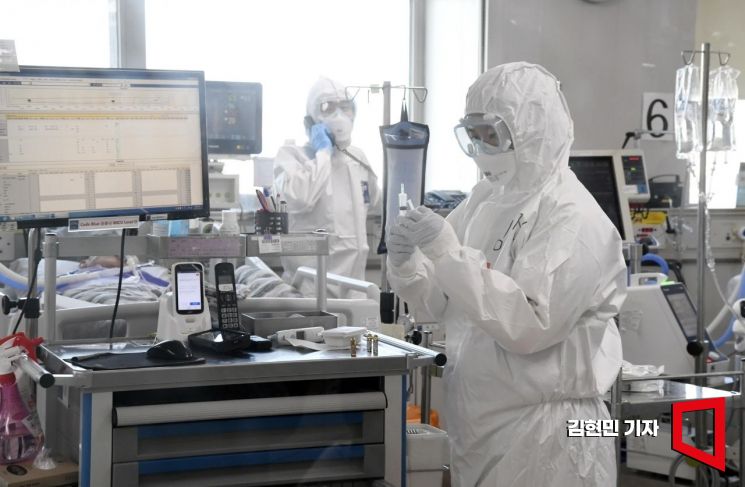 On the 22nd, medical staff are caring for patients in the intensive care unit for severe COVID-19 cases at the National Health Insurance Service Ilsan Hospital, a dedicated COVID-19 hospital in Goyang-si, Gyeonggi-do. Photo by Hyunmin Kim kimhyun81@
There are two main factors contributing to the deterioration of the health insurance finances. First is the increased medical demand due to demographic changes. This means that health insurance costs are rising because of the population structure moving toward a super-aged society. According to the National Health Insurance Service (NHIS), as of 2022, elderly medical expenses amounted to 44.1187 trillion KRW, accounting for 43.1% of total medical expenses. Furthermore, the impact of excessive medical users on finances is significant. They exploit the low out-of-pocket costs to engage in so-called "medical shopping." According to data received by Assemblyman Shin Hyun-young of the Democratic Party from the NHIS, as of 2019, there were 23 outpatient excessive users who visited outpatient clinics more than 1,000 days annually.
Im Samuel, a researcher at the National Assembly Legislative Research Office who authored the report, emphasized that although the financial deficit is not an immediate issue, discussions on financial restructuring should begin in advance.
"It is not an immediate issue yet, and there are variables such as government expenditure efficiency policies and improvements in the super-aging trend. However, from a mid- to long-term perspective, it is true that adjustments to insurance premium rates and increases in out-of-pocket levels through legislation are necessary. Considering public opinion, this is a very delicate matter, and the comprehensive plan presented by the government lacks detail, so the National Assembly should play a role in detailing it."
However, it does not seem easy for the 22nd National Assembly to fulfill this role. Raising out-of-pocket levels would face negative public opinion. In the 22nd general election pledges, each political party promised to expand the scope of health insurance coverage, but plans for financial efficiency were hard to find. The People Power Party pledged to gradually expand health insurance coverage for implants for the elderly, support skin diseases for youth aged 2030, and include obesity treatment drugs in coverage. The Democratic Party stated its intention to expand health insurance coverage, which was halted by the Yoon Seok-yeol administration. They also promised to lower the age for implant health insurance coverage and expand benefits, include robotic surgery for specific diseases in health insurance coverage, and apply health insurance to nursing hospital caregiving fees.
The political response to the report has been lukewarm. It is considered burdensome to make an issue that has not yet arrived a central agenda for the 22nd National Assembly. A ruling party official said, "As of this year, the insurance premium rate is 7.09%. It has not reached the legal ceiling (8%). It does not seem to be the stage for the 22nd National Assembly to review measures such as raising out-of-pocket levels. Management and supervision of fraudulent claims should come first."
Researcher Im said, "Since releasing the report, no political party has inquired about the related content. It is not a topic that clearly reveals differences between parties. Since it is an issue where gaining public consensus is important, the National Assembly should draw out social agreement before the financial deficit becomes a reality."
© The Asia Business Daily(www.asiae.co.kr). All rights reserved.


















