Completed Risk Assessment for 894 Large Street Trees, Maintenance of Hazardous Trees Scheduled for April
Removal of Japanese Pagoda Tree → Planting of Ipop Trees Considering Surrounding Scenery and Site Conditions
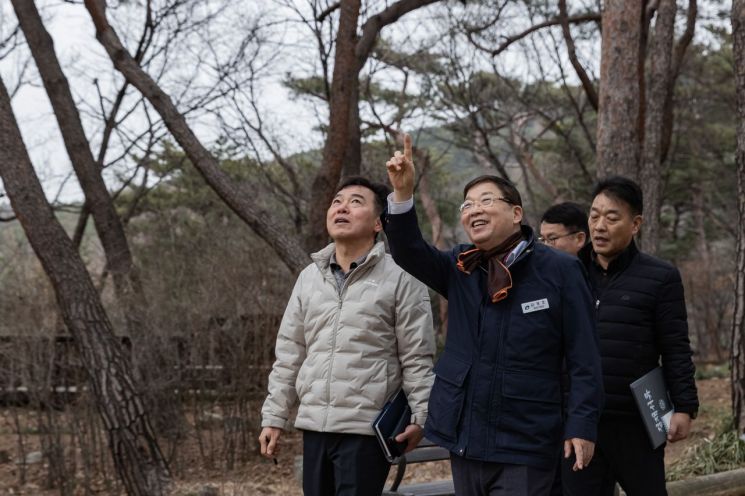
Gwangjin-gu (District Mayor Kim Kyung-ho) is conducting a risk assessment of 894 large street trees and will maintain those at high risk of breaking due to heavy rain and typhoons.
Risky street trees are a critical issue as they can lead to casualties and property damage in the event of a disaster, making it essential to diagnose the risk and select hazardous trees.
Since February, the district has been carrying out risk assessments on 894 zelkovas and pagoda trees along nine routes, including Cheonho-daero. While zelkovas and pagoda trees provide abundant shade in summer, they are vulnerable to wind and flood damage due to the occurrence of cavities and other defects that increase the risk of falling during strong winds.
The risk levels of street trees are classified into four stages: ▲Severe (recommend immediate removal) ▲High (recommend removal or other measures) ▲Moderate (recommend defect repair and monitoring) ▲Low (recommend defect repair and monitoring). Trees diagnosed at the 'High' level or above in this survey will be maintained.
The district plans to complete the removal of hazardous street trees within this month and will plant Japanese snowbell trees and others in the removed spots, considering the surrounding landscape and site conditions.
Kim Kyung-ho, Mayor of Gwangjin-gu, stated, “Safety directly related to the lives of residents is the most important matter. We will do our best to prevent safety accidents through continuous monitoring of street tree health and to create a beautiful street environment.”
© The Asia Business Daily(www.asiae.co.kr). All rights reserved.

















