Designation extended for 1 year until April 26, 2025
Only sales for actual residence allowed, gap investment prohibited
Mayor Oh Se-hoon: "Need for downward stabilization of housing prices"
Strong demands for property rights infringement and cancellation
Market impact limited due to re-designation
Seoul City has re-designated Apgujeong, Yeouido, Mokdong, and Seongsu-dong as land transaction permission zones. The validity has been extended for one year until April next year.
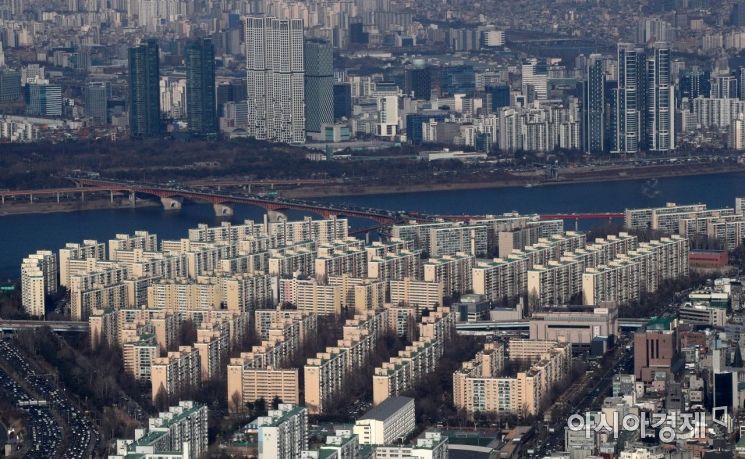
On the 17th, Seoul City announced that it held the 5th Urban Planning Committee meeting and re-designated a 4.57㎢ area covering Apgujeong, Yeouido, Mokdong, and Seongsu-dong as land transaction permission zones.
The target areas are ▲24 apartment complexes in Apgujeong-dong apartment district, Gangnam-gu ▲Yeouido-dong apartment district and 16 nearby complexes in Yeongdeungpo-gu ▲14 complexes in the Mokdong housing development district, Yangcheon-gu ▲Strategic maintenance zones 1 to 4 in Seongsu-dong, Seongdong-gu. With this decision, the designation validity of the land transaction permission zones is extended for one more year until April 26 next year.
Seoul City stated, "This was an unavoidable choice to preemptively block speculative transactions," adding, "We judged that if the designation is lifted in areas with high development expectations, the possibility of speculative demand inflow would increase."
A land transaction permission zone refers to an area designated where permission from the head of the relevant city, county, or district office must be obtained when trading real estate above a certain scale, such as residential, commercial, or industrial properties. Once designated as a land transaction permission zone, the land must be used only for the permitted purposes.
Only actual demanders who will reside or operate businesses for at least two years can acquire houses or commercial properties. Gap investments are also prohibited. When purchasing a house in a land transaction permission zone, all household members must be non-homeowners, and any owned houses must be sold within one year. The payment deadline is also restricted to within three months.
The land transaction permission zone system was introduced to prevent speculative transactions in large-scale development areas. It can be designated without limit on the number of times for up to five years. The Ministry of Land, Infrastructure and Transport and Seoul City decide on re-designation annually.
For example, in May 2020, the Ministry of Land designated Ichon-dong, Hangangno 1, 2, and 3-ga, and Yongsan-dong 3-ga in Yongsan-gu as land transaction permission zones to build the Yongsan International Business District. The designation in this area will expire on the 19th of next month. In June 2020, the entire areas of Cheongdam, Samsung, and Daechi-dong in Gangnam-gu and Jamsil-dong in Songpa-gu near the Jamsil MICE development project and Yeongdong-daero complex development project were designated as land transaction permission zones. This designation is set to expire on June 22.
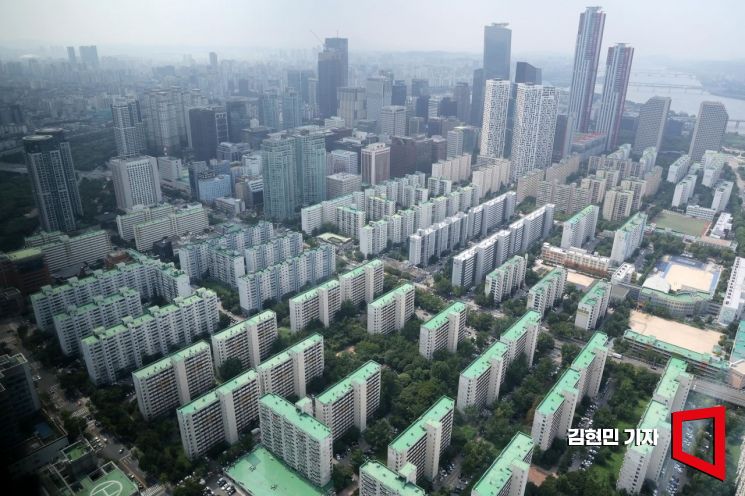
Seoul Mayor Oh Se-hoon has expressed his stance not to lift the land transaction permission zones as the housing market requires a "downward stabilization." Areas nearing expiration are also likely to be re-designated. In a recent interview, Mayor Oh stated, "House prices need to go down further." He is implementing policies to activate reconstruction and redevelopment to prevent speculation while resolving the housing supply shortage.
In the industry, there are also criticisms that the land transaction permission zone system was not created for use in urban areas, so lifting the designation is necessary. As the real estate market downturn continues, voices calling for deregulation are steadily emerging.
Lee Eun-hyung, a research fellow at the Korea Institute of Construction Policy, said, "Designating land transaction permission zones in areas like Gangnam as it is now does not align with the purpose of the system, so fundamentally lifting the designation is appropriate," adding, "Excessively suppressing transactions causes a significant price gap between designated and nearby non-designated areas, which could infringe on property rights."
Apgujeong, Mokdong, and Yeouido are areas where maintenance projects are actively underway and supply is not abundant. Therefore, the re-designation is not expected to have a significant impact on the market.
Ham Young-jin, head of the Real Estate Research Lab at Woori Bank, explained, "Recently, apartment sale prices in the Gangnam area have turned positive, and reconstruction and development prospects continue. Although there are burdens such as the obligation to submit financing plans and land use plans, and the obligation to reside, considering the limited new housing supply and supply scarcity in these areas, the movement as market-leading regions will continue."
© The Asia Business Daily(www.asiae.co.kr). All rights reserved.
![Clutching a Stolen Dior Bag, Saying "I Hate Being Poor but Real"... The Grotesque Con of a "Human Knockoff" [Slate]](https://cwcontent.asiae.co.kr/asiaresize/183/2026021902243444107_1771435474.jpg)

















