Overturning the Second Trial Verdict and Ruling in Favor of the Victim
The Supreme Court has ruled that even if the victim's money deposited into an account due to phishing crimes was withdrawn through automatic credit card bill payments, the account holder has an obligation to return the unjust enrichment to the victim.
Previously, the first and second trials held that the account holder did not have the obligation to return unjust enrichment because it was difficult to see that the account holder had effectively gained control over the money deposited in the account and became the actual beneficiary. However, the Supreme Court judged that the account holder gained the benefit of avoiding the credit card debt, not the deposited money itself.
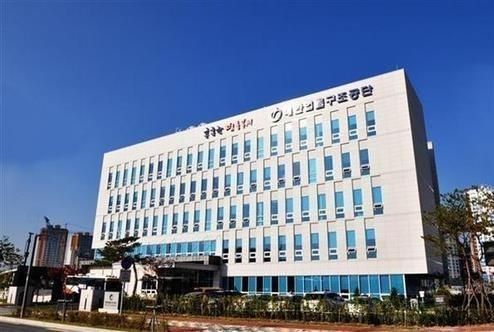
According to the Korea Legal Aid Corporation on the 16th, the Supreme Court's 2nd Division (Presiding Judge Lee Dong-won) overturned the lower court ruling that dismissed the claim for return of unjust enrichment filed by phishing victim A against B, ruling that B did not unjustly enrich himself, and remanded the case to the Seoul Northern District Court.
In October 2021, A received a text message from a phishing criminal impersonating A's child, stating that "the phone screen is broken and repair costs are needed," and accessed a specific website as instructed by the phishing criminal.
The phishing criminal obtained A's bank account number, password, and other information, installed a remote control program on A's mobile phone, and transferred 1 million KRW from A's account to B's account. The money deposited into B's account was then automatically transferred to B's virtual account through an automatic payment for a credit card bill of a card company.
After realizing the damage, A filed a lawsuit against the card company for the return of unjust enrichment with the help of the Korea Legal Aid Corporation. However, the court ruled against A, stating, "There is no evidence to consider that the card company acted with malice or gross negligence regarding the fact that the funds were A's loss."
Eventually, A filed a lawsuit against B, who received the remittance from the phishing criminal.
In the first trial, conducted by public notice delivery as B's whereabouts were unknown, the court ruled against A, stating, "It is difficult to see that B reached a state where he could effectively control the money transferred to his account." The court reasoned that since the money deposited without B's knowledge was automatically used for credit card payments, it was not unjust enrichment.
A appealed, but the second trial reached the same conclusion.
However, the Supreme Court's judgment was different.
The court stated, "The benefit B obtained was not the money transferred itself, but the relief from his credit card debt," and explained the reason for overturning and remanding the case, saying, "The lower court's ruling was mistaken as it contradicted the Supreme Court's precedents."
Previously, the Supreme Court clarified that "there is no limitation on the method of obtaining the 'benefit,' which is a requirement for unjust enrichment to be established," and that "passive increases in property, such as avoiding losses that would naturally occur due to the occurrence of certain facts like debt relief, also constitute benefits."
After four trials over two and a half years, A obtained a ruling to recover 1 million KRW, but since B's whereabouts remain unclear, it is expected to be a difficult path to actually recover the 1 million KRW and the accrued interest from B.
Kim Deok-hwa, a lawyer from the Korea Legal Aid Corporation representing A, said, "For A, who is in a financially difficult situation, 1 million KRW is a significant amount," and added, "If B's assets are identified through property disclosure, we will proceed with enforcement procedures."
© The Asia Business Daily(www.asiae.co.kr). All rights reserved.

















